This website has moved!

Politically Me is no longer available here. To read James' blogs, please visit www.jphillips.eu

You will be automatically directed there shortly

Showing posts with label 2012. Show all posts

Thursday, 1 November 2012

A Favourable Backbench Rebellion

SONY DSC

Image by Constantin Deaconescu

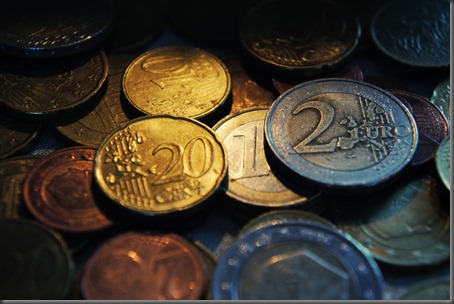
I’m surprising myself by agreeing with Tory MP for Rochester and Strood, Mark Reckless, whom I have most often found myself contemptuously disagreeing with in the past. Plus, there’s the fact that he’s just a Tory in his day job. Mark is a massive Eurosceptic and somehow manages to argue that every problem we face is in some way Europe’s fault. Yet, yesterday, he stood as a backbencher and voted in favour of a reduction in the funds we provide to Europe. This, I fundamentally agree with in these tough times.

As a country, we are fighting our way through horrific austerity measures and facing devastating and disgusting cuts to our frontline services, yet continue to provide consistent financial support to this international body. Whilst we suffer the effects of cuts, we continue to provide funding to other countries without even beginning to negotiate a slight reduction in respect of our own financial difficulties. This is a preposterous idea. When we are supporting our own citizens less and less each day, why should we continue to support citizens of other countries at the same rate as before?

Now, don’t get me wrong; I do not believe we should wholly withdraw all of our financial support to other countries, but I believe in a proportional cut alongside our other cuts. If something must be cut, it must be cut in line with everything else. We should not favour one thing over another thing, unless with it comes overwhelming benefits.

Hence, I find myself on the side of Labour and a local Tory (although a backbencher, mind you) and agreeing with this successful rebellion on the Government. This is the right step forward; it’s just a shame that this does not create a mandate, and that the Government could still ignore the parliamentary vote when they make their EU funding proposal. Let’s hope they listen to the slight majority and reduce the EU benefit and return some of that saved money to our frightful economy.

Friday, 19 October 2012

Tories Not Welcome in Birmingham


With no aim but to express anger, frustration and dissatisfaction, the protest outside the Tory conference on Sunday had a resounding message; the Tories were not welcome in Birmingham. If the public had their way (which they rarely do), the Tories would have hosted their conference as far away from the ICC as possible.

Crying out with the crowds, it was more than obvious to me that the atmosphere was one of genuine rage. Across both the public and private sectors, the cuts are hitting hard; their consequences deep and far-reaching. From railway workers, to fire-fighters, to lecturers at our University, there was cross-spectrum resistance to the Tory presence. And, despite police officers being unable to protest along with us by law, the liaison officers were sympathetic to our cause. “Birmingham Grannies against the Cuts” were a particular favourite group of mine; not least because it shows that Government policies are spanning generations and the most vulnerable are, despicably, getting the rough end of the stick whilst the most fortunate are cut more and more slack.

Students, including NUS officers Vicki Baars and Aaron Kiely, also lined the ranks, demonstrating against raised tuition fees and continuing further and higher education cuts. Asked why they were demonstrating, Mathematics student, Ollie Jones said they were “angry” with the cuts that the Tory party were making in Government, particularly in opposition to changes to the NHS.

Vicki Baars, NUS Vice President for Union Development hit the spot when she tweeted, “at the rally against #cpc12, the Conservative led government has tripled Tuition Fees, introduced FE fee’s for over 24’s… Let’s defend edu!”
Inspiring speeches were given by general secretaries from public sector unions including the UCU, RMT and Unite. Christine Blower, general secretary for NUT, addressed the crowds “there is a will to privatise our education” and cited that one in five young people can’t find a job, while Bob Crow, RMT, called for re-nationalisation of the railways.

Yet, the protest was disappointing; in spite of a supposed five thousand attendees, it felt quiet and too jovial, and both the march and the rally were over in two and a half hours. Once it had finished, it had finished. It was by far lacking the passion of previous protests. Whilst timid voices shouted for a tax on the rich, the one percent, Cameron stood, unscathed and with security for protection, that his Government would not be introducing a mansion tax. Once again, our demands were ignored.

Fortunately, I can confidently say that the upcoming protests by the TUC and the NUS in London will be much more impactful. If #demo2012 is anything like the student protests of 2010, we will see fifty thousand take on Westminster and show this shambles of a Government that we will not just sit back and take what they throw at us. For ourselves, and future generations, we will say “no more”.


No Means No

The discourse of rape has been on many tongues lately; from high-profile politicians to celebrities to liberation groups, there has been controversy over the definition of term. The National Union of Students (NUS) found itself in this position last Wednesday, when a motion on the subject was proposed by the Women’s Campaign.

Heavy media coverage of the allegations against Julian Assange has ensured that the issue remains in the spotlight. The Wikileaks founder is alleged to have raped and molested two females in 2010, but has successfully sought asylum in the Ecuadorian assembly on the premise that he believes he will extradited to the USA for separate offences relating to the aforementioned website.

It’s a case which has sparked wider debate and dispute in the public sphere, bringing the definition of rape under scrutiny. Todd Akin, a supporter of USA Presidential Candidate, Mitt Romney, said that women can prevent pregnancy in “a legitimate rape” and, thus, conceiving a child is rare. Furthermore, George Galloway, Respect MP for Bradford West, ludicrously referred to a man inserting his penis into a sleeping woman as “bad sexual etiquette”. Thankfully, these comments sparked global outrage, but in many circumstances, compassion and understanding was offered to both rapists and those who spoke of rape as above, so-called rape apologists. The usual, shameful excuses were trotted out; that women put themselves in provocative situations via dress or body language, and that rape is excusable if the victim is in a relationship with the perpetrator.

Consequently, the NUS Women’s Campaign called for no more, presenting a motion to the NUS’ National Executive Council (NEC) calling for the long-standing no-platform policy (which previously only covered fascists) to be extended to cover rape apologists. However, several NEC members (including Aaron Kiely, NUS Black Students’ Officer) proposed an amendment requesting that the NUS support Assange’s request for a guarantee from the Swedish authorities that he would not be extradited to the USA. It was also argued that the no-platform policy should remain as it is, due to the unique threat fascist pose to liberation students and democratic structures. That six NEC members left the room in tears over comments made in the debate is indicative of its severity and the issue’s importance.

Mercifully, the motion passed with twenty four votes to six. Kelley Temple, NUS Women’s Officer said that the “NUS believes that there is a culture of undermining rape victims and rejects attempts to glorify, joke about or dismiss rape. The motion passed confirms that NUS shall not offer a platform to speakers who are rape deniers of apologists, or support events where such individuals speak.” Aaron Kiely was unavailable for comment.

This is great step forward for the movement, but also for culture in general. It is fortunate that the array of ignorant comments made throughout the past few months has at least led to one progressive piece of anti-rape legislation. No means no, and there are no exceptions.


(as published on Redbrick at http://www.redbrick.me/2012/10/97237/)

Friday, 31 August 2012

The UKBA and LMU


This Wednesday at 20:00, the UK Border Agency (UKBA) announced its decision to revoke the Highly Trusted Status (HTS) of London Metropolitan University, thus removing the right for the University to grant approval for student visas, and causing all current student visas approved by the University to be invalidated.
The UKBA’s horrific decision has far-reaching and outstanding effects, far more than one could possibly first imagine; the displacement of current students, the delay to prospective students, the loss of money to the University and the Higher Education sphere as a whole, the loss of tenants, the damaging impact to the reputation of the United Kingdom, overstaffing at the University, confusion for students… the list goes on.

However, of course, the most important is the damaging effect that students have faced. The most shocking part is that even those who are currently studying at the University, of whom most, if not all, will be legitimate hard-working students, are now no longer able to complete their course – some may have less than three months left of their course, and paid out thousands in order to study at this University, yet are now being told their course is no longer an option. They must find a new course by 1 December or return to their home country – a very unfair, and economically harming danger. 

Furthermore, there are the students who have applied for the University, been warranted Visas, perhaps bought their travel tickets, and have planned to travel to the University next month, some within the timeframe of 2 weeks. These students are now being told they must also reapply elsewhere.

The worst? It would be fairly simple if they had more time; the fact is, UCAS applications have been completed, clearing spaces have been open, filled and closed. There are no longer any spaces left for students, and even if there were, it would be very unlikely that it was a course that the students had originally studied or intended to study. What use is that?

This decision is not a simple one, but the Government and the UKBA thoroughly knew the impact of it, and the unwelcome reception it would have. It is also not a decision that will be taken lightly. The National Union of Students (NUS), Unison and the University and College Union (UCU) have all condemned the action, planning a day of protest to show their support and solidarity for the displaced students and I am certain that hundreds, if not thousands, will turn out; perhaps I will be one of them.

Thursday, 2 August 2012

What's next for Syria?

The Syrian crisis continues to worsen and any improvement to the situation seems an all too distant possibility. The announcement of the UN's special envoy to Syria, Kofi Annan's resignation from the role highlights the difficulty of the task; and aside from that, revelations from Obama's administration and talks between Russia's Putin and David Cameron  clearly demonstrate the absolute lack of international unity.

But what is the real heart of the problem? Is it a lack of unity between all members of the United Nations, with China and Russia vetoing any proposed action on Assad's regime, or is it the fact that neither the regime or the 'rebels' are adhering to the six-point plan that Annan attempted to implement? Every side blames the other, so no clarity is apparent. Regardless, the crisis is infuriating, and despite it's similarities to the Libyan uprising last year, it is also very different. Cynics might say it's to do with oil, others to say with key alliances; either way, there are civilians being killed left, right and centre here, and it's not something that should occur no matter the situation.

The situation is vastly different to Libya for a number of reasons; essentially, the sides of the oppositions and the length of time this conflict has spanned define the sensitivity of the situation. Comparatively, Libya appeared to have an almost everyone-against-Gaddafi situation, where the majority of citizens were in favour of his deposition, whereas within Syria, there is an obvious divide of opinion, and to favour one side over another would be to ignore the rights and opinions of a large sector of society, regardless of what the rest of the country and, indeed, the world thinks. Secondly, the conflict in Libya lasted only a couple of months before there was international intervention, whereas this conflict has lasted over a year now. The common opinion now is that Syria is militarised; citizens are used to conflict and there is danger for any person within the country. To arm the citizens would not simply result in the overthrow of the Government, but rather in the massacre of a vast number of citizens who disagree with the most armed side. These two points put us in a very difficult situation.

What's the correct way forward? I'm no expert on international relations, and I would hate to advocate war in any form, but it's obvious that some kind of action needs to be taken to depose Assad, or the country needs to be sorted and split, like with Sudan. But first, diplomacy needs to ensure that there is peaceful transition and implementation of whatever strategy is agreed upon. Unfortunately, diplomacy appears to be the first hurdle that cannot be overcome, forcing Annan's resignation today. And Obama appears to have decided that also, signing the document for approval in helping the rebels a few months ago, in a covert operation, just falling short of agreeing to arm them. We are yet to see the backlash on this, and a resolution that China and Russia agree appears too distant.

The strangest part of the situation; Syria have still been able to enter a team into the London 2012 Olympics, and they are competing alongside international athletes peacefully. How can a country that is killing its own citizens be able to peacefully enter an international sports competition is beyond me, but apparently it's possible.

Saturday, 28 July 2012

Reflecting on a reflection of the British.

Honestly, I can say that the Olympic Ceremony was no less than impressive and inspiring; a fantastic recollection of the lows and the highs of British history. Yes, a few things were missed here and there, but the British culture in all its vastness was most definitely celebrated; from music, to literature, to the National Health Service, Danny Boyle made sure that something from every aspect of our fantastic nation made it into his memorable masterpiece. It certainly was a spectacle.

Regardless of my mild cynicism and cautious take on the Olympics I spoke of yesterday, the Olympics have already surprised me. A fantastic piece of art itself, the Opening Ceremony simply shone a light on how important art is to culture, at a time when access to it is being cut. The 7500 volunteers who took part are what make this most fantastic - putting so much effort into one performance (so it might be the performance of your life) and coming out on top of the world, and not being paid a penny for it - that's a feat, that's inspiring, that's admirable. In fact, it was Paul McCartney that ruined it for the show - right at the end, messing up his lyrics. Oh well, that bit's not Danny Boyle's fault and "Macca" hasn't got a career left in him to ruin.

Particularly amusing for me though, was the inclusion of some world famous literary characters, and some well-loved comedians: of course, I'm talking about J.K. Rowling's giant Lord Voldemort scared off by a million Mary Poppinses/Poppi(?), before Mr. Bean made his way into the Chariots of Fire video whilst retaining enough stamina to simultaneously press the same piano key over and over. You don't need to be British to have been in awe with all of that in front of your eyes. I just feel sorry for the Americans who were not able to watch it live, and had their recorded version interrupted by commercials; surely that removes the magic of the show, but NBC are to blame.

Politically, a few things stood out to me last night, even though they were not intentional. Firstly, the Bedknobs and Broomsticks-esque sketch of the NHS, celebrating put unique welfare system. Not meant as a sentimental gesture to the Tory-led coalition, it certainly reminded us of what we do love about our country, and Twitter (at least) erupted in support of the system, rebuffing those proposed Government plans. Great Ormond Street Hospital holds particular significance to me, and I felt shivers down my spine as their excellence was demonstrated in the perfomance.

Secondly, the comments of the Tory MP for Cannock Chase, Staffordshire, Aidan Burley, were both shocking and appalling - attacking Danny Boyle's masterpiece as "leftie multicultural" rubbish. It was a celebration of British culture and history, not an idealist piece of propaganda, or the manifesto of the Labour Party. Besides, Danny Boyle is a Conservative himself. Of course, Burley has rebuked his Tweets as misinterpreted, but that's just PR for you.

And thirdly, I wonder how Mitt Romney is feeling about his comments on our preparation following that. Yes, I had some sympathy for his view yesterday, but retrospectively my written views make me nauxious, and I hope he is in a similar state of mind.

However, one point still stands; I'm still not a massive sports fan. That patriotism has become a little stronger, and I will share the joy with our nation when we collect numerous medals - I just won't watch us win them. It's still just about another sporting fixture to me - just preceded by one of the most excellent pieces of art I have ever admired. I will most certainly be remembering that, and I'm sure the other 26.9 million Britons alone will with me.

Friday, 27 July 2012

Is it the right time for the Olympics?

The Olympics have arrived which surely means that we can only expect untold benefits to our nation and economy- unless you don't live in a city or a town or suburb close to a city. Like Wales for example, who have already expressed their dissatisfaction and feeling of isolation from the Olympics in a recent opinion poll. So, what benefits can I be expecting? None, I'd say, except a small feeling of sporting patriotism and a conversation starter. Disadvantages vastly outweigh the advantages, but I suppose it's because I'm not really a sports fan and I haven't any way of watching but in front of the television that I hate to sit in front of anyway.

Nevertheless, it is a once in a lifetime opportunity and I can't say I didn't gather with the rest of my patriotic townsfolk in order to stand on a street corner and watch the Olympic torch pass through Gillingham by me for a mere 3 seconds of my life. I spent more time staring at the abstractly-shaped Coca Cola lorry than the actual icon that is the flame. And then I got back on with my life - within a few hours, I'd forgotten about the inspirational event that was a once in a lifetime thing. It was back to normality for me.

And that was the Olympics for me (except the lucky moment I did get to hold a torch for thirty seconds in Cheshire, simply for a quick photo and the novelty of doing so) - and probably a lot of other people in the UK. They saw the torch go by their town for a few minutes and then they went home... And they forgot. Maybe they will sit in front of the TV and watch the results of billions of pounds of public money being spent, and the use of censorship in Olympic event arenas as a result of private money. But is it a stunt? Perhaps.

The Olympics were won for the UK under the Labour Government in 2005, 7 years ago, and then it was cause for massive celebration, but now, under the Conservative-Lib Dem Coalition, the continuation and commitment to undertaking the games in the UK simply seems an attempt to divert our attention from the less favourable policies being discussed and introduced, as we have seen before. The crisis in Libya detracted from Education and Health Care reforms, for example. The only comfort we can take is that Parliament is in recess and no policies will be introduced while the games are on, and the whole G4S problems occurred right at the end of the term.

Maybe Mitt Romney is right when he said that the UK was not prepared for the Olympics and our enthusiasm just isn't there. Unless it's on your doorstep, you probably feel disillusioned and not quite involved. And even then, you might feel angry and discouraged from taking part in the fun; you might be more concerned about the missiles on your roof, or the soldiers checking your post, or the security officials telling you to take your Pepsi t-shirt off.

So, is it the right time for the Olympics considering our massive financial debt and our complete dissatisfaction with the political arena? Is sport the one thing that will return our community spirit? And have the Olympics been organised in the right way? I'll leave that for you to decide. We all have our own opinions. Personally, I find the games and the expenditure on them mildly hypocritical. And I do feel partly disillusioned; if it were not for the torch going right through my town, and the excitement for the games created by the various activities held by passionate individuals at my college, I might have just seen the games as another sporting fixture - another programme to skip past on the TV.

I probably will anyway. I'll see what happens with the Opening Ceremony tonight and decide then.