This website has moved!

Politically Me is no longer available here. To read James' blogs, please visit www.jphillips.eu

You will be automatically directed there shortly

Showing posts with label eu. Show all posts

Wednesday, 23 January 2013

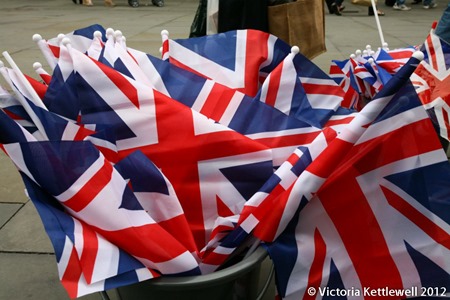
“I’m not English, I’m British!”

246569_235628086539929_1405104506_n

Image by Victoria Kettlewell

The collective identity of a nation is fragile and, perhaps, malleable. Yet, in times of war, crisis and sport, it is one that unites a massive population and allows us to set aside our political differences. The fact that we think and feel differently is forgotten in these circumstances and instead, to an extent, we are able to come together as if one person and stand shoulder-to-shoulder in agreement, before proceeding into some form of patriotic endeavour. Take, for example, our coalition government during the Second World War. But what is it about national identity that makes us feel so united?

With the impending referenda on Scottish Independence in 2014 and the UK’s relationship with the EU (if the Conservative party win the 2015 General Election), political parties will be relying on this national identity to drum up support for their yes or no campaigns. In Scotland, it will be a question of “are you more proud to be British or Scottish?” We only need to look to the recent protests in Northern Ireland to note how important the aspect of national identity is to the electorate. It would appear that any threat to national identity is also a threat to personal identity. It is embedded in our cultural, language and ethnic differences. National parties such as the Scottish National Party, Sinn Fein and Plaid Cymru are also beginning to grow in prevalence.

In 1918, Woodrow Wilson, then president of the United States of America, argued that the best way to stop war from taking hold again was to grant the right to self-determination and end the control over smaller nations by empires and colonial rulers. This allowed countries such as Poland to regain its independence and saw the creation of countries such as Czechslovakia that were based on the ethnic identity of those who would be living in the state. The idea was that each country would respect each other’s sovereign rights. Ironically, it would seem, this bred tension between states and led to dangerous delusions of cultural superiority that then delivered the beginnings of the Second World War.

Hence, when Blair granted devolution of powers to Scotland, Wales and Northern Ireland during his first premiership, the concept of national self-determination was not new. In fact, it was rather modest of him to use referenda as a way of deciding when, in the past, independence or devolution of power have been simply handed over or fought out in a bloody war. However, we have approached an era of consent that tends towards allowing citizens to decide their own fate on their national identity, rather than the Government or, in some cases, colonial ruler to do so for them.

However, a national identity can be considered a strange concept. And if it is to unite a nation, how well does it do that? After all, we are sure to see in the Scottish referendum that not all of the electorate will see themselves as “Scottish”, but some will see themselves as “British”, both implying different relationships with their Government. Perhaps this is why the West Lothian question has never furthered. Are we in a state where “English” people see themselves more as “British” than “English”?

But as globalisation takes hold of the world, surely the concept of national identity is weakened, as we can never truly be unified on common characteristics in a more multicultural society, only in rejecting certain products or practices from other states, which can be quite rare. Maybe I’m not “English”. Maybe I’m not “British”. Maybe I’m not “European”. Perhaps, I’m simply “Earthish”.

Wednesday, 16 January 2013

Prime Minister's Questions - 16th January

parliament6

A solemn start to the house as all parties paid tribute to military personnel and those involved in the day’s helicopter crash in London, sending wishes to their families. Debate swiftly moved on to the discussion of the UK’s position in Europe, a topic that dominated the day. Cameron stumbled over his words as he tried to defend the obvious split in the Tory party over the decision whilst Miliband attacked him for wanting to delay the decision for five years, creating uncertainty in Britain’s business sector. Ludicrously, the PM appeared to dodge a question from Labour on whether the country would remain signed up to the equal pay bill that makes it illegal to discriminate on pay. Cameron’s only consistent line of defense lay in that he wanted to propose a change to the EU and then get the British electorate’s consent on the manner and his tactic was solely on offense as defense, accusing the Labour party of creating the Governemnt’s problems at any opportunity. In response to the earlier helicopter crash, Cameron said it was very likely that regulations on flying through the increasing skyline of the city would be urgently reviewed.

Wednesday, 9 January 2013

Prime Minister’s Questions – 9th January

parliament6

Image by Victoria Kettlewell

Happy New Year wishes from the “nasty party” and the “little red pests” as the first Prime Minister’s Questions greeted us this week. The re-launch of the coalition appears to have reinvigorated Clegg as, sat on the front bench, his usual solemn-looking face was replaced with laughing and increased gestures. Miliband attacked the coalition for its lateness in publishing the audit, before proclaiming it would only highlight the Government’s broken promises on the NHS, sexual inequality and the tagline “we are all in this together”. Cameron failed to rebut the claims, only making different points about the policy areas, then stating that the five million pounds that goes to the Labour party does not guarantee any returns. One Member of Parliament asked of the Government’s intention to repeal the fox hunting ban to which Cameron ignored the question instead stating that the “only little red pests he pursues are in this house”. A referendum may seem impending after it was stated that the Government would seek public consent for any EU settlement that is reached. A backbench and, obviously, critical Conservative MP asked the PM whether he was politically closer to Lord Tebitt or Clegg and received the response that Cameron is, and always will be, closer to the Conservatives than any other. Strangely, the resignation of Conservative peers and the Northern Ireland violence didn’t get a look-in.

Saturday, 1 December 2012

Why Do We Deny Democracy to Our Prisoners?


prisoner votes_thumb[2]

Photo by Lee Thompson

Prisoner voting seems to be a bit of a taboo topic and when you pose the question to most people, the initial response is usually a firm “no”. But on application of the various democratic principles that the UK upholds, and some convincing arguments, it begins to get a little difficult to defend that response.

The discussion comes at a time when Parliament have voted against lifting the blanket ban on voting rights for prisoners, despite this being illegal as defined by the European Court of Human Rights (expect a longer dragged out court case, and some prisoners attempting to sue) and the UK is, again, one of few Western States to have a blanket ban. Legally, the UK only needs to allow a minority of prisoners to vote, perhaps those serving sentences for minor theft, to comply with the European legislation, but last month the House of Commons voted overwhelmingly against increasing any voting rights for prisoners, leaving them disenfranchised as a result.

Proclaimed one of the most democratic countries in the world, it seems a little preposterous that the UK does deny these rights to our own citizens, especially when countries which are often criticized for their human rights, such as China, only restrict this right on the most serious crimes (where the prisoners are sentenced for death or a life sentence). In Germany, the law even encourages prisons to promote voting to inmates.

I can describe the UK’s ban only as wrong. To deny any person the right to have their say in their leadership and the policies they have to live under when they leave prison is simply unfair. Perhaps I could understand the ban on prisoners who had been convicted for serious crimes, such as terrorism or serial murder, but even then I’d feel a bit concerned about taking away their democratic rights. After all, they may have been convicted of a crime that they may not have initially agreed should be designated a crime, for example, those convicted of drug offences. A broad section of society disagrees that the use of drugs for recreational use should be an offence at all. Using your vote is your way of having a say in what should be deemed right and wrong by society.

Furthermore, these prisoners may continue to pay tax whilst serving if they are part of the prison workshop scheme. Surely, those who contribute to the economy, should also have a say in how their money is distributed within society. Denying the prisoner the right to vote would take away this possibility.

The UK often criticise other countries for their record on human rights, especially with their denial of universal suffrage, but are we able to talk about these issues if we do it ourselves? The idea of a democracy is to allow the rule of the masses, allowing society to direct the way forward for themselves, but denying a section of society that privilege is denying the full prospects of democracy. If we are one of the most democratic nations in the world, then this is a sad story for those which aren’t deemed very democratic.

Monday, 26 November 2012

Why So Anti-Love?

Gay Marriage

Image by Guillaume Paumier

Laws differ across the world and the sentences awarded to those who break them differ even more. But the “crime of homosexuality” is perhaps one of the most controversial. As the UK and the US seem to have same-sex marriage on the agenda, countries like France and Uganda appear to be heading in the opposite direction.

Despite a Tory back-bench rebellion extremely likely, the overwhelming support for same-sex marriage in the Commons and Scottish Parliament will guarantee that it will pass into law and the rights for LGBT people in Great Britain will be massively increased and put on a par with heterosexual rights. But it’s questionable as to why society can be so divisive in the first place; after all, surely the concept of love is equal among all, so the accessibility to affirming that should be too. Anti-homosexuality simply doesn’t make sense.

Thus, recent events in France and Uganda seem utterly preposterous. Hollande, France’s President, is rightfully pushing through a bill through parliament that will allow both same-sex marriages and adoption for same-sex couples. Yet, despite this being one of Hollande’s key election policies, seventy thousand took to the streets of Paris in protest and one thousand mayors signed a position in opposition. Perhaps the most ludicrous of suggestions (also raised by Lord Carey, ex-Archbishop of Canterbury) is that same-sex marriage could lead to polygamy – obviously all gay people cheat and want to marry lots of people at the same time. Love between two people of the same sex isn’t equivalent to love between two people of opposite sexes – gays need a lot more to satisfy their desires. Ridiculous!

Meanwhile, in Uganda, the Speaker of Parliament has despicably announced the “Christmas gift” of passing anti-homosexuality legislation. Otherwise known in the media as the “Kill the Gays bill”, the bill allows for the death sentence for those who commit the crime of so-called “aggravated homosexuality” or life imprisonment simply for being homosexual. Hence, options for gays in Uganda are either to live a heterosexual life, to hide their homosexuality or to seek asylum in another country. I’m sure you’ll agree that none of these options would be particularly appealing to you – why should you have to adapt your life, and hide your inner emotions, in order to escape imprisonment or death?

At present, only eleven states in the world allow same-sex couples to legally marry. Ten European states have a constitutional ban on it altogether. Same-sex marriage legislation began to pass through legislatures in the early 2000s – hopefully we can see more of this in the years to come.

Saturday, 17 November 2012

Gasp! Shock! Horror!

pcc elections

Photo by Staffs Live on Flickr

Au contraire; perhaps more accurately descriptive words are “meh”, “so” or “duh” – the PCC elections were nothing different to what we expected. Low turnout, a high number of elected Independent candidates, and Liberal Democrats no longer showing as the third party, it’s not a surprise. Let’s go through it.

The Electoral Commission warned the Government of a predicted 18.5% turnout but (and here’s probably the biggest surprise of the day), it was even less than that at 15%. Some regions including my own, the West Midlands, which hosts the bustling population of Birmingham, boasted an incredibly low 12%. One ballot station in Newport received not one single ballot paper throughout the day – that was an easy count. With the lowest turnout at11.6% recorded in Staffordshire and the highest at 20% recorded in Northamptonshire simply demonstrates how apathetic the nation were towards these elections, and who can blame them? It was a disaster and simply shambolic.

30% of winning candidates were unaffiliated to political parties as part of their election campaigns. And again, this is no surprise. There was huge hostility towards the party politicisation of the police force so of course Independent candidates were going to thrive in these. And, in all honesty, well done to them! Aside from that, it’s perhaps not a surprise that Tories still managed to gain a simple majority of the positions (40%) despite their continually decreasing reputation. Why? Simply because this policy will be most popular with their party members, hence, their party members will probably make the bulk of voters. Other political party members will be ambivalent, not necessarily have a candidate fielded from their party or decide not to vote in protest.

UKIP have risen to the third party – well again, that’s not surprising for two reasons. Firstly, it’s difficult to argue that the Liberal Democrats have not lost all credibility they may have ever had, even to their own party members. I won’t dwell on this point. Secondly, the collapse of the Euro and the continuing use of our funds to bailout Eurozone countries is less than dissatisfactory to the electorate. The crisis is not one we can ignore, and our own financial difficulties are often blamed on this. So it’s no surprise that the electorate are increasingly supporting a party that wants to distance the UK from Europe as much as possible, and as the three main parties are not as committed to this cause, there is just the one party to turn to. UKIP are already the second largest party representing the UK in the European Parliament. Before long, the dissatisfied right-wing supporters of the Conservative party are sure to migrate to UKIP and increase their representation in the European Parliament in 2014, and perhaps the Commons in 2015.

So just one question remains; will the Government continue commencing this ridiculous policy, or will they reverse it? The elected PCCs begin their roles on Thursday; they will get paid between £65,000 and £100,000; this election cost over £75 million, and; the majority of them only have 7% of the complete electorate’s vote.

Of course, this Government will sit them out until 2016 – but will they continue after that? That’s something that could be a surprise.


Also published on Redbrick

Thursday, 1 November 2012

A Favourable Backbench Rebellion

SONY DSC

Image by Constantin Deaconescu

I’m surprising myself by agreeing with Tory MP for Rochester and Strood, Mark Reckless, whom I have most often found myself contemptuously disagreeing with in the past. Plus, there’s the fact that he’s just a Tory in his day job. Mark is a massive Eurosceptic and somehow manages to argue that every problem we face is in some way Europe’s fault. Yet, yesterday, he stood as a backbencher and voted in favour of a reduction in the funds we provide to Europe. This, I fundamentally agree with in these tough times.

As a country, we are fighting our way through horrific austerity measures and facing devastating and disgusting cuts to our frontline services, yet continue to provide consistent financial support to this international body. Whilst we suffer the effects of cuts, we continue to provide funding to other countries without even beginning to negotiate a slight reduction in respect of our own financial difficulties. This is a preposterous idea. When we are supporting our own citizens less and less each day, why should we continue to support citizens of other countries at the same rate as before?

Now, don’t get me wrong; I do not believe we should wholly withdraw all of our financial support to other countries, but I believe in a proportional cut alongside our other cuts. If something must be cut, it must be cut in line with everything else. We should not favour one thing over another thing, unless with it comes overwhelming benefits.

Hence, I find myself on the side of Labour and a local Tory (although a backbencher, mind you) and agreeing with this successful rebellion on the Government. This is the right step forward; it’s just a shame that this does not create a mandate, and that the Government could still ignore the parliamentary vote when they make their EU funding proposal. Let’s hope they listen to the slight majority and reduce the EU benefit and return some of that saved money to our frightful economy.