This website has moved!

Politically Me is no longer available here. To read James' blogs, please visit www.jphillips.eu

You will be automatically directed there shortly

Showing posts with label media. Show all posts

Wednesday, 13 November 2013

Harley Miller isn’t the only immigrant being deported

Photo by David McKelvey

There has been a certain furore on the internet over the deportation of a particular well-acclaimed Australian woman. 


With two masters degrees and her considerable input into our NHS system, it is understandable that people would get angry over the Border Agency’s demand for her to pack her bags and leave. Shared internationally via Facebook, her experience is rightly identified as an abomination, but why is it that this outcry is only deserving of a middle-class professional white woman?

There’s no denying that the situation that Harley Miller is facing is a horrible one to be put in: to suddenly receive a letter denying your application to stay in the UK after 9 years, to lose your job and to be told that you must leave within 28 days. However, the truth is that this happens to people on a far worse scale more often than we hear about it. Immigrants from across the world look to the UK for a better way of life, away from discrimination, from tyrannies and from war zones. Away from a failing economy, a tiny job market and poor standards of living. Put yourself in their shoes and I can guarantee you would want better than that.

The irony about those who oppose immigration is the complete contradiction they pose in their rhetoric. Individuals should strive towards personal success, using all the resources available to them to gain a better standard of life, say the Conservatives. The only thing holding people back is themselves, say the Conservatives. It’s their own fault that they’re living in impoverished conditions, say the Conservatives. Ignoring the fact that this is what most people do anyway, it appears that these same aspirations must not apply to immigrants. Most immigrants will come to the UK for a better standard of life, and who can blame them? Unfortunately for them, their better way of life involves constant xenophobia, fear of deportation and the additional role as a scapegoat. It’s a hard price to pay for a more comfortable life.

Yet, the media don’t write about these people being deported, and, thus, neither do the public hear about them. So when we get up-in-arms about Harley Miller’s deportation, step back and think of these poor immigrants who have are facing constant harassment and the fearful prospects that our international friends face daily.

Immigrants aren’t our enemies. Immigrants aren’t even something we should ‘tolerate’. Immigrants are human beings whom we should embrace. They bring multiculturalism to our country, they teach us of their culture, they bring us some new flavour to our lives. They provide us friends at university and at work, they provide business and they contribute to the tax system. Overall, immigrants provide more benefits to the UK than what they get back, and the papers (and the British as a result) don’t give them the credit or respect that they deserve. Regardless of where these people are from, they give the UK something we would never want to lose.

Luckily for Harley Miller, she’ll return to Australia with her two masters degrees and nine-years of medical experience in the NHS behind her. She’ll return to a tolerant and accepting country with no fear of persecution. The money she’ll earn from the sale of her house in the UK will allow her to instantly buy a new one in Australia. It’s a shame that’s not the case for most deported immigrants.

Wednesday, 6 November 2013

Last Night's Protest was More Than Fireworks at the Palace


It is far from the status quo, but anti-austerity protestors are beginning to find their feet in the world. 


Anonymous activists and supporters took to London and other cities across the world last night to demonstrate their increasing anger and frustration with the longstanding ruling elite. Among them was Russell Brand, recently announced a revolutionary, and Caroline Lucas. Green MP for Brighton.

Protestors took to central London last night smartly donning the mask inspired by Guy Fawkes beginning a Bonfire to Austerity (literally) on Westminster Bridge. Their protest was one of many over recent years that aims to highlight the corruption of mainstream politics, the disgusting destruction of the environment and the malice of the banking industry. These are the people that Russell Brand gave an increased public voice for last week in his widely watched interview with Jeremy Paxman on Newsnight.

These are incredibly important points; as dissatisfaction with politics continue, and people become more apathetic with the three untrustworthy options they are presented with, an alternative is necessary: a revolution. Now, perhaps we’re not talking about a full-scale French-Revolutionesque enactment, but we are talking about, as Brand put it, a ‘revolution of consciousness’ where people become vastly more aware of the atrocities and unethical attitudes of the government acting in their name. This is what will get us real change, whether this be through a new political party like the Greens, or through a new form of political control and governance it does not matter.  Unfortunately, this wanted effect on our consciousness and thought is difficult when those who most shape it are those who seek to retain the current power structures – the media – who are cozied up in the beds of the powerful.

Anti-austerity and anti-government protesters are stuck in a terribly biased situation. The media will want to run negative piece after negative piece and the Government of the day will simply ignore such arguments. When the opposition, who so profoundly announce support for their aims (like taxing the rich more heavily and imposing more regulation on the banking industry), gains Governmental control, still nothing will change. And while the population tacitly grants its support by voting in an election, nothing will change. A minority force like Anonymous is powerless by itself, but has no major player on their side.

It comes as no surprise that the right-wing media focus on the slightly more obstructive and violent methods adopted by a minority of protestors last night, hence detracting from the real message intended. The Daily Mail leads with ‘Funnyman-turned-activist joins protestors as they aim fireworks at Buckingham Palace’, for example. The media sets out to shut down minorities, and to dissuade against anything that challenges what is the status quo. One would like to think that this is regardless of newspapers, but this is shockingly, and sadly, untrue.

Now, certainly, the danger involved in setting off a firework in a very crowded space and towards a residential building makes the act ridiculous here. But we must remember that behind every method there is a genuine message: here it is that we must stop propping up our Monarchy using public funds when people are dying in the streets with no money, no home and no support.

Last night’s protest in London, and across the globe, was historic for the sheer number of anti-government protestors that assembled for it. Adorning the face of Guy Fawkes, protestors associated themselves with a force for change and challenging the establishment. Their next task is to rid themselves of those who dirty their image through violence and start recruiting more members of the public.

Monday, 24 June 2013

The Illiberal Reaction of the US Government to Snowden

 Edward Snowden Protest
Image by Michael Fleshman

The revelations surrounding the National Security Agency (NSA) in the United States and the Global Communication Headquarters (GCHQ) in the United Kingdom show the disturbing penetration into people’s private lives that two of the “most liberal” Governments claim the authority for. It’s been nearly three weeks since The Guardian published the information that they had received from ex-CIA employee, Edward Snowden, much in the same way as information previously provided by WikiLeaks. This case continues to demonstrate the immense difficulties and dangers presented to those few whistle-blowers.

Positively, in this case, Snowden was well aware of the consequences of his actions and prepared his line of escape, flying to Hong Kong and taking temporary refuge there. Yet, it is a dismal state of affairs that a man should seek political asylum from such a “liberal” nation for something that amounts to accountability of a tax-paid scheme. The mass surveillance programs used by the NSA were not voted for by the US citizenship and do not solely pervade the home country, but also reaches out across the world in their attempts to spy on people and their governments. Now, I’m not saying that the US Government is the worst for invading privacy, but the secret nature of these operations make them ten times worse. At least in the countries that are renowned for their lack of privacy, they are renowned for it; you know what you’re getting there. Within the US, it was a different story; it was another case of the US deciding that liberty needed to be sacrificed in the name of security, without consulting their citizens on the issue.

Snowden faces three charges from the US Government: theft of government property, unauthorised communication of national defence information, and wilful communication of classified intelligence with an unauthorised person. It is easy to take issue with each of these charges. Firstly, the US Government works for US citizens, is paid for by US citizens and is elected by US citizens, so everything it creates and receives should surely be the property of US citizens. Surely the charge here then is synonymous with “theft of public property” or “theft of civilian property”. But, Snowden is a US civilian, and he can’t steal from himself and he’s not inhibiting others’ access to it – in fact, he’s making it more accessible – so can this charge be applied. I’d argue not, but this is most certainly not a view that the US Government or, perhaps, the courts will agree on. The other two charges follow on from this point; the Government were not authorised to intrude on people’s lives by those who have the authorisation – the public – so how was Snowden supposed to get authorisation from the public to communicate the Government’s secret work? Now, you may disagree with the fact that this information and operation does indeed belong to the US citizens but there remains a case for Government accountability and a warrant for the public to know what their Government is doing in their name.

The continued reaction by the US Government only serves to deepen the frustration and anger with the administration. In their desperation to shut Snowden’s mouth, gag him and take him away to Guantanamo Bay, they are making outlandish demands on the international community; not to harbour him, or to let him travel, unless it is back to the US. With joy, many countries have ignored this command from the self-proclaimed President of the World, as Hong Kong, Russia, Ecuador and Cuba rally behind Snowden. The US’ hope that they could get away with unilaterally enforcing security in the world has failed. They are deepening the cut by continuing their hostility, secrets and heavy-handedness.

Let us join in with the international solidarity for Edward Snowden who has performed an incredible and brave action that he should most certainly not be persecuted for.

Friday, 19 April 2013

Disaster Strikes Again


This week has been ridden with disasters and terrorism - the Boston explosions and today's gunfight, the explosion at the Texas fertiliser plant, the ricin-laced letters sent to a US senator and Barack Obama, and the earthquake in Iran. Unfortunately, they are the harsh reminders of what a fearsome world we live in. We should not be subject to such worries yet, on a daily basis, many are; anti-terrorism legislation, constant presence of surveillance devices and security announcements on public transport serve to remind us.

This week’s Boston bombings are a horrible event for the hundreds of thousands citizens to endure. Twice this week, ordinary people have been warned to not leave their homes and been left stranded with a continual threat of death, disaster and destruction to their relatively peaceful lives. Causes for celebration became crime scenes and, as is far too common in the United States, a place where people go to learn, became a place where people should avoid for their own safety. It is not a situation that anybody should have to experience.

Hence, it is ludicrous that people should use such time to promote their political message. As support and solidarity was expressed from people across the world, others took the opportunity to attack the media for their coverage of the events in contrast to the coverage of other equally-important events. On Twitter, there were messages along the lines of “the media are forgetting that people die in Iraq, Afghanistan and Syria everyday”. But this is a sad argument. Yes, it is true that people do die in these sorry situations, but there is no reason to devalue the deaths and injuries of those affected in other crises. 


Indeed, media coverage of events in war-struck zones is not as high as it should be and there are areas of the world that the media do prioritise over others. This is wrong and this is unfair, but the death of anyone is a highly important event. It is important to provide coverage to any distressing events, but to capitalise on the coverage of one act of terrorism to protest the lack of coverage of another is disrespectful.


The world is a truly dangerous place in which to live. Damage is done to individuals and their environment almost constantly, and the right coverage is never given, and equal coverage will never be possible. We are experiencing a period of complete upheaval of our beliefs and faiths and this is not something that should be ignored. We should not tolerate any threat to life, but to use one horrific event to protest about another is simply petty. Save it for another day.

Monday, 10 December 2012

The Discourse of Terrorism

Terrorism

Image by 9/11 photos

“Terrorist” and “terrorism” are politically motivated words, interchangeable with “clinically insane”, “religious extremists” or “(ideology)-ists”. The Northern Irish Loyalists are causing bomb alerts, and acting in violent manners, and have for many decades, in order to fight against any attempt any change to their nation. Yet, they are called “paramilitaries”, when their aim can, sometimes, to create mass destruction and terror, the very characteristics that make a definition of a terrorist. By definition, Guy Fawkes was a terrorist. By definition, Breivik was a terrorist. By definition, any of those high school and university massacrists in the United States are terrorists. Note, however, how the media changes their portrayal of these people.

Breivik, a far-right Christian, initiated his attacks against the Norweigan Labour Party in order to bring attention to his views of islamophobia, Zionism, anti-feminism, anti-multiculturalism and apartheid. He killed 77 people via bombs and shootings to further his political causes. He stood in court and pleaded guilty. He committed acts of terrorism and whilst the media may use the word terrorism, it appears sly and almost invisible amongst the other adjectives on the page; the media called him a “mass killer” with an “extremist ideology” who committed “acts of political violence” (reported the BBC), while the Telegraph called him a Christian fundamentalist with certain “political traits”. The latter had no mention of “terrorism”.

Meanwhile, the shootings at a Batman screening in the United States earlier this year were carried out by a “former neuroscience student” turned “gunman”, reported the BBC. Don’t the media make him sound a much more innocent person than he was? In fact, some media reports made it sound as if we should pity him – after all, he was probably suffering from some form of mental illness and we shouldn’t take it personally.

In contrast, no member of society would argue that Al-Qaeda are not terrorists. So what makes them different? It seems improbable that we could name anyone of a western nation as a terrorist; after all, their underlying ideals are right – perhaps they have the right religion – they have simply gone insane. Maybe they didn’t receive enough support from their country. Poor them. They were driven to this by, most likely, a chain of distressing events in their life.

Al-Qaeda – how dare they? Those religious extremists will stop at nothing to destroy our civilised western nations. Somebody needs to teach them a lesson – perhaps we should send in our armies for 10 years – maybe longer? That should sort it. We’ll teach them what a good nation looks like. Say hello to democracy via an authoritarian and coercive means – that’s what democracy is all about. The west is best.

Something is wrong here. Language is overly important, and really shapes how we think. The more the media and our leaders associate one word with one image, the more we are to reject any alternative, yet true, images. As Wittgenstein said, “the limits of my language mean the limits of my world” after all.

Wednesday, 28 November 2012

Prime Minister’s Questions – 28th November

parliament

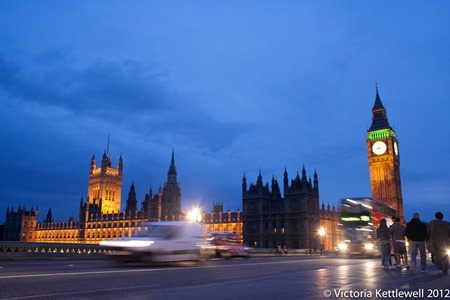
Image by Victoria Kettlewell

The economy was on the tips of everyone’s tongues in the Commons this week (but when isn’t it?). After the initial expected tributes to those involved in flooding rescue and clean up operations, the Commons immediately descended into the brawl between Cameron and Miliband, both blowing their own trumpets about their economic policies. Miliband continued to rely on quoting Cameron’s words and twisting them to his advantage when questioning Cameron’s Work Programme as the “biggest and boldest programme since the great depression” to which Cameron reeled off, at a pace most couldn’t keep up with, a horde of statistics about why his policy was good and Labour’s previous policies were not. Quoting 700,000 people in work as a result of the programme, Cameron was left susceptible to criticisms from Miliband that only 2% of those on the programme were in sustainable jobs (although it was quickly pointed out that Miliband’s math didn’t quite work out). The infamous “calm down” jeer was called from the Labour benches as Cameron tried to defend his policies with a flustered face and glances to his ministerial colleagues for support. Questions were also asked about the results of the Leveson inquiry, but Cameron continuously evaded them only saying that we need a strong and robust independent regulatory service for our media.


Also published on Redbrick

Monday, 26 November 2012

Why So Anti-Love?

Gay Marriage

Image by Guillaume Paumier

Laws differ across the world and the sentences awarded to those who break them differ even more. But the “crime of homosexuality” is perhaps one of the most controversial. As the UK and the US seem to have same-sex marriage on the agenda, countries like France and Uganda appear to be heading in the opposite direction.

Despite a Tory back-bench rebellion extremely likely, the overwhelming support for same-sex marriage in the Commons and Scottish Parliament will guarantee that it will pass into law and the rights for LGBT people in Great Britain will be massively increased and put on a par with heterosexual rights. But it’s questionable as to why society can be so divisive in the first place; after all, surely the concept of love is equal among all, so the accessibility to affirming that should be too. Anti-homosexuality simply doesn’t make sense.

Thus, recent events in France and Uganda seem utterly preposterous. Hollande, France’s President, is rightfully pushing through a bill through parliament that will allow both same-sex marriages and adoption for same-sex couples. Yet, despite this being one of Hollande’s key election policies, seventy thousand took to the streets of Paris in protest and one thousand mayors signed a position in opposition. Perhaps the most ludicrous of suggestions (also raised by Lord Carey, ex-Archbishop of Canterbury) is that same-sex marriage could lead to polygamy – obviously all gay people cheat and want to marry lots of people at the same time. Love between two people of the same sex isn’t equivalent to love between two people of opposite sexes – gays need a lot more to satisfy their desires. Ridiculous!

Meanwhile, in Uganda, the Speaker of Parliament has despicably announced the “Christmas gift” of passing anti-homosexuality legislation. Otherwise known in the media as the “Kill the Gays bill”, the bill allows for the death sentence for those who commit the crime of so-called “aggravated homosexuality” or life imprisonment simply for being homosexual. Hence, options for gays in Uganda are either to live a heterosexual life, to hide their homosexuality or to seek asylum in another country. I’m sure you’ll agree that none of these options would be particularly appealing to you – why should you have to adapt your life, and hide your inner emotions, in order to escape imprisonment or death?

At present, only eleven states in the world allow same-sex couples to legally marry. Ten European states have a constitutional ban on it altogether. Same-sex marriage legislation began to pass through legislatures in the early 2000s – hopefully we can see more of this in the years to come.

Thursday, 15 November 2012

Using Rockets as Diplomacy

gaza-israel

Photo by dombook11 on Flickr

At what point did the use of dangerous weaponry become diplomacy? It’s only distressing that the military fire and air raids from both sides of the Israeli-Palestine conflict is the chosen way forward, causing unnecessary civilian casualties from arbitrary attacks on mix and match locations. War simply isn’t necessary nor acceptable, and full retaliation is never the first form of response, regardless of the provocation; that’s what diplomacy is for. But that’s the only ceasefire we’ve seen.

The Israeli-Palestine conflict has, in some form, been occurring since the earliest 20th century. Maybe that makes it understandable as to why violence is always the first call of duty, but at what point, and why, did they give up on the much more passive diplomatic route? And what seems most absurd to me is that this is essentially a religious conflict! Surely the ultimate method for peacekeeping is anti-war in essence? This conflict poses so many questions that simply should not be questions.

Whether you are pro-Israel or pro-Gaza, it is agreeable that murder, torture and loss of innocent lives is the least desirable of all options available there? And we definitely don’t want to escalate this into a major war with international intervention. The actions of Israel and Gaza are not acceptable; too many lives have already been lost, and no more blood should be shed.

And yet I can’t help but notice the media’s portrayal of the crisis. Almost one-sided, yesterday, the BBC news page had a tiny article on the attack on Gaza and the death of the Hamas leader, yet today, there was breaking news as Gaza responded. A huge lack of neutrality. If we don’t take a neutral stand, there will forever be bias, and hatred over one of the sides. If there’s hatred, there’s less likely to be peaceful resolutions. It seems self-perpetuating.

Aside from this, UK officials met today to discuss the Syria crisis also and the appropriate action to take, perhaps a stepping stone towards military intervention to bring the year and a half long conflict to an end. Understandably, UN resolutions and agreed ceasefires have ended, but it’s still not right to send in the army. I know there will be many arguments as to why we should intervene; the view point that are many innocent lives at risk and being lost that should be defended. Yet, that resolution would still involve some dying, and the prioritisation of some lives over others is not a justification for me. There’s got to be a better alternative, but the world is so apparently trigger-happy, we haven’t found it yet.

Perhaps the saddest part for me is that the turmoil in our country is political and economic, yet in many places across the world there is the tragic loss of life due to a militant attitude. If only we lived in a universal society where the former was the highest complaint anyone made.

Answer me one question; why is the nature of humans to fight?

Friday, 2 November 2012

The Caribbean Crisis

haiti

Image by IOM Haiti on Flickr

With the digital age taking hold, and people being able to find out everything they need to know on a particular topic after a search on Google and a couple of extra clicks, you’d think that it would be nigh on impossible to miss big news, no matter where in the world you were. Unfortunately not, it would seem, as the aftermath of Hurricane/Superstorm Sandy shows us just exactly what the media wants us to know.

Lesser is it known that  en-route to the United States, Sandy also hit the Caribbean countries of Haiti, Cuba, Jamaica, Puerto Rico, the Bahamas and the Dominican Republic, causing massive destruction to lands already ridden with poverty and homelessness and still trying to recover from previous bouts of natural disaster over a year ago. These countries are in a sorry state, but the media seems to think that nobody cares. This is despicable, surely you’d agree. Yes, 80 people and counting have died in the United States, but on Wednesday, 71 had also died in the Caribbean as a simple result of the hurricane. Month-long states of emergency have been declared – people who had nothing now have less. But we get to hear about people who think they had nothing complain about their car being flooded and not being able to get to work and having to go through the annoying process of insurance claims and never being able to get anything back.

What if you had nothing anyway? And then the ground on which you slept became a swamp or a sea of water. Regardless, the mainstream media focuses on our brothers and sisters in the United States, who, of course, are far worse hit.

However, not all media reports are ignoring this other side of the crisis. Channel 4 News presents an excellent report on the unreported devastation of Hurricane Sandy:

Video courtesy of Channel 4

I’m not saying that the United States weren’t hit bad, and that they don’t need support and help and companionship through this difficult time. And I’m not calling everyone ignorant, or even blinded, I’m just saying that we need to look further than our mainstream media websites and television channels to get the full picture. Humans are malleable; you will believe what you are told unless you have sufficient reason to think otherwise. The media industry is clever and manipulates its messages to get you thinking a particular way. And it’s even something we’re aware of but do nothing about. Perhaps it's something we should start working on.

Thursday, 25 October 2012

Don't Be Fooled - We're Not There Yet


Today, the news that the UK had finally shown economical growth of 1% and, hence, exited a recession was announced. It is pleasing news to the country, and the Government and the media are spinning into brilliance; yet I am sceptical. Now I know I'm not an economist but I can offer a short outsider's perspective on this item. I offer caution and definitely think it's no time for celebration yet.

First, and foremost, we must recognise that the quarter that has shown growth encompassed the Olympic period. The mixture of tourism, hospitality and sporting fever practically guaranteed that there would be no financial downturn over the three months from July to September; there were millions of people touring the city of London, an expensive place to be on the quietest of the day, and heightened prices (particularly within the Olympic park itself) for the events will more than definitely have seen a rise in profits amongst the companies. But, this is a onetime event; the aftermath of the Olympics is already over. In fact, if you're like me, I'd not thought about the Olympics at all for a while until this announcement. Despite the fact that it's only been announced that 0.2% of that is from the Olympic tickets, I'm sure the majority of this income is from the Olympics and it's not something that will be repeated. So don't hold your breath for massive growth in the next quarter.

Next, the Government is still announcing and planning further and further cuts that will have huge impacts on the incomes and budgets of households across the country. Hence, there will be little money to spend. People's bank accounts are already squeezed enough as it is without having to deal with a reduction in funding. With no internationals and no sporting events on, people will not spend anything other than on the basics, especially whilst having to save for Christmas.

And that's the final point. We are unlikely to see an immediate drop in growth next quarter, as Christmas will undoubtedly have some increased spending (on those tight budgets) that will cause some small amount of growth. But this will all cause a feeling of false hope; the Government and the media will spin it to say it's a good thing and something to congratulate the Government on, but in reality, they have done little. The Olympic project was set up under the Labour Government; this, plus the spending, was not a result of their policies, but the result of international and national patriotism and celebration.

I warn you, we will be back in a recession before long - unless, by chance, this happens to be the kick up the backside that the economy needs.