This website has moved!

Politically Me is no longer available here. To read James' blogs, please visit www.jphillips.eu

You will be automatically directed there shortly

Showing posts with label politics. Show all posts

Monday, 10 December 2012

The Discourse of Terrorism

Terrorism

Image by 9/11 photos

“Terrorist” and “terrorism” are politically motivated words, interchangeable with “clinically insane”, “religious extremists” or “(ideology)-ists”. The Northern Irish Loyalists are causing bomb alerts, and acting in violent manners, and have for many decades, in order to fight against any attempt any change to their nation. Yet, they are called “paramilitaries”, when their aim can, sometimes, to create mass destruction and terror, the very characteristics that make a definition of a terrorist. By definition, Guy Fawkes was a terrorist. By definition, Breivik was a terrorist. By definition, any of those high school and university massacrists in the United States are terrorists. Note, however, how the media changes their portrayal of these people.

Breivik, a far-right Christian, initiated his attacks against the Norweigan Labour Party in order to bring attention to his views of islamophobia, Zionism, anti-feminism, anti-multiculturalism and apartheid. He killed 77 people via bombs and shootings to further his political causes. He stood in court and pleaded guilty. He committed acts of terrorism and whilst the media may use the word terrorism, it appears sly and almost invisible amongst the other adjectives on the page; the media called him a “mass killer” with an “extremist ideology” who committed “acts of political violence” (reported the BBC), while the Telegraph called him a Christian fundamentalist with certain “political traits”. The latter had no mention of “terrorism”.

Meanwhile, the shootings at a Batman screening in the United States earlier this year were carried out by a “former neuroscience student” turned “gunman”, reported the BBC. Don’t the media make him sound a much more innocent person than he was? In fact, some media reports made it sound as if we should pity him – after all, he was probably suffering from some form of mental illness and we shouldn’t take it personally.

In contrast, no member of society would argue that Al-Qaeda are not terrorists. So what makes them different? It seems improbable that we could name anyone of a western nation as a terrorist; after all, their underlying ideals are right – perhaps they have the right religion – they have simply gone insane. Maybe they didn’t receive enough support from their country. Poor them. They were driven to this by, most likely, a chain of distressing events in their life.

Al-Qaeda – how dare they? Those religious extremists will stop at nothing to destroy our civilised western nations. Somebody needs to teach them a lesson – perhaps we should send in our armies for 10 years – maybe longer? That should sort it. We’ll teach them what a good nation looks like. Say hello to democracy via an authoritarian and coercive means – that’s what democracy is all about. The west is best.

Something is wrong here. Language is overly important, and really shapes how we think. The more the media and our leaders associate one word with one image, the more we are to reject any alternative, yet true, images. As Wittgenstein said, “the limits of my language mean the limits of my world” after all.

Sunday, 2 December 2012

The Political Compass


political compass

I recently decided to retake the Political Compass test, having previously found it a useful and more accurate tool to find out where on the political spectrum I am situated and, hence, to find the party whom I would most likely be more political aligned to. It came as no surprise that the closest party to me was the Green Party as before – being the only non-nationalist UK party in the bottom-left quartile, it wasn’t hard to see. Perhaps what I found most surprising was that I have moved a little to the right since my last test – I can’t speculate as to what may have caused this and I don’t think I want to; these are my views, and this is an accurate representation of them, so I shall leave them be, and retake the test in March and see what it says then. If you’ve not been on this website before, it’s a good basis to finding out who you should be voting for in the General Elections rather than simply basing it on the leader’s charisma.

My figures stand at:

  • Economically 4.62 to the left;
  • Socially 7.9 towards libertarian.

I’d be interested to hear what everyone else’s are, so if you’ve taken the test, post your most recent results, and if not, take it and post the results. I was once told that for those who have taken this test before, or based the test on politicians as they’ve grown older, that most move towards the right and towards authoritarian; in all honesty, I hope this doesn’t happen to me. So it would be interesting to see how others matched on the chart and whether this is reflected in reality.

Also, if you’re particularly interested in making sure you decide on the basis of your ideologies, I’d recommend a website called Vote for Policies – the website is a little out of date, but uses the 2010 general election manifestos of the 6 main UK parties and asks you to choose which you most agree with. At the end of the test, it tells you which party you most agreed with. Again, I found myself with the vast majority of Green Party policies. Perhaps if everyone used these tools and voted on the basis of the results, we’d have a much more interesting General Election. Couple that with a proportionally representative voting system, and it would be even more interesting. But that’s far off and very unlikely.

Saturday, 1 December 2012

Why Do We Deny Democracy to Our Prisoners?


prisoner votes_thumb[2]

Photo by Lee Thompson

Prisoner voting seems to be a bit of a taboo topic and when you pose the question to most people, the initial response is usually a firm “no”. But on application of the various democratic principles that the UK upholds, and some convincing arguments, it begins to get a little difficult to defend that response.

The discussion comes at a time when Parliament have voted against lifting the blanket ban on voting rights for prisoners, despite this being illegal as defined by the European Court of Human Rights (expect a longer dragged out court case, and some prisoners attempting to sue) and the UK is, again, one of few Western States to have a blanket ban. Legally, the UK only needs to allow a minority of prisoners to vote, perhaps those serving sentences for minor theft, to comply with the European legislation, but last month the House of Commons voted overwhelmingly against increasing any voting rights for prisoners, leaving them disenfranchised as a result.

Proclaimed one of the most democratic countries in the world, it seems a little preposterous that the UK does deny these rights to our own citizens, especially when countries which are often criticized for their human rights, such as China, only restrict this right on the most serious crimes (where the prisoners are sentenced for death or a life sentence). In Germany, the law even encourages prisons to promote voting to inmates.

I can describe the UK’s ban only as wrong. To deny any person the right to have their say in their leadership and the policies they have to live under when they leave prison is simply unfair. Perhaps I could understand the ban on prisoners who had been convicted for serious crimes, such as terrorism or serial murder, but even then I’d feel a bit concerned about taking away their democratic rights. After all, they may have been convicted of a crime that they may not have initially agreed should be designated a crime, for example, those convicted of drug offences. A broad section of society disagrees that the use of drugs for recreational use should be an offence at all. Using your vote is your way of having a say in what should be deemed right and wrong by society.

Furthermore, these prisoners may continue to pay tax whilst serving if they are part of the prison workshop scheme. Surely, those who contribute to the economy, should also have a say in how their money is distributed within society. Denying the prisoner the right to vote would take away this possibility.

The UK often criticise other countries for their record on human rights, especially with their denial of universal suffrage, but are we able to talk about these issues if we do it ourselves? The idea of a democracy is to allow the rule of the masses, allowing society to direct the way forward for themselves, but denying a section of society that privilege is denying the full prospects of democracy. If we are one of the most democratic nations in the world, then this is a sad story for those which aren’t deemed very democratic.

Wednesday, 28 November 2012

Prime Minister’s Questions – 28th November

parliament

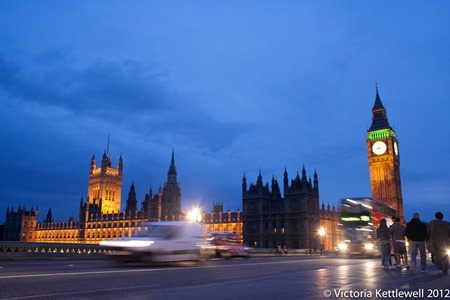
Image by Victoria Kettlewell

The economy was on the tips of everyone’s tongues in the Commons this week (but when isn’t it?). After the initial expected tributes to those involved in flooding rescue and clean up operations, the Commons immediately descended into the brawl between Cameron and Miliband, both blowing their own trumpets about their economic policies. Miliband continued to rely on quoting Cameron’s words and twisting them to his advantage when questioning Cameron’s Work Programme as the “biggest and boldest programme since the great depression” to which Cameron reeled off, at a pace most couldn’t keep up with, a horde of statistics about why his policy was good and Labour’s previous policies were not. Quoting 700,000 people in work as a result of the programme, Cameron was left susceptible to criticisms from Miliband that only 2% of those on the programme were in sustainable jobs (although it was quickly pointed out that Miliband’s math didn’t quite work out). The infamous “calm down” jeer was called from the Labour benches as Cameron tried to defend his policies with a flustered face and glances to his ministerial colleagues for support. Questions were also asked about the results of the Leveson inquiry, but Cameron continuously evaded them only saying that we need a strong and robust independent regulatory service for our media.


Also published on Redbrick

Monday, 26 November 2012

Why So Anti-Love?

Gay Marriage

Image by Guillaume Paumier

Laws differ across the world and the sentences awarded to those who break them differ even more. But the “crime of homosexuality” is perhaps one of the most controversial. As the UK and the US seem to have same-sex marriage on the agenda, countries like France and Uganda appear to be heading in the opposite direction.

Despite a Tory back-bench rebellion extremely likely, the overwhelming support for same-sex marriage in the Commons and Scottish Parliament will guarantee that it will pass into law and the rights for LGBT people in Great Britain will be massively increased and put on a par with heterosexual rights. But it’s questionable as to why society can be so divisive in the first place; after all, surely the concept of love is equal among all, so the accessibility to affirming that should be too. Anti-homosexuality simply doesn’t make sense.

Thus, recent events in France and Uganda seem utterly preposterous. Hollande, France’s President, is rightfully pushing through a bill through parliament that will allow both same-sex marriages and adoption for same-sex couples. Yet, despite this being one of Hollande’s key election policies, seventy thousand took to the streets of Paris in protest and one thousand mayors signed a position in opposition. Perhaps the most ludicrous of suggestions (also raised by Lord Carey, ex-Archbishop of Canterbury) is that same-sex marriage could lead to polygamy – obviously all gay people cheat and want to marry lots of people at the same time. Love between two people of the same sex isn’t equivalent to love between two people of opposite sexes – gays need a lot more to satisfy their desires. Ridiculous!

Meanwhile, in Uganda, the Speaker of Parliament has despicably announced the “Christmas gift” of passing anti-homosexuality legislation. Otherwise known in the media as the “Kill the Gays bill”, the bill allows for the death sentence for those who commit the crime of so-called “aggravated homosexuality” or life imprisonment simply for being homosexual. Hence, options for gays in Uganda are either to live a heterosexual life, to hide their homosexuality or to seek asylum in another country. I’m sure you’ll agree that none of these options would be particularly appealing to you – why should you have to adapt your life, and hide your inner emotions, in order to escape imprisonment or death?

At present, only eleven states in the world allow same-sex couples to legally marry. Ten European states have a constitutional ban on it altogether. Same-sex marriage legislation began to pass through legislatures in the early 2000s – hopefully we can see more of this in the years to come.

Saturday, 17 November 2012

Gasp! Shock! Horror!

pcc elections

Photo by Staffs Live on Flickr

Au contraire; perhaps more accurately descriptive words are “meh”, “so” or “duh” – the PCC elections were nothing different to what we expected. Low turnout, a high number of elected Independent candidates, and Liberal Democrats no longer showing as the third party, it’s not a surprise. Let’s go through it.

The Electoral Commission warned the Government of a predicted 18.5% turnout but (and here’s probably the biggest surprise of the day), it was even less than that at 15%. Some regions including my own, the West Midlands, which hosts the bustling population of Birmingham, boasted an incredibly low 12%. One ballot station in Newport received not one single ballot paper throughout the day – that was an easy count. With the lowest turnout at11.6% recorded in Staffordshire and the highest at 20% recorded in Northamptonshire simply demonstrates how apathetic the nation were towards these elections, and who can blame them? It was a disaster and simply shambolic.

30% of winning candidates were unaffiliated to political parties as part of their election campaigns. And again, this is no surprise. There was huge hostility towards the party politicisation of the police force so of course Independent candidates were going to thrive in these. And, in all honesty, well done to them! Aside from that, it’s perhaps not a surprise that Tories still managed to gain a simple majority of the positions (40%) despite their continually decreasing reputation. Why? Simply because this policy will be most popular with their party members, hence, their party members will probably make the bulk of voters. Other political party members will be ambivalent, not necessarily have a candidate fielded from their party or decide not to vote in protest.

UKIP have risen to the third party – well again, that’s not surprising for two reasons. Firstly, it’s difficult to argue that the Liberal Democrats have not lost all credibility they may have ever had, even to their own party members. I won’t dwell on this point. Secondly, the collapse of the Euro and the continuing use of our funds to bailout Eurozone countries is less than dissatisfactory to the electorate. The crisis is not one we can ignore, and our own financial difficulties are often blamed on this. So it’s no surprise that the electorate are increasingly supporting a party that wants to distance the UK from Europe as much as possible, and as the three main parties are not as committed to this cause, there is just the one party to turn to. UKIP are already the second largest party representing the UK in the European Parliament. Before long, the dissatisfied right-wing supporters of the Conservative party are sure to migrate to UKIP and increase their representation in the European Parliament in 2014, and perhaps the Commons in 2015.

So just one question remains; will the Government continue commencing this ridiculous policy, or will they reverse it? The elected PCCs begin their roles on Thursday; they will get paid between £65,000 and £100,000; this election cost over £75 million, and; the majority of them only have 7% of the complete electorate’s vote.

Of course, this Government will sit them out until 2016 – but will they continue after that? That’s something that could be a surprise.


Also published on Redbrick

Thursday, 15 November 2012

Using Rockets as Diplomacy

gaza-israel

Photo by dombook11 on Flickr

At what point did the use of dangerous weaponry become diplomacy? It’s only distressing that the military fire and air raids from both sides of the Israeli-Palestine conflict is the chosen way forward, causing unnecessary civilian casualties from arbitrary attacks on mix and match locations. War simply isn’t necessary nor acceptable, and full retaliation is never the first form of response, regardless of the provocation; that’s what diplomacy is for. But that’s the only ceasefire we’ve seen.

The Israeli-Palestine conflict has, in some form, been occurring since the earliest 20th century. Maybe that makes it understandable as to why violence is always the first call of duty, but at what point, and why, did they give up on the much more passive diplomatic route? And what seems most absurd to me is that this is essentially a religious conflict! Surely the ultimate method for peacekeeping is anti-war in essence? This conflict poses so many questions that simply should not be questions.

Whether you are pro-Israel or pro-Gaza, it is agreeable that murder, torture and loss of innocent lives is the least desirable of all options available there? And we definitely don’t want to escalate this into a major war with international intervention. The actions of Israel and Gaza are not acceptable; too many lives have already been lost, and no more blood should be shed.

And yet I can’t help but notice the media’s portrayal of the crisis. Almost one-sided, yesterday, the BBC news page had a tiny article on the attack on Gaza and the death of the Hamas leader, yet today, there was breaking news as Gaza responded. A huge lack of neutrality. If we don’t take a neutral stand, there will forever be bias, and hatred over one of the sides. If there’s hatred, there’s less likely to be peaceful resolutions. It seems self-perpetuating.

Aside from this, UK officials met today to discuss the Syria crisis also and the appropriate action to take, perhaps a stepping stone towards military intervention to bring the year and a half long conflict to an end. Understandably, UN resolutions and agreed ceasefires have ended, but it’s still not right to send in the army. I know there will be many arguments as to why we should intervene; the view point that are many innocent lives at risk and being lost that should be defended. Yet, that resolution would still involve some dying, and the prioritisation of some lives over others is not a justification for me. There’s got to be a better alternative, but the world is so apparently trigger-happy, we haven’t found it yet.

Perhaps the saddest part for me is that the turmoil in our country is political and economic, yet in many places across the world there is the tragic loss of life due to a militant attitude. If only we lived in a universal society where the former was the highest complaint anyone made.

Answer me one question; why is the nature of humans to fight?

Sunday, 11 November 2012

Choosing a Leader

5758106479_cf4ca592f3

Image by Cabinet Office on Flickr

It’s a funny thing choosing a leader for your country and essentially choosing someone to place your trust in to for a prolonged amount of time, with no real ability to recall your vote. It’s a big decision we must make, and most often one people end up regretting by the time the chosen one has finished dismantling the hard work that someone else has put in.

In the wake of Obama’s victory and re-election in the United States, it’s a little overlooked that we are now halfway through our Condemned Government (of course, unless by some stroke of luck, Parliament is closed) and that means we can officially count the days until we are certain their mandate will end. That wonderful time at which we can hold Clegg and Cameron to account and completely humiliate them with what will probably be a resounding Labour win is now closer than the time we voted them in (although this is arguable in itself.) The end is nearer than the beginning, although not exactly nigh yet.

It’s no secret that all of the parties are already planning their election campaigns for 2015, deciding who will lead their campaigns and what their manifestos and key policies will be, making predictions for what will happen over the next few years and be high on the agenda in 2015, so I’m going to make some of my own:

  • Nick Clegg will be replaced as leader by Vince Cable either for the election or as a result of the election
  • The PCC elections will show to have little support and little turnout and the decision will be reversed or reduced
  • The Labour Party will not have tuition fees as a key policy or will only reduce fees by a small amount
  • UKIP and the Green Party will see a small rise in support
  • Labour will win an overwhelming majority, but still not match Blair’s 2001 majority. Lib Dems will lose a large number of seats and Nick Clegg will not win the Sheffield seat.
  • The UK will enter another recession in 2013.
  • Another European country using the Euro will collapse.
  • There will be further military intervention in the Middle East, Syria or the Faulklands.

Some may seem far-fetched, and some might seem plain obvious. I think all of these are highly possible, but let’s see how the next two and a half years pan out, shall we?

Monday, 5 November 2012

Quit Badgering Me

badger
It’s not a good year for farmers. With exceedingly wet conditions (even for British records) crop harvests are at a low and fruit and veg prices are at a high. Beekeepers are reporting a 72% drop in harvested honey and bees are on the life-support equipment that is sugar syrup. So you can understand their anger with the execution of 26,000 cattle after they were infected with Bovine TB from urine and faeces last year.
It’s only common sense that there would be some suggestions on how to tackle the problem then, and of course, a conflict of opinion. We either vaccinate the badger population or cull them. Treatment or murder? Life or death? The Government has opted to provide a pilot project of culling, drawing in cross-spectrum criticism whilst regional Wildlife Trusts will pilot a vaccination scheme. Gloucestershire and Somerset will play host to the 6-week cull trial, whereas Shropshire and Cheshire will pilot vaccinating. I’m certain there’s an obvious better option of the two.
Humanely, there is little defence of a culling scheme, a process which simply involves hunting wild badgers and shooting them indiscriminately. Expected to cost the taxpayer around £100,000 a year, the process is supposed to use less time and resources than a previous vaccination scheme which still resulted in £500m being spent to control the disease over the last 10 years. So, it is plausible that the cull proposal would be massively beneficial to farmers’ livestock and the taxpayer alike.
But is this an argument of quality or quantity? Why do people buy organic foods in the supermarket? Is it hypocritical to be using these ethical food sources whilst supporting the cruel act of a cull of another species?
Of course vaccination has its own costs and complications, but surely that’s something you would sacrifice and admit and then get on with it, for the sake of both cattle and badger? And surely life itself is invaluable – we shouldn’t underestimate that. Besides, experts argue that the cull which actually increase the chances of TB being transferred from badger to cattle, that it will cost more in the long run, it’s inhumane and that there is no concrete proof that the TB is always directly transferred from badger to cattle, rather than cattle to cattle.
I hope that this pilot project proves unsuccessful and ultimately costly, or better, that they decide to cancel it and continue on the vaccination program. After all, Scotland never culled their badger population and they were declared TB free in September 2009, so we can certainly achieve that same result.


Thursday, 1 November 2012

A Favourable Backbench Rebellion

SONY DSC

Image by Constantin Deaconescu

I’m surprising myself by agreeing with Tory MP for Rochester and Strood, Mark Reckless, whom I have most often found myself contemptuously disagreeing with in the past. Plus, there’s the fact that he’s just a Tory in his day job. Mark is a massive Eurosceptic and somehow manages to argue that every problem we face is in some way Europe’s fault. Yet, yesterday, he stood as a backbencher and voted in favour of a reduction in the funds we provide to Europe. This, I fundamentally agree with in these tough times.

As a country, we are fighting our way through horrific austerity measures and facing devastating and disgusting cuts to our frontline services, yet continue to provide consistent financial support to this international body. Whilst we suffer the effects of cuts, we continue to provide funding to other countries without even beginning to negotiate a slight reduction in respect of our own financial difficulties. This is a preposterous idea. When we are supporting our own citizens less and less each day, why should we continue to support citizens of other countries at the same rate as before?

Now, don’t get me wrong; I do not believe we should wholly withdraw all of our financial support to other countries, but I believe in a proportional cut alongside our other cuts. If something must be cut, it must be cut in line with everything else. We should not favour one thing over another thing, unless with it comes overwhelming benefits.

Hence, I find myself on the side of Labour and a local Tory (although a backbencher, mind you) and agreeing with this successful rebellion on the Government. This is the right step forward; it’s just a shame that this does not create a mandate, and that the Government could still ignore the parliamentary vote when they make their EU funding proposal. Let’s hope they listen to the slight majority and reduce the EU benefit and return some of that saved money to our frightful economy.

Sunday, 28 October 2012

Why the PCC Elections are a bit of a Farce!

PCC

Image from UKHomeOffice on Flickr

Like me, you should have received your polling card through your letterbox this week – and if you didn't,  why aren't you registered to vote? It might even be your first opportunity to vote in a national election. But if you're not someone who follows politics or current affairs very closely, you were probably confused by what it was for or discarded it as yet another takeaway menu – but what you held in your hands was another place marker in history that this Government has created.

You might have seen the rather menacing and, indeed, graphic awareness advert that has recently been released (you know, the one where the man gets beaten up on this bus, and the bus shelter gets smashed up). If not, here it is - try not to get too upset:

It’s probably the first and last you’ll hear of it, however – with the exception of this post. The Electoral Reform Society is expecting only 18.5% of the possible voting population to actually turnout at their local polling station; this is compared to 65% in the 2010 general election. And commentators are largely blaming the lack of publicity about both the elections and the candidates. Nominations for candidates, who are usually put forward by political parties, closed only this week, meaning that voters cannot yet find out about the candidates even if they wanted to.

But why is it all so important? Well, basically, you need to decide which politician you want to spend £65,000 to £100,000 to tell police officers to stop people committing crime. OK, maybe not so cynical… although, despite our regular condemnations of their service, I don’t think employing forty-one of these Police and Crime Commissioners is going to make the service any better than it already is.

And even so, isn’t it possible that each candidate, like all politicians, will be looking to find the “popular” crimes? And, by that, I don’t mean ones that criminals like committing, but those that most people are concerned about or the victims of. For example, littering, anti-social behaviour and drunkenness; perhaps neglecting the more serious and damaging crimes of serial theft and rape. (Again, cynical me…)

Perhaps this new initiative is just a way of allowing the Government, and politicians, to stick their oar into a part of society they haven’t yet got full control over yet. Now the legislation is through parliament, though, there is little we can do to stop it; and the fact that it was (and still is) little reported in the media means that the majority of society won’t even have their say.

Sceptical as I am, I can’t stress enough the importance of making sure you vote in this election though. If you want to make sure you have a say on what the Brum police get up to, grab your polling card and go to your local polling station on November 15th. And definitely make sure you check out the details of the candidates on www.choosemypcc.org.uk from October 26th.

Don’t forget and don’t miss out.

Also on Redbrick: http://www.redbrick.me/2012/10/pcc-elections-a-farce/

Thursday, 25 October 2012

Don't Be Fooled - We're Not There Yet


Today, the news that the UK had finally shown economical growth of 1% and, hence, exited a recession was announced. It is pleasing news to the country, and the Government and the media are spinning into brilliance; yet I am sceptical. Now I know I'm not an economist but I can offer a short outsider's perspective on this item. I offer caution and definitely think it's no time for celebration yet.

First, and foremost, we must recognise that the quarter that has shown growth encompassed the Olympic period. The mixture of tourism, hospitality and sporting fever practically guaranteed that there would be no financial downturn over the three months from July to September; there were millions of people touring the city of London, an expensive place to be on the quietest of the day, and heightened prices (particularly within the Olympic park itself) for the events will more than definitely have seen a rise in profits amongst the companies. But, this is a onetime event; the aftermath of the Olympics is already over. In fact, if you're like me, I'd not thought about the Olympics at all for a while until this announcement. Despite the fact that it's only been announced that 0.2% of that is from the Olympic tickets, I'm sure the majority of this income is from the Olympics and it's not something that will be repeated. So don't hold your breath for massive growth in the next quarter.

Next, the Government is still announcing and planning further and further cuts that will have huge impacts on the incomes and budgets of households across the country. Hence, there will be little money to spend. People's bank accounts are already squeezed enough as it is without having to deal with a reduction in funding. With no internationals and no sporting events on, people will not spend anything other than on the basics, especially whilst having to save for Christmas.

And that's the final point. We are unlikely to see an immediate drop in growth next quarter, as Christmas will undoubtedly have some increased spending (on those tight budgets) that will cause some small amount of growth. But this will all cause a feeling of false hope; the Government and the media will spin it to say it's a good thing and something to congratulate the Government on, but in reality, they have done little. The Olympic project was set up under the Labour Government; this, plus the spending, was not a result of their policies, but the result of international and national patriotism and celebration.

I warn you, we will be back in a recession before long - unless, by chance, this happens to be the kick up the backside that the economy needs.

Friday, 19 October 2012

Tories Not Welcome in Birmingham


With no aim but to express anger, frustration and dissatisfaction, the protest outside the Tory conference on Sunday had a resounding message; the Tories were not welcome in Birmingham. If the public had their way (which they rarely do), the Tories would have hosted their conference as far away from the ICC as possible.

Crying out with the crowds, it was more than obvious to me that the atmosphere was one of genuine rage. Across both the public and private sectors, the cuts are hitting hard; their consequences deep and far-reaching. From railway workers, to fire-fighters, to lecturers at our University, there was cross-spectrum resistance to the Tory presence. And, despite police officers being unable to protest along with us by law, the liaison officers were sympathetic to our cause. “Birmingham Grannies against the Cuts” were a particular favourite group of mine; not least because it shows that Government policies are spanning generations and the most vulnerable are, despicably, getting the rough end of the stick whilst the most fortunate are cut more and more slack.

Students, including NUS officers Vicki Baars and Aaron Kiely, also lined the ranks, demonstrating against raised tuition fees and continuing further and higher education cuts. Asked why they were demonstrating, Mathematics student, Ollie Jones said they were “angry” with the cuts that the Tory party were making in Government, particularly in opposition to changes to the NHS.

Vicki Baars, NUS Vice President for Union Development hit the spot when she tweeted, “at the rally against #cpc12, the Conservative led government has tripled Tuition Fees, introduced FE fee’s for over 24’s… Let’s defend edu!”
Inspiring speeches were given by general secretaries from public sector unions including the UCU, RMT and Unite. Christine Blower, general secretary for NUT, addressed the crowds “there is a will to privatise our education” and cited that one in five young people can’t find a job, while Bob Crow, RMT, called for re-nationalisation of the railways.

Yet, the protest was disappointing; in spite of a supposed five thousand attendees, it felt quiet and too jovial, and both the march and the rally were over in two and a half hours. Once it had finished, it had finished. It was by far lacking the passion of previous protests. Whilst timid voices shouted for a tax on the rich, the one percent, Cameron stood, unscathed and with security for protection, that his Government would not be introducing a mansion tax. Once again, our demands were ignored.

Fortunately, I can confidently say that the upcoming protests by the TUC and the NUS in London will be much more impactful. If #demo2012 is anything like the student protests of 2010, we will see fifty thousand take on Westminster and show this shambles of a Government that we will not just sit back and take what they throw at us. For ourselves, and future generations, we will say “no more”.


Thursday, 2 August 2012

What's next for Syria?

The Syrian crisis continues to worsen and any improvement to the situation seems an all too distant possibility. The announcement of the UN's special envoy to Syria, Kofi Annan's resignation from the role highlights the difficulty of the task; and aside from that, revelations from Obama's administration and talks between Russia's Putin and David Cameron  clearly demonstrate the absolute lack of international unity.

But what is the real heart of the problem? Is it a lack of unity between all members of the United Nations, with China and Russia vetoing any proposed action on Assad's regime, or is it the fact that neither the regime or the 'rebels' are adhering to the six-point plan that Annan attempted to implement? Every side blames the other, so no clarity is apparent. Regardless, the crisis is infuriating, and despite it's similarities to the Libyan uprising last year, it is also very different. Cynics might say it's to do with oil, others to say with key alliances; either way, there are civilians being killed left, right and centre here, and it's not something that should occur no matter the situation.

The situation is vastly different to Libya for a number of reasons; essentially, the sides of the oppositions and the length of time this conflict has spanned define the sensitivity of the situation. Comparatively, Libya appeared to have an almost everyone-against-Gaddafi situation, where the majority of citizens were in favour of his deposition, whereas within Syria, there is an obvious divide of opinion, and to favour one side over another would be to ignore the rights and opinions of a large sector of society, regardless of what the rest of the country and, indeed, the world thinks. Secondly, the conflict in Libya lasted only a couple of months before there was international intervention, whereas this conflict has lasted over a year now. The common opinion now is that Syria is militarised; citizens are used to conflict and there is danger for any person within the country. To arm the citizens would not simply result in the overthrow of the Government, but rather in the massacre of a vast number of citizens who disagree with the most armed side. These two points put us in a very difficult situation.

What's the correct way forward? I'm no expert on international relations, and I would hate to advocate war in any form, but it's obvious that some kind of action needs to be taken to depose Assad, or the country needs to be sorted and split, like with Sudan. But first, diplomacy needs to ensure that there is peaceful transition and implementation of whatever strategy is agreed upon. Unfortunately, diplomacy appears to be the first hurdle that cannot be overcome, forcing Annan's resignation today. And Obama appears to have decided that also, signing the document for approval in helping the rebels a few months ago, in a covert operation, just falling short of agreeing to arm them. We are yet to see the backlash on this, and a resolution that China and Russia agree appears too distant.

The strangest part of the situation; Syria have still been able to enter a team into the London 2012 Olympics, and they are competing alongside international athletes peacefully. How can a country that is killing its own citizens be able to peacefully enter an international sports competition is beyond me, but apparently it's possible.