Showing posts with label polling. Show all posts
Showing posts with label polling. Show all posts
Monday, 26 August 2013
Don’t Make Box-Ticking Mandatory
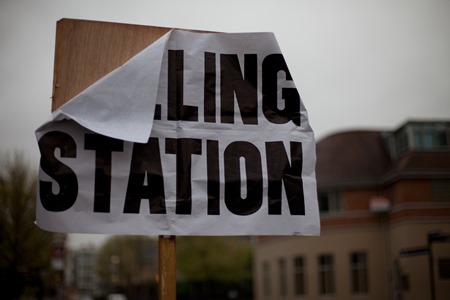
The Institute for Public Policy Research has recommended that voting is made compulsory for first-time voters, but they have seriously overlooked the point of voting.
The UK is most certainly experiencing a democratic deficit, from low voter turnouts, distrust in politicians and a lack of everyday political engagement and, therefore, it is a problem that must be addressed.
As the body that seeks to promote democratic participation, the institute reports that compelling first-time voters to place their ballot would have a wide range of benefits, ranging from forging a life-long habit of voting to ensuring that political parties pay more attention to the young vote. The options on the ballot would include each candidate in the area and an option to not place a ballot.
However, the proposal by the thinktank seriously undermines one of the core concepts of a democracy – choice. Although the thinktank provides an option for young people to place their vote, the idea that they must attend the ballot station and tick a box, or face a fine, is completely at odds with the definition of a democracy. And even if this policy were implemented, you may as well go the full mile and extend the compulsion to all members of the electorate; everyone has views after all.
To compel young people to vote would be to create a false politics, with an inaccurate measurement of political participation. What the thinktank does understand well is the need for politics to appeal to young people and that is the approach that should be taken. It’s been said over and over again that political parties need to speak to young people, perhaps even before they begin to vote, rather than just wait for when they have the power to make a difference. But as young people live their lives so differently to the majority of the electorate, with different living, employment and financial arrangements, the majority of political decisions lay in relation to a future not yet completely comprehended by many young people. Issues such as tuition fees, the Educational Maintenance Allowance and same-sex marriage can appeal to young people, whereas others such as pension reform and care home standards bear no relevance yet.
A mixture of a lower age of participation and better political education will do a far better job at increasing political participation than this proposal. Allowing people to engage at an earlier age can create a habit as much as compelling them to do so. But this will only work if politicians make politics relevant and exciting to young people, making them understand that decisions made now can have an effect on their later life even at such an early stage. And it also relies largely on their close family and friends who may display complete dissatisfaction with politics – older members of families in particular may pass on negative views about the political system to the younger generation and their lack of a habit to vote may make voting seem an abnormal or worthless thing to do.
Furthermore, it’s no question of a doubt that the majority of the things we are forced to do are the least enjoyable. Why add politics to that mix? Politics should not be something that people are made to do, but something that people want to do. Forcing people to vote is more likely to push people away from politics, than be a ‘nudge in the right direction’. A democracy is about consensual participation, not mandatory box-ticking once a year.
You can show your opinion in a poll at the Guardian, but that’s your choice.
Also published on Redbrick and Backbench
Saturday, 1 December 2012
Why Do We Deny Democracy to Our Prisoners?
![prisoner votes_thumb[2]](https://blogger.googleusercontent.com/img/b/R29vZ2xl/AVvXsEhT_5bgMxuctjLokEzxGES8gLP5AhyphenhyphenSkgINPBxB6eDYUoBFG1ce-Wnzo9U3ohSFG3jmBE5_3uSyuVoTPewjy1zu1QQn1pWhbMjAcU6OQtcZUky4t6ZK1no_fwZLy_j3O2ssD6D33XSFkgg/?imgmax=800 "prisoner votes_thumb[2]")
Prisoner voting seems to be a bit of a taboo topic and when you pose the question to most people, the initial response is usually a firm “no”. But on application of the various democratic principles that the UK upholds, and some convincing arguments, it begins to get a little difficult to defend that response.
The discussion comes at a time when Parliament have voted against lifting the blanket ban on voting rights for prisoners, despite this being illegal as defined by the European Court of Human Rights (expect a longer dragged out court case, and some prisoners attempting to sue) and the UK is, again, one of few Western States to have a blanket ban. Legally, the UK only needs to allow a minority of prisoners to vote, perhaps those serving sentences for minor theft, to comply with the European legislation, but last month the House of Commons voted overwhelmingly against increasing any voting rights for prisoners, leaving them disenfranchised as a result.
Proclaimed one of the most democratic countries in the world, it seems a little preposterous that the UK does deny these rights to our own citizens, especially when countries which are often criticized for their human rights, such as China, only restrict this right on the most serious crimes (where the prisoners are sentenced for death or a life sentence). In Germany, the law even encourages prisons to promote voting to inmates.
I can describe the UK’s ban only as wrong. To deny any person the right to have their say in their leadership and the policies they have to live under when they leave prison is simply unfair. Perhaps I could understand the ban on prisoners who had been convicted for serious crimes, such as terrorism or serial murder, but even then I’d feel a bit concerned about taking away their democratic rights. After all, they may have been convicted of a crime that they may not have initially agreed should be designated a crime, for example, those convicted of drug offences. A broad section of society disagrees that the use of drugs for recreational use should be an offence at all. Using your vote is your way of having a say in what should be deemed right and wrong by society.
Furthermore, these prisoners may continue to pay tax whilst serving if they are part of the prison workshop scheme. Surely, those who contribute to the economy, should also have a say in how their money is distributed within society. Denying the prisoner the right to vote would take away this possibility.
The UK often criticise other countries for their record on human rights, especially with their denial of universal suffrage, but are we able to talk about these issues if we do it ourselves? The idea of a democracy is to allow the rule of the masses, allowing society to direct the way forward for themselves, but denying a section of society that privilege is denying the full prospects of democracy. If we are one of the most democratic nations in the world, then this is a sad story for those which aren’t deemed very democratic.
Sunday, 11 November 2012
Choosing a Leader

Image by Cabinet Office on Flickr
It’s a funny thing choosing a leader for your country and essentially choosing someone to place your trust in to for a prolonged amount of time, with no real ability to recall your vote. It’s a big decision we must make, and most often one people end up regretting by the time the chosen one has finished dismantling the hard work that someone else has put in.
In the wake of Obama’s victory and re-election in the United States, it’s a little overlooked that we are now halfway through our Condemned Government (of course, unless by some stroke of luck, Parliament is closed) and that means we can officially count the days until we are certain their mandate will end. That wonderful time at which we can hold Clegg and Cameron to account and completely humiliate them with what will probably be a resounding Labour win is now closer than the time we voted them in (although this is arguable in itself.) The end is nearer than the beginning, although not exactly nigh yet.
It’s no secret that all of the parties are already planning their election campaigns for 2015, deciding who will lead their campaigns and what their manifestos and key policies will be, making predictions for what will happen over the next few years and be high on the agenda in 2015, so I’m going to make some of my own:
- Nick Clegg will be replaced as leader by Vince Cable either for the election or as a result of the election
- The PCC elections will show to have little support and little turnout and the decision will be reversed or reduced
- The Labour Party will not have tuition fees as a key policy or will only reduce fees by a small amount
- UKIP and the Green Party will see a small rise in support
- Labour will win an overwhelming majority, but still not match Blair’s 2001 majority. Lib Dems will lose a large number of seats and Nick Clegg will not win the Sheffield seat.
- The UK will enter another recession in 2013.
- Another European country using the Euro will collapse.
- There will be further military intervention in the Middle East, Syria or the Faulklands.
Some may seem far-fetched, and some might seem plain obvious. I think all of these are highly possible, but let’s see how the next two and a half years pan out, shall we?
Sunday, 28 October 2012
Why the PCC Elections are a bit of a Farce!

Image from UKHomeOffice on Flickr
Like me, you should have received your polling card through your letterbox this week – and if you didn't, why aren't you registered to vote? It might even be your first opportunity to vote in a national election. But if you're not someone who follows politics or current affairs very closely, you were probably confused by what it was for or discarded it as yet another takeaway menu – but what you held in your hands was another place marker in history that this Government has created.
You might have seen the rather menacing and, indeed, graphic awareness advert that has recently been released (you know, the one where the man gets beaten up on this bus, and the bus shelter gets smashed up). If not, here it is - try not to get too upset:
It’s probably the first and last you’ll hear of it, however – with the exception of this post. The Electoral Reform Society is expecting only 18.5% of the possible voting population to actually turnout at their local polling station; this is compared to 65% in the 2010 general election. And commentators are largely blaming the lack of publicity about both the elections and the candidates. Nominations for candidates, who are usually put forward by political parties, closed only this week, meaning that voters cannot yet find out about the candidates even if they wanted to.
But why is it all so important? Well, basically, you need to decide which politician you want to spend £65,000 to £100,000 to tell police officers to stop people committing crime. OK, maybe not so cynical… although, despite our regular condemnations of their service, I don’t think employing forty-one of these Police and Crime Commissioners is going to make the service any better than it already is.
And even so, isn’t it possible that each candidate, like all politicians, will be looking to find the “popular” crimes? And, by that, I don’t mean ones that criminals like committing, but those that most people are concerned about or the victims of. For example, littering, anti-social behaviour and drunkenness; perhaps neglecting the more serious and damaging crimes of serial theft and rape. (Again, cynical me…)
Perhaps this new initiative is just a way of allowing the Government, and politicians, to stick their oar into a part of society they haven’t yet got full control over yet. Now the legislation is through parliament, though, there is little we can do to stop it; and the fact that it was (and still is) little reported in the media means that the majority of society won’t even have their say.
Sceptical as I am, I can’t stress enough the importance of making sure you vote in this election though. If you want to make sure you have a say on what the Brum police get up to, grab your polling card and go to your local polling station on November 15th. And definitely make sure you check out the details of the candidates on www.choosemypcc.org.uk from October 26th.
Don’t forget and don’t miss out.
Also on Redbrick: http://www.redbrick.me/2012/10/pcc-elections-a-farce/
Subscribe to:
Comments (Atom)