Sunday, 7 July 2013
British, Scottish and a Great Sportsman
Wednesday, 23 January 2013
Prime Minister’s Questions – 23rd January
As Nick Robinson predicted, Prime Minister’s Questions was dominated by “the defining questions of the general election and the next five years” as all parties clashed over the topic of Europe after Cameron’s most crucial speech in her premiership. The question of which direction Cameron would be campaigning in favour of was carefully dodged over and over again as Miliband attacked his uncertainty. This uncertainty, Labour argued, would affect our economy, our businesses and our international relations. Attacked by his own party, Cameron was forced to defend himself against the jeers of backbenchers and the opposition with his line that he would want to stay in a renegotiated Europe. Turning the question on Miliband, Cameron coerced Labour into rejecting that they want a referendum. Meanwhile, a Scottish Member of Parliament ridiculed Cameron for saying that the two-year time frame for the Scottish referendum was too long whilst giving a five-year time frame for a referendum on Europe. Cameron retorted with a remark that implied the Scottish National Party were stupid for thinking of leaving the United Kingdom without even attempting negotiations. However, although Cameron’s remarks were stronger than Milibands, his continued resistance to his backbench Eurosceptics, the Labour party and the rising force of UKIP suggests that his position on Europe will not be as concrete as he might like it to be.
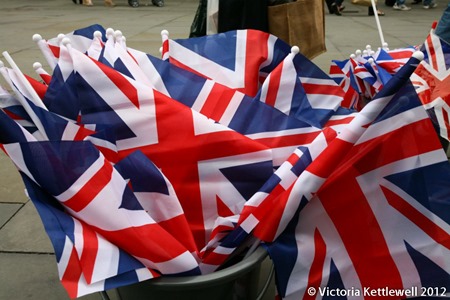
“I’m not English, I’m British!”
The collective identity of a nation is fragile and, perhaps, malleable. Yet, in times of war, crisis and sport, it is one that unites a massive population and allows us to set aside our political differences. The fact that we think and feel differently is forgotten in these circumstances and instead, to an extent, we are able to come together as if one person and stand shoulder-to-shoulder in agreement, before proceeding into some form of patriotic endeavour. Take, for example, our coalition government during the Second World War. But what is it about national identity that makes us feel so united?
With the impending referenda on Scottish Independence in 2014 and the UK’s relationship with the EU (if the Conservative party win the 2015 General Election), political parties will be relying on this national identity to drum up support for their yes or no campaigns. In Scotland, it will be a question of “are you more proud to be British or Scottish?” We only need to look to the recent protests in Northern Ireland to note how important the aspect of national identity is to the electorate. It would appear that any threat to national identity is also a threat to personal identity. It is embedded in our cultural, language and ethnic differences. National parties such as the Scottish National Party, Sinn Fein and Plaid Cymru are also beginning to grow in prevalence.
In 1918, Woodrow Wilson, then president of the United States of America, argued that the best way to stop war from taking hold again was to grant the right to self-determination and end the control over smaller nations by empires and colonial rulers. This allowed countries such as Poland to regain its independence and saw the creation of countries such as Czechslovakia that were based on the ethnic identity of those who would be living in the state. The idea was that each country would respect each other’s sovereign rights. Ironically, it would seem, this bred tension between states and led to dangerous delusions of cultural superiority that then delivered the beginnings of the Second World War.
Hence, when Blair granted devolution of powers to Scotland, Wales and Northern Ireland during his first premiership, the concept of national self-determination was not new. In fact, it was rather modest of him to use referenda as a way of deciding when, in the past, independence or devolution of power have been simply handed over or fought out in a bloody war. However, we have approached an era of consent that tends towards allowing citizens to decide their own fate on their national identity, rather than the Government or, in some cases, colonial ruler to do so for them.
However, a national identity can be considered a strange concept. And if it is to unite a nation, how well does it do that? After all, we are sure to see in the Scottish referendum that not all of the electorate will see themselves as “Scottish”, but some will see themselves as “British”, both implying different relationships with their Government. Perhaps this is why the West Lothian question has never furthered. Are we in a state where “English” people see themselves more as “British” than “English”?
But as globalisation takes hold of the world, surely the concept of national identity is weakened, as we can never truly be unified on common characteristics in a more multicultural society, only in rejecting certain products or practices from other states, which can be quite rare. Maybe I’m not “English”. Maybe I’m not “British”. Maybe I’m not “European”. Perhaps, I’m simply “Earthish”.
Wednesday, 12 December 2012
Prime Minister’s Questions – 12th December
The house just couldn’t keep quiet this week and with that came a feeling of having returned to a classroom of schoolboys. Even our infamous Speaker couldn’t get the house to shut up, so there was a constant jeering, perhaps more annoying than the vuvuzelas of the 2010 Football World Cup. Cameron and Miliband referred to each other as bullies and there certainly was some use of catchphrases. Red-faced Cameron was asked if he had “wrecked a restaurant recently” whilst confidence-lacking Miliband had his shadow chancellor attacked as a bully who couldn’t take it in return. It was an elongated and highly repetitive argument of welfare cuts and deficit reduction over welfare increase and increased borrowing. Where Cameron tried to take a Robin Hood angle, Miliband shot him down, stating that the Tory donors stamped their feet and got what they wanted. Cameron shortly replied that if it weren’t for the Labour donors, Miliband wouldn’t be in his position. Neither side won – there was just simply bulldozing of either side’s policies. Other MPs ravaged the PM with questions on the “snooper’s charter” saying the Government would do more spying than their media friends in Wapping, whilst others showed off their historical expertise in asking whether the Government were going to repeal the Magna Carta of 1297. Scottish MPs showed off and asked whether the Government would be copying them in their successes, whereas Northern Irish MPs asked the PM to condemn the violence in Belfast. Wales was quiet this week.