Friday, 30 August 2013
The UK wants to stay away from bombs, not give 'succour' to Assad
Monday, 26 August 2013
Don’t Make Box-Ticking Mandatory
The Institute for Public Policy Research has recommended that voting is made compulsory for first-time voters, but they have seriously overlooked the point of voting.
The UK is most certainly experiencing a democratic deficit, from low voter turnouts, distrust in politicians and a lack of everyday political engagement and, therefore, it is a problem that must be addressed.
As the body that seeks to promote democratic participation, the institute reports that compelling first-time voters to place their ballot would have a wide range of benefits, ranging from forging a life-long habit of voting to ensuring that political parties pay more attention to the young vote. The options on the ballot would include each candidate in the area and an option to not place a ballot.
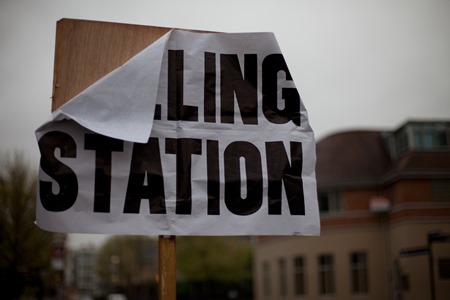
However, the proposal by the thinktank seriously undermines one of the core concepts of a democracy – choice. Although the thinktank provides an option for young people to place their vote, the idea that they must attend the ballot station and tick a box, or face a fine, is completely at odds with the definition of a democracy. And even if this policy were implemented, you may as well go the full mile and extend the compulsion to all members of the electorate; everyone has views after all.
To compel young people to vote would be to create a false politics, with an inaccurate measurement of political participation. What the thinktank does understand well is the need for politics to appeal to young people and that is the approach that should be taken. It’s been said over and over again that political parties need to speak to young people, perhaps even before they begin to vote, rather than just wait for when they have the power to make a difference. But as young people live their lives so differently to the majority of the electorate, with different living, employment and financial arrangements, the majority of political decisions lay in relation to a future not yet completely comprehended by many young people. Issues such as tuition fees, the Educational Maintenance Allowance and same-sex marriage can appeal to young people, whereas others such as pension reform and care home standards bear no relevance yet.
A mixture of a lower age of participation and better political education will do a far better job at increasing political participation than this proposal. Allowing people to engage at an earlier age can create a habit as much as compelling them to do so. But this will only work if politicians make politics relevant and exciting to young people, making them understand that decisions made now can have an effect on their later life even at such an early stage. And it also relies largely on their close family and friends who may display complete dissatisfaction with politics – older members of families in particular may pass on negative views about the political system to the younger generation and their lack of a habit to vote may make voting seem an abnormal or worthless thing to do.
Furthermore, it’s no question of a doubt that the majority of the things we are forced to do are the least enjoyable. Why add politics to that mix? Politics should not be something that people are made to do, but something that people want to do. Forcing people to vote is more likely to push people away from politics, than be a ‘nudge in the right direction’. A democracy is about consensual participation, not mandatory box-ticking once a year.
You can show your opinion in a poll at the Guardian, but that’s your choice.
Also published on Redbrick and Backbench
Friday, 5 July 2013
Remembering Thatcher
Furthermore, although not a direct decision of the Palace of Westminster but the Bank of England, there is a view to remove Elizabeth Fry from the five pound note and replace her with the Conservative Prime Minister, Winston Churchill. However, as the only female (excepting Her Majesty) remaining on UK currency, there is a large campaign to increase the number of women remembered on our banknotes. Again, we are presented with the proposals to replace Elizabeth Fry with dear old Maggie. There are most certainly other women we can be proud of and owe more of today’s rights and luxuries too. We have Florence Nightingale, the social reformer and founder of modern nursing, Emmeline Pankhurst, the leader of the suffragette movement, and Emily Davison, the suffragette who died fighting for women’s rights to vote, who are all deserving of a celebration of their contributions to Britain’s rights and freedoms. They draw respect and inspire many across the political spectrum and across the world that Thatcher does not share; they lived their lives to further the women’s cause in a way that Thatcher denounced; and, they formed a pillar of society alike to those that Thatcher wished to destroy.
Despite her undeniable changes to the country, Thatcher is far less deserving of the privileges currently being discussed to be given posthumously than others who lived before her. As a controversial character, she inspires both joy and hatred in citizens across the country and, indeed, world. There are most definitely other more unifying and celebratory historical figures who are worthy of the luxuries that are being granted to our former Prime Minister, whom we should ensure we consider.
Wednesday, 12 June 2013
Examinations; the Be All and End All?
Yesterday’s announcement by the Government is demonstrable of the belief in the importance of statistics that is held by the commanding body of Parliament. Entirely focused on the results and the value of qualifications, the new reforms proposed by Michael Gove neglect the wider reasons for the education system. Due to come into practice in 2015, the massive changes to GCSEs involve removing coursework, creating one-single exam at the end of the course and changing the grading system from letters (A* to U) to numbers (1 to 8). Aside from this, is a change in the curriculum to focus more on British produce and history; to me, an obvious attempt, to beam beliefs of British superiority into students’ minds, yet it will only make us look uneducated and ignorant to the international community.
Firstly, underlying these changes is the constant narrative that current GCSEs are just too easy – hence, if you fail, you’re an idiot. Why? Well, the inclusion of coursework makes them even easier, so that should be removed. Coursework’s “uncontrolled” nature, prolonged construction period and detailed feedback and help from lecturers makes them simple to pass. Also, I don’t quite understand the change in how GCSEs are graded will make any difference only in that it will devalue any “old-style” letter-graded GCSEs with new number-graded GCSEs being seen as more stringent, tough and valuable and, hence, those with high-grades in the new-style GCSEs are more likely to be seen favourably. Even if we were to accept the premise that old-style GCSEs aren’t hard enough and were easy to pass, it isn’t my fault that I was a student during that system, and why should I have to pay for that?
However, these reforms completely overlook the wider and more positive consequences of our education system. Coursework is vital for many people to help develop their written, independent and research skills that are so important in later life; after all, how often are you likely to be subject to a short examination (memory test) in the general workplace, instead of using these written or other practical skills. I’m sure most companies would find much more value in asking you to write a report, do some research, or apply your practical skills to a task, rather than to sit down in silence for a prolonged amount of time and write an extended response to an overly specific question or statement with no consultation. Removing coursework in favour of single examinations ignores this fact, and makes it much harder for individuals to develop these vital skills. In addition to this, to allow only a single examination in each subject (with those who re-sit looked down upon) will inevitably allow the system to fail those who make one mistake. Everyone makes mistakes and everyone gets a second chance; the new GCSE system will not allow this.
However, it is ludicrous that the Government believes that removing coursework and introducing single examinations would increase results and make us one of the best educating nations in the world. It is fact that people learn in different ways, and that people respond to pressure in different ways. Of course, some people work well in examinations and others work well undertaking research and this is a condition of our human nature. All individuals are different, so to treat them all the same is to ignore that fact. Whereas some people would prefer the increased pressure of an examination, it is bound to destroy and worsen the prospects of others. There are many students who are incredibly intelligent, can write well and fluently, but do not do well in examinations due to the increased pressure, unnatural conditions and, in some cases, simply the wrong question; I beg on David Cameron to sit my recent philosophy examination on whether things that are not temporally present exist – then we can see how much he remembers from his Oxford PPE degree.
You can see why I think that the government only care about results and not the people in between; students are just part of that endless manufacturing line that prepares them for the working world where we are analysed by a jumble of letters (or numbers) next to our name and our workplace adequacy assessed. If your two-sheet piece of paper doesn’t have the right symbols, you’re out, slammed into unemployment or into low-paid employment and then blamed for your lack of success. Surely, this is quite the opposite of what the Government really wants?
Thursday, 23 May 2013
Race/Religion ≠ Extremism
Wednesday, 22 May 2013
Legislation is Only Half the Battle for Equality
Tuesday, 9 April 2013
The Death of Margaret Thatcher
The death of any person, regardless of their life, is not something that should be celebrated. However, as the news broke, people, parties and groups across the world cheered and planned parties as they experienced happiness in the loss of a life. This is inherently despicable behaviour. By all means, celebrate the downfall of a politician you disagreed with, but not their death. This woman’s downfall was in 1990, not yesterday. She left the political sphere and retreated to a personal and private life, one we had no right to intrude upon. You may argue that I didn’t live through the 1980s and I don’t understand what she did to the country. You’re right, I didn’t and I might not, but I know that death is not a thing to be celebrated.
This woman had a family, loved ones, friends, supporters, like you and I. If your mother, wife, friend died, how would you feel if the neighbours you’ve always feuded with held a street party and cheered as the ambulance carted her away? You wouldn’t. Now imagine this is what is happening to her family and friends and understand that the reaction they are witnessing in street parties (above) and at NUS national conference (below); it is unfair, it is upsetting and it is unnerving.
I am appalled to hear that #nusnc13 cheered the death of Maggie T. Whether you loved or loathed her, this is just disrespectful. #poorform
— Flo Hawking (@flohawking) April 8, 2013
Baroness Margaret Thatcher, an 87 year old lady, 1925-2013: Rest In Peace.
Wednesday, 23 January 2013
“I’m not English, I’m British!”
The collective identity of a nation is fragile and, perhaps, malleable. Yet, in times of war, crisis and sport, it is one that unites a massive population and allows us to set aside our political differences. The fact that we think and feel differently is forgotten in these circumstances and instead, to an extent, we are able to come together as if one person and stand shoulder-to-shoulder in agreement, before proceeding into some form of patriotic endeavour. Take, for example, our coalition government during the Second World War. But what is it about national identity that makes us feel so united?
With the impending referenda on Scottish Independence in 2014 and the UK’s relationship with the EU (if the Conservative party win the 2015 General Election), political parties will be relying on this national identity to drum up support for their yes or no campaigns. In Scotland, it will be a question of “are you more proud to be British or Scottish?” We only need to look to the recent protests in Northern Ireland to note how important the aspect of national identity is to the electorate. It would appear that any threat to national identity is also a threat to personal identity. It is embedded in our cultural, language and ethnic differences. National parties such as the Scottish National Party, Sinn Fein and Plaid Cymru are also beginning to grow in prevalence.
In 1918, Woodrow Wilson, then president of the United States of America, argued that the best way to stop war from taking hold again was to grant the right to self-determination and end the control over smaller nations by empires and colonial rulers. This allowed countries such as Poland to regain its independence and saw the creation of countries such as Czechslovakia that were based on the ethnic identity of those who would be living in the state. The idea was that each country would respect each other’s sovereign rights. Ironically, it would seem, this bred tension between states and led to dangerous delusions of cultural superiority that then delivered the beginnings of the Second World War.
Hence, when Blair granted devolution of powers to Scotland, Wales and Northern Ireland during his first premiership, the concept of national self-determination was not new. In fact, it was rather modest of him to use referenda as a way of deciding when, in the past, independence or devolution of power have been simply handed over or fought out in a bloody war. However, we have approached an era of consent that tends towards allowing citizens to decide their own fate on their national identity, rather than the Government or, in some cases, colonial ruler to do so for them.
However, a national identity can be considered a strange concept. And if it is to unite a nation, how well does it do that? After all, we are sure to see in the Scottish referendum that not all of the electorate will see themselves as “Scottish”, but some will see themselves as “British”, both implying different relationships with their Government. Perhaps this is why the West Lothian question has never furthered. Are we in a state where “English” people see themselves more as “British” than “English”?
But as globalisation takes hold of the world, surely the concept of national identity is weakened, as we can never truly be unified on common characteristics in a more multicultural society, only in rejecting certain products or practices from other states, which can be quite rare. Maybe I’m not “English”. Maybe I’m not “British”. Maybe I’m not “European”. Perhaps, I’m simply “Earthish”.
Monday, 7 January 2013
How Not to Protest Effectively
Protestors rally outside Starbucks in Birmingham City Centre
The right to protest is a fundamental and respected right of the United Kingdom’s democracy and over the past couple of years we have seen many protests of varied causes take place in cities and towns across the Isles. Carefully and tactically planned, the aims of these protests are clearly to try and create change by winning over those around them with their cause, gathering more supporters and influencing the public opinion as a whole. However, the opposite effect can often be the result; rather than join the cause, the public criticise the protestors for “disrupting the working day”.
The anti-cuts and anti-tax-evasion pressure group, Anonymous, protested in the city centre of Birmingham on Saturday 5th January. Demonstrating outside major high-street retailers and banks such as HSBC, Vodafone and BHS, the group rallied outside the Bullring Shopping Centre, causing the entire building to be locked down with shoppers stuck inside and outside waiting for them to disperse. Among those waiting outside was a shop-owner who complained to those protesting that they were interrupting his working day and causing him to lose money. Inside the shops, staff members barricaded the doors to stop those protesting from getting inside as customers were moved towards safety at the back of the shop. Commercial behaviour in Birmingham was brought to a standstill.
My guessing is if protesters who stormed @bullring had jobs they could afford to shop too. Try working and not disrupting my day.
— Mark Rice (@StaffsMark) January 5, 2013
Compassion can be felt all-round. There is some agreement with the cause that the cuts are hard and detrimental and that tax-evasion by major corporations is unjust and immoral and there is agreement that a protest should be held to demonstrate this anger as an effective way of raising awareness and rallying support. But there is disagreement over the method and tactics used by these pressure groups in order to do the former. The question raised is whether it is effective and fair to demonstrate outside the individual high street stores. It is arguable that it is neither and this is an opinion that many observers in the streets raise.
An apparent lack of consideration appears to prevail in the organisation of a protest outside a high-street. The fact that the employees of these companies have little or no say into the governance of the corporation as whole appears forgotten in the minds of protestors. Hence, the method of attacking individual shop stores is ineffective and often ignored by the decision-makers. In essence, the protestors are simply instilling fear in the hearts of the employees and customers of these shops as well as increasing a negative perception of themselves and their cause, creating the opposite of the desired effect.
However, the alternative (to protest outside the headquarters of the major corporations to the decision-makers themselves) is difficult. Usually these businesses are placed in locations far from the major public eye, reducing awareness-raising and there’s no way of knowing when the senior bosses are actually present at the headquarters to take note of the protestors concerns. Even if they are, it is not necessarily going to make any difference. Upon observation of previous examples (i.e. most protests outside the Houses of Parliament, Downing Street or Millbank), it is uncommon that we can see any direct effect on impending legislation.
The right to protest is one that should remain, but the ability and effectiveness of protests is minimal. Hence, the organisation of a protest must be more thoroughly considered before it is carried out, or the risk of making no effect but a diminishing level of support is highly likely. The protests witnessed in Birmingham and the comments during and after them simply show the disastrous effects of an ill-thought-out demonstration.
Wednesday, 19 December 2012
Prime Minister’s Questions – 19th December
It seemed like some festive cheer was in the air this week as it took a good few minutes before the battle of statistics began – it even looked like Cameron and Miliband were just going to stand there agreeing with each other for a while as they talked about various military topics. We finally got a glimpse of what Cameron’s “Big Society” is when he shouted about the fantastic hard work thousands of volunteers are offering to food banks around the country; Miliband has now captioned the scheme as for “feeding hungry children in Britain”. Cameron seemed unable to defend himself against Miliband’s attacks on the Tory’s cuts calling them “out of touch” with families and saying that the richest were getting a tax reduction. According to Cameron, Miliband has nothing else to offer this Christmas. Other Labour MPs gifted the Tories with their own panto with some new Christmas movies – the Grinch Who Stole Christmas starring the Chancellor, the Muppets Christmas Carol starring the Lib Dems and It’s Not A Wonderful Life for the Poor starring Cameron. There was a shout of “can we have a vote?” from a Tory MP as one Labour MP gave his season’s greetings to the Speaker. One final attack from Labour saw a suicide note that blamed the Government’s reforms of the Disability Living Allowance. However, the impending end of the world never managed to make it onto their agenda. Let’s hope they’ve got a secret plan for the survivors up their sleeves.
Wednesday, 12 December 2012
Prime Minister’s Questions – 12th December
The house just couldn’t keep quiet this week and with that came a feeling of having returned to a classroom of schoolboys. Even our infamous Speaker couldn’t get the house to shut up, so there was a constant jeering, perhaps more annoying than the vuvuzelas of the 2010 Football World Cup. Cameron and Miliband referred to each other as bullies and there certainly was some use of catchphrases. Red-faced Cameron was asked if he had “wrecked a restaurant recently” whilst confidence-lacking Miliband had his shadow chancellor attacked as a bully who couldn’t take it in return. It was an elongated and highly repetitive argument of welfare cuts and deficit reduction over welfare increase and increased borrowing. Where Cameron tried to take a Robin Hood angle, Miliband shot him down, stating that the Tory donors stamped their feet and got what they wanted. Cameron shortly replied that if it weren’t for the Labour donors, Miliband wouldn’t be in his position. Neither side won – there was just simply bulldozing of either side’s policies. Other MPs ravaged the PM with questions on the “snooper’s charter” saying the Government would do more spying than their media friends in Wapping, whilst others showed off their historical expertise in asking whether the Government were going to repeal the Magna Carta of 1297. Scottish MPs showed off and asked whether the Government would be copying them in their successes, whereas Northern Irish MPs asked the PM to condemn the violence in Belfast. Wales was quiet this week.
Saturday, 1 December 2012
Why Do We Deny Democracy to Our Prisoners?
Prisoner voting seems to be a bit of a taboo topic and when you pose the question to most people, the initial response is usually a firm “no”. But on application of the various democratic principles that the UK upholds, and some convincing arguments, it begins to get a little difficult to defend that response.
The discussion comes at a time when Parliament have voted against lifting the blanket ban on voting rights for prisoners, despite this being illegal as defined by the European Court of Human Rights (expect a longer dragged out court case, and some prisoners attempting to sue) and the UK is, again, one of few Western States to have a blanket ban. Legally, the UK only needs to allow a minority of prisoners to vote, perhaps those serving sentences for minor theft, to comply with the European legislation, but last month the House of Commons voted overwhelmingly against increasing any voting rights for prisoners, leaving them disenfranchised as a result.
Proclaimed one of the most democratic countries in the world, it seems a little preposterous that the UK does deny these rights to our own citizens, especially when countries which are often criticized for their human rights, such as China, only restrict this right on the most serious crimes (where the prisoners are sentenced for death or a life sentence). In Germany, the law even encourages prisons to promote voting to inmates.
I can describe the UK’s ban only as wrong. To deny any person the right to have their say in their leadership and the policies they have to live under when they leave prison is simply unfair. Perhaps I could understand the ban on prisoners who had been convicted for serious crimes, such as terrorism or serial murder, but even then I’d feel a bit concerned about taking away their democratic rights. After all, they may have been convicted of a crime that they may not have initially agreed should be designated a crime, for example, those convicted of drug offences. A broad section of society disagrees that the use of drugs for recreational use should be an offence at all. Using your vote is your way of having a say in what should be deemed right and wrong by society.
Furthermore, these prisoners may continue to pay tax whilst serving if they are part of the prison workshop scheme. Surely, those who contribute to the economy, should also have a say in how their money is distributed within society. Denying the prisoner the right to vote would take away this possibility.
The UK often criticise other countries for their record on human rights, especially with their denial of universal suffrage, but are we able to talk about these issues if we do it ourselves? The idea of a democracy is to allow the rule of the masses, allowing society to direct the way forward for themselves, but denying a section of society that privilege is denying the full prospects of democracy. If we are one of the most democratic nations in the world, then this is a sad story for those which aren’t deemed very democratic.
Monday, 26 November 2012
Why So Anti-Love?
Laws differ across the world and the sentences awarded to those who break them differ even more. But the “crime of homosexuality” is perhaps one of the most controversial. As the UK and the US seem to have same-sex marriage on the agenda, countries like France and Uganda appear to be heading in the opposite direction.
Despite a Tory back-bench rebellion extremely likely, the overwhelming support for same-sex marriage in the Commons and Scottish Parliament will guarantee that it will pass into law and the rights for LGBT people in Great Britain will be massively increased and put on a par with heterosexual rights. But it’s questionable as to why society can be so divisive in the first place; after all, surely the concept of love is equal among all, so the accessibility to affirming that should be too. Anti-homosexuality simply doesn’t make sense.
Thus, recent events in France and Uganda seem utterly preposterous. Hollande, France’s President, is rightfully pushing through a bill through parliament that will allow both same-sex marriages and adoption for same-sex couples. Yet, despite this being one of Hollande’s key election policies, seventy thousand took to the streets of Paris in protest and one thousand mayors signed a position in opposition. Perhaps the most ludicrous of suggestions (also raised by Lord Carey, ex-Archbishop of Canterbury) is that same-sex marriage could lead to polygamy – obviously all gay people cheat and want to marry lots of people at the same time. Love between two people of the same sex isn’t equivalent to love between two people of opposite sexes – gays need a lot more to satisfy their desires. Ridiculous!
Meanwhile, in Uganda, the Speaker of Parliament has despicably announced the “Christmas gift” of passing anti-homosexuality legislation. Otherwise known in the media as the “Kill the Gays bill”, the bill allows for the death sentence for those who commit the crime of so-called “aggravated homosexuality” or life imprisonment simply for being homosexual. Hence, options for gays in Uganda are either to live a heterosexual life, to hide their homosexuality or to seek asylum in another country. I’m sure you’ll agree that none of these options would be particularly appealing to you – why should you have to adapt your life, and hide your inner emotions, in order to escape imprisonment or death?
At present, only eleven states in the world allow same-sex couples to legally marry. Ten European states have a constitutional ban on it altogether. Same-sex marriage legislation began to pass through legislatures in the early 2000s – hopefully we can see more of this in the years to come.
Monday, 5 November 2012
Quit Badgering Me
Sunday, 28 October 2012
Why the PCC Elections are a bit of a Farce!
Image from UKHomeOffice on Flickr
Like me, you should have received your polling card through your letterbox this week – and if you didn't, why aren't you registered to vote? It might even be your first opportunity to vote in a national election. But if you're not someone who follows politics or current affairs very closely, you were probably confused by what it was for or discarded it as yet another takeaway menu – but what you held in your hands was another place marker in history that this Government has created.
You might have seen the rather menacing and, indeed, graphic awareness advert that has recently been released (you know, the one where the man gets beaten up on this bus, and the bus shelter gets smashed up). If not, here it is - try not to get too upset:
It’s probably the first and last you’ll hear of it, however – with the exception of this post. The Electoral Reform Society is expecting only 18.5% of the possible voting population to actually turnout at their local polling station; this is compared to 65% in the 2010 general election. And commentators are largely blaming the lack of publicity about both the elections and the candidates. Nominations for candidates, who are usually put forward by political parties, closed only this week, meaning that voters cannot yet find out about the candidates even if they wanted to.
But why is it all so important? Well, basically, you need to decide which politician you want to spend £65,000 to £100,000 to tell police officers to stop people committing crime. OK, maybe not so cynical… although, despite our regular condemnations of their service, I don’t think employing forty-one of these Police and Crime Commissioners is going to make the service any better than it already is.
And even so, isn’t it possible that each candidate, like all politicians, will be looking to find the “popular” crimes? And, by that, I don’t mean ones that criminals like committing, but those that most people are concerned about or the victims of. For example, littering, anti-social behaviour and drunkenness; perhaps neglecting the more serious and damaging crimes of serial theft and rape. (Again, cynical me…)
Perhaps this new initiative is just a way of allowing the Government, and politicians, to stick their oar into a part of society they haven’t yet got full control over yet. Now the legislation is through parliament, though, there is little we can do to stop it; and the fact that it was (and still is) little reported in the media means that the majority of society won’t even have their say.
Sceptical as I am, I can’t stress enough the importance of making sure you vote in this election though. If you want to make sure you have a say on what the Brum police get up to, grab your polling card and go to your local polling station on November 15th. And definitely make sure you check out the details of the candidates on www.choosemypcc.org.uk from October 26th.
Don’t forget and don’t miss out.
Also on Redbrick: http://www.redbrick.me/2012/10/pcc-elections-a-farce/
Thursday, 25 October 2012
Don't Be Fooled - We're Not There Yet
Today, the news that the UK had finally shown economical growth of 1% and, hence, exited a recession was announced. It is pleasing news to the country, and the Government and the media are spinning into brilliance; yet I am sceptical. Now I know I'm not an economist but I can offer a short outsider's perspective on this item. I offer caution and definitely think it's no time for celebration yet.
First, and foremost, we must recognise that the quarter that has shown growth encompassed the Olympic period. The mixture of tourism, hospitality and sporting fever practically guaranteed that there would be no financial downturn over the three months from July to September; there were millions of people touring the city of London, an expensive place to be on the quietest of the day, and heightened prices (particularly within the Olympic park itself) for the events will more than definitely have seen a rise in profits amongst the companies. But, this is a onetime event; the aftermath of the Olympics is already over. In fact, if you're like me, I'd not thought about the Olympics at all for a while until this announcement. Despite the fact that it's only been announced that 0.2% of that is from the Olympic tickets, I'm sure the majority of this income is from the Olympics and it's not something that will be repeated. So don't hold your breath for massive growth in the next quarter.
Next, the Government is still announcing and planning further and further cuts that will have huge impacts on the incomes and budgets of households across the country. Hence, there will be little money to spend. People's bank accounts are already squeezed enough as it is without having to deal with a reduction in funding. With no internationals and no sporting events on, people will not spend anything other than on the basics, especially whilst having to save for Christmas.
And that's the final point. We are unlikely to see an immediate drop in growth next quarter, as Christmas will undoubtedly have some increased spending (on those tight budgets) that will cause some small amount of growth. But this will all cause a feeling of false hope; the Government and the media will spin it to say it's a good thing and something to congratulate the Government on, but in reality, they have done little. The Olympic project was set up under the Labour Government; this, plus the spending, was not a result of their policies, but the result of international and national patriotism and celebration.
I warn you, we will be back in a recession before long - unless, by chance, this happens to be the kick up the backside that the economy needs.