This website has moved!

Politically Me is no longer available here. To read James' blogs, please visit www.jphillips.eu

You will be automatically directed there shortly

Showing posts with label coalition. Show all posts

Wednesday, 22 January 2014

Desperate Times Call for Desperate Measures

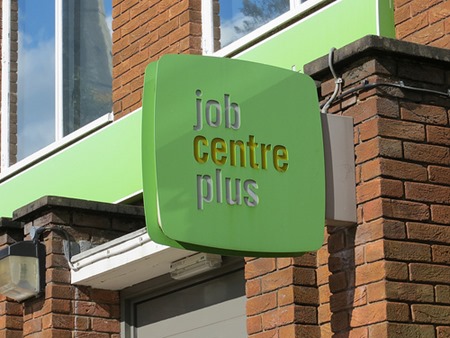
Photo © 2009 Arthur Picton

A 99p store in Wrexham had to call in police backup when their store was bombarded with shoppers seeking to make the most out of a rare half price sale at the bargain store. People will laugh and cry ‘what is this world coming to?’ but the sad reality is that, in these times of austerity, for some any chance of a saving cannot be missed.


With the shop’s lease expected to come to an end on January 28th, the store had made the decision to mark down all products to fifty pence, causing a surge in customers. However, following last-minute negotiations, the lease was extended and managers made the decision to return products to their normal prices. Stupidly, the management put this into effect in the middle of their opening hours, doubling their prices at midday, and understandably angering customers who had been queuing for nearly two hours.

When people are willingly squeezing themselves into a shop that has already exceeded its maximum safe capacity in order to get their hands on doubly discounted goods, it’s hard to disagree that something has gone wrong. It is far from the fault of the shopper, however. The Government’s programme of austerity is forcing people into harsh economic difficulties, resulting in the need to look for the cheapest way of financing their lives. If that means forcing yourself into an overcrowded shop, well, desperate times call for desperate measures. Anything that makes the money last a bit longer is something that should be pursued.

Besides, it was a poor decision by the store’s management to decide to increase their prices in the middle of the day. It’s logical, for any customer, that if your shopping doubles in price from the moment you pick it up from the shelf to the moment it passes by the till scanner, then you’re going to be angry. You’ll feel cheated and lied to – your ten pound shop has suddenly become twenty pounds. This sale has been advertised for days and yet, after battling with other customers and patiently queuing for an inhuman amount of time, you’re being told that the terms have changed. I find it completely incomprehensible that any person could go through that situation and not be enraged.

So, what is this world coming to? A financially squeezed population trying to be economically sensible and save every penny they can, whilst the Government continues to make their situations harder and shop managers are solely concerned about how much money they make in a day. I think it’s pretty obvious what’s not right about this state of affairs.

Thursday, 9 January 2014

This “Friendly Conversation” is an Indication of Bridges Being Repaired

Photo © 2012 Dave Radcliffe

Recent conversations between the Liberal Democrat’s Nick Clegg and the Labour Party’s Ed Balls, alongside a very strange two-worded tweet by the Deputy Prime Minister, have led to increased speculation by the media of a coalition pact between the two parties. But with Labour seemingly set to easily achieve a majority in the House of Commons in 2015, is this a meaningless conversation?


The “friendly conversation” between the two senior politicians is causing a strange ripple of excitement across the political sphere yet it seems a strange conversation to have taken place. Reminiscent of the conversations that took place between Tony Blair and Paddy Ashdown in the run-up to the 1997 election, such a Lib-Lab pact seems unlikely to occur in the near future. With most polls predicting a comfortable majority for the official opposition, Miliband and Balls need not look to the Liberal Democrats to ensure that they are in Government from May 2015. Considering current predictions that the Liberal Democrats will struggle to achieve much more than 20 seats, having such a pact seems completely worthless and would not add much.

It would seem to suggest that Ed Balls is worried that the party might not achieve a majority or that internal factions within the Labour Party threaten their prospective Government’s power over Parliament. It would not be the first time, after all, that a Labour government has been defeated in Parliament due to differences within its own party – remember how Tony Blair lost the vote that would enable the detention of terror suspects for 90 days. With the recent return to the left of the political spectrum, some of the decisions Miliband’s government may wish to enact may not sit well with his own party, but may do so with a left-leaning Liberal Democrat party.

However, Nick Clegg has denied the relevance of this conversation, stating that it was just two parliamentary colleagues conversing amicably. Although his strange tweet of “Ed Balls”, confirmed genuine by his press office, and the reply by the Labour shadow minister seems to suggest more. Perhaps it is out of worry that a deeper rift may form between the two current coalition partners. However, with the Liberal Democrats suffering a massive reduction in membership, with left-leaning members leaving the party to join Labour or the Greens, and right-leaning members leaving to join UKIP, this could be an underhand attempt by the party leader to realign the party with a more socially focused Labour Party. With the Liberal Democrats looking to survive their first term in Parliament since almost a century ago, their need to be on friendly terms with Governmental parties is crucial.

Perhaps it is simply a friendly attempt to redefine the relationship between the two parties. With Labour constantly attacking the Liberal Democrats’ role within the coalition, this is understandable. In the unlikely situation that the Labour party do not return a majority in 2015, a good relationship with the Liberal Democrats is beneficial (although far from essential, as this coalition seems to show). Additionally, if the Labour Party do secure a majority, this may not be repeated at the 2020 election and a coalition with the Liberal Democrats may be necessary then.

What is blindingly obvious now, however, is the Labour Party’s willingness to accept the likelihood of coalitions in the future. With the power and support of the two main parties diminishing, it is increasingly possible that the Liberal Democrats will be a party of Government. Despite their poor reputation for their activity within the current coalition, their twenty or so MPs may be the MPs that allow for a majority Government. Furthermore, if the increased membership of UKIP does indeed translate into representation within the House of Commons, the Liberal Democrats will almost definitely be invited into coalitions in order to keep the far-right party away from governance, as the share of the vote is stolen from Labour and the Conservatives. This conversation between Nick Clegg and Ed Balls is an obvious indication that a relationship between the two parties is on the horizon, even if it is not necessary in 2015.

Wednesday, 18 September 2013

Sorry Nick, but the Lib Dems Are Not the Solution to the UK’s Democracy

Photo by Dave Radcliffe
 

In his speech to the Liberal Democrat conference today, Nick Clegg made a series of remarks, the gist of which being that we, as a nation, are better off with his party in government.


Maintaining, despite the prolonged criticism, that entering a coalition with the Conservatives was the best deal for the UK, Clegg argued that he saved the UK from a number of policies wished to be implemented by his parliamentary partners. Claiming that their presence in Government allowed them to valiantly protect us from the evil Tory policies of the ‘Snooper’s Charter, ID Cards and tax breaks for the rich, Clegg seems to be suffering from a bout of convenient amnesia.

The Deputy Prime Minister forgot to mention how the party had conceded on their own policies in Government – settling for a referendum on Alternative Vote rather than the Single transferrable vote and the hike in tuition fees – and helped vote through horrendous cuts that have caused detriment to thousands across the country.

What the Liberal Democrat leader also omits is the fact that if the Liberal Democrats had not entered coalition with the party, we would have been protected from all these policy measures anyway, the party would have been saved from ridicule, and people would have far more respect for the party for sticking to their principles.

The Deputy Prime Minister also seems to hold the view that it his party that is driving down the votes down for Labour and the Tories, meaning that the probability of a hung parliament in future General Elections is higher. Hence he argues that the Liberal Democrats are needed in Government to hold back the Tory from their detrimental cuts, and Labour from their excessive spending. But again, he misses the point that it is not satisfaction with the Liberal Democrats, but mass dissatisfaction with the status quo that is the three main parties. After all, his party has been overtaken by UKIP in successive polls for months now.

Clegg’s speech today shows the new-found pragmatism and realisation that he wants his party to hold. Knowing that his party has no chance of electoral success, Clegg is attempting to pull his party to a bargaining position, understanding that in the next instance of a hung parliament, the party needs to raise its credibility by negotiating exactly what the Liberal Democrats want to achieve if part of a coalition Government. 

This is another ridiculous attempt by the party leader to reunite his party, distance himself from his coalition partners, and bring back support for his party by making promises that he'll curb the worst characteristics of the other parties. This ploy is completely transparent and it is not easy to be duped into this belief. The Liberal Democrats have made devastating mistakes under Nick Clegg's leadership and, much like the Tories and Labour, no amount of rhetoric will return the trust for the party has that been lost. 

Sunday, 15 September 2013

Lib Dem Leader Claims Party Will ‘Moderate’ Labour and Tories in Coalition

Photo by Alex Folkes/Fishnik Photography
 

Appearing on the Andrew Marr show, Liberal Democrat leader Nick Clegg commits his party to further coalitions with Labour or the Tories in the case of a hung parliament.


Clegg’s comments follow an internal poll that revealed that over half of members want the leader to strike a deal between their party and the Labour party if the 2015 General Election does not result in a majority government. The leader said that the Lib Dems were needed in government to make sure that neither Labour or the Tories would be ‘messing things up on their own all over again’ and that they would act as a moderating force.

The deputy prime minister also told Marr that the Lib Dems would have some demands if they entered a coalition, including increasing the tax-free personal allowance so that workers earning the minimum wage of £6.19 would be exempt for tax. When asked...

[Read more on H4TV]

Monday, 1 April 2013

Waging War on the Welfare State


Welcome to April. At the next possible opportunity, make a U-turn.

Today is the day of the implementation of further dreaded cuts. As April arrives, we can only optimistically hope that it is some well-organised April Fool’s joke, but unfortunately we know better of a Conservative Government. Lambasted as the “nastiest” ever Government by the TUC, it is difficult to ignore the harsh effects of the benefit changes that are begin from today; from our beloved "bedroom tax” to the loss of legal aid. All of these seem set to only make the poor poorer in the name of deficit reduction.

While Iain Duncan Smith claims that they changes are “fair”, the shouts of society are in stark contrast and looking at the policies, we can understand why. Firstly, and most prominently argued, is the effects of the incoming “bedroom tax” which will force families out of social housing simply due to the number of rooms their house has. Two-thirds of the people who will be hit by this tax are disabled. People will be coerced into moving into smaller homes which may not meet their needs, in order to remain financially sustainable.

Perhaps in an attempt to pin some blame on the local councils, the Government are now offloading council tax benefits into local control (with a 10% reduction already imposed). Whilst local councils are already being forced into making cuts by the Government, there is little leeway for them to increase the spending in these areas and we are likely to see further reductions by local councils in order to meet the other demands required of them.

At the end of the month, the Universal Credit will be piloted in the area of Ashton-under-Lyne, intended to merge many different benefits together into one means-tested payments. However, this will undoubtedly reduce the amount of money that claimants will receive, pushing those with no alternatives further towards or below the poverty line. Furthermore, with the software for the pilot not yet looking ready, this reform is looking set to fail.

The U-turns and amendments of the Government on planned policies have simply demonstrated how ill thought-out their work is. With regards to the “bedroom tax”, it is a sorry state of affairs that the public and Labour must point out how the policy would disproportionately impact the elderly, disabled and military families, before the Government can realise what is wrong with their policies. It changes little though and many policies continue to pass through the Houses and into legislation without being properly scrutinised and surrounded by public and opposition doubt of their practicalities, effectiveness and, most importantly, impact.

However, the welfare system is far from perfect and its reform is not a topic we should just shy away from. There are things about the system which are fundamentally unfair; for example, that some families can be better on benefits than if they worked, but the battle plan of the Government is waging war on the wrong side. Rather than ensure that companies pay their employees wages which make living comfortably possible, therefore ensuring that people on benefits do not have more money than their working counterparts, they are simply reducing the amount of money they dole out to help those in real need of help.

The fiscal year of 2013/2014 will definitely hit hard, and those who need the most financial support will see it unfairly dwindling away whilst their rich counterparts receive a tax break. It is unfair, it is harsh and it is ill thought-out but these are reforms we will be forced to suffer the consequences of, simply so that we try and get rid of those minus signs in our bank balance.

Wednesday, 9 January 2013

Prime Minister’s Questions – 9th January

parliament6

Image by Victoria Kettlewell

Happy New Year wishes from the “nasty party” and the “little red pests” as the first Prime Minister’s Questions greeted us this week. The re-launch of the coalition appears to have reinvigorated Clegg as, sat on the front bench, his usual solemn-looking face was replaced with laughing and increased gestures. Miliband attacked the coalition for its lateness in publishing the audit, before proclaiming it would only highlight the Government’s broken promises on the NHS, sexual inequality and the tagline “we are all in this together”. Cameron failed to rebut the claims, only making different points about the policy areas, then stating that the five million pounds that goes to the Labour party does not guarantee any returns. One Member of Parliament asked of the Government’s intention to repeal the fox hunting ban to which Cameron ignored the question instead stating that the “only little red pests he pursues are in this house”. A referendum may seem impending after it was stated that the Government would seek public consent for any EU settlement that is reached. A backbench and, obviously, critical Conservative MP asked the PM whether he was politically closer to Lord Tebitt or Clegg and received the response that Cameron is, and always will be, closer to the Conservatives than any other. Strangely, the resignation of Conservative peers and the Northern Ireland violence didn’t get a look-in.

Saturday, 17 November 2012

Gasp! Shock! Horror!

pcc elections

Photo by Staffs Live on Flickr

Au contraire; perhaps more accurately descriptive words are “meh”, “so” or “duh” – the PCC elections were nothing different to what we expected. Low turnout, a high number of elected Independent candidates, and Liberal Democrats no longer showing as the third party, it’s not a surprise. Let’s go through it.

The Electoral Commission warned the Government of a predicted 18.5% turnout but (and here’s probably the biggest surprise of the day), it was even less than that at 15%. Some regions including my own, the West Midlands, which hosts the bustling population of Birmingham, boasted an incredibly low 12%. One ballot station in Newport received not one single ballot paper throughout the day – that was an easy count. With the lowest turnout at11.6% recorded in Staffordshire and the highest at 20% recorded in Northamptonshire simply demonstrates how apathetic the nation were towards these elections, and who can blame them? It was a disaster and simply shambolic.

30% of winning candidates were unaffiliated to political parties as part of their election campaigns. And again, this is no surprise. There was huge hostility towards the party politicisation of the police force so of course Independent candidates were going to thrive in these. And, in all honesty, well done to them! Aside from that, it’s perhaps not a surprise that Tories still managed to gain a simple majority of the positions (40%) despite their continually decreasing reputation. Why? Simply because this policy will be most popular with their party members, hence, their party members will probably make the bulk of voters. Other political party members will be ambivalent, not necessarily have a candidate fielded from their party or decide not to vote in protest.

UKIP have risen to the third party – well again, that’s not surprising for two reasons. Firstly, it’s difficult to argue that the Liberal Democrats have not lost all credibility they may have ever had, even to their own party members. I won’t dwell on this point. Secondly, the collapse of the Euro and the continuing use of our funds to bailout Eurozone countries is less than dissatisfactory to the electorate. The crisis is not one we can ignore, and our own financial difficulties are often blamed on this. So it’s no surprise that the electorate are increasingly supporting a party that wants to distance the UK from Europe as much as possible, and as the three main parties are not as committed to this cause, there is just the one party to turn to. UKIP are already the second largest party representing the UK in the European Parliament. Before long, the dissatisfied right-wing supporters of the Conservative party are sure to migrate to UKIP and increase their representation in the European Parliament in 2014, and perhaps the Commons in 2015.

So just one question remains; will the Government continue commencing this ridiculous policy, or will they reverse it? The elected PCCs begin their roles on Thursday; they will get paid between £65,000 and £100,000; this election cost over £75 million, and; the majority of them only have 7% of the complete electorate’s vote.

Of course, this Government will sit them out until 2016 – but will they continue after that? That’s something that could be a surprise.


Also published on Redbrick

Sunday, 11 November 2012

Choosing a Leader

5758106479_cf4ca592f3

Image by Cabinet Office on Flickr

It’s a funny thing choosing a leader for your country and essentially choosing someone to place your trust in to for a prolonged amount of time, with no real ability to recall your vote. It’s a big decision we must make, and most often one people end up regretting by the time the chosen one has finished dismantling the hard work that someone else has put in.

In the wake of Obama’s victory and re-election in the United States, it’s a little overlooked that we are now halfway through our Condemned Government (of course, unless by some stroke of luck, Parliament is closed) and that means we can officially count the days until we are certain their mandate will end. That wonderful time at which we can hold Clegg and Cameron to account and completely humiliate them with what will probably be a resounding Labour win is now closer than the time we voted them in (although this is arguable in itself.) The end is nearer than the beginning, although not exactly nigh yet.

It’s no secret that all of the parties are already planning their election campaigns for 2015, deciding who will lead their campaigns and what their manifestos and key policies will be, making predictions for what will happen over the next few years and be high on the agenda in 2015, so I’m going to make some of my own:

  • Nick Clegg will be replaced as leader by Vince Cable either for the election or as a result of the election
  • The PCC elections will show to have little support and little turnout and the decision will be reversed or reduced
  • The Labour Party will not have tuition fees as a key policy or will only reduce fees by a small amount
  • UKIP and the Green Party will see a small rise in support
  • Labour will win an overwhelming majority, but still not match Blair’s 2001 majority. Lib Dems will lose a large number of seats and Nick Clegg will not win the Sheffield seat.
  • The UK will enter another recession in 2013.
  • Another European country using the Euro will collapse.
  • There will be further military intervention in the Middle East, Syria or the Faulklands.

Some may seem far-fetched, and some might seem plain obvious. I think all of these are highly possible, but let’s see how the next two and a half years pan out, shall we?

Thursday, 1 November 2012

A Favourable Backbench Rebellion

SONY DSC

Image by Constantin Deaconescu

I’m surprising myself by agreeing with Tory MP for Rochester and Strood, Mark Reckless, whom I have most often found myself contemptuously disagreeing with in the past. Plus, there’s the fact that he’s just a Tory in his day job. Mark is a massive Eurosceptic and somehow manages to argue that every problem we face is in some way Europe’s fault. Yet, yesterday, he stood as a backbencher and voted in favour of a reduction in the funds we provide to Europe. This, I fundamentally agree with in these tough times.

As a country, we are fighting our way through horrific austerity measures and facing devastating and disgusting cuts to our frontline services, yet continue to provide consistent financial support to this international body. Whilst we suffer the effects of cuts, we continue to provide funding to other countries without even beginning to negotiate a slight reduction in respect of our own financial difficulties. This is a preposterous idea. When we are supporting our own citizens less and less each day, why should we continue to support citizens of other countries at the same rate as before?

Now, don’t get me wrong; I do not believe we should wholly withdraw all of our financial support to other countries, but I believe in a proportional cut alongside our other cuts. If something must be cut, it must be cut in line with everything else. We should not favour one thing over another thing, unless with it comes overwhelming benefits.

Hence, I find myself on the side of Labour and a local Tory (although a backbencher, mind you) and agreeing with this successful rebellion on the Government. This is the right step forward; it’s just a shame that this does not create a mandate, and that the Government could still ignore the parliamentary vote when they make their EU funding proposal. Let’s hope they listen to the slight majority and reduce the EU benefit and return some of that saved money to our frightful economy.

Monday, 3 September 2012

Goodbye Lords Reform


Today it was officially announced that the House of Lords reform was to be dropped - of course, it had been expected for a while, but one couldn't cross their fingers enough that the first day of Parliament after the Summer Recess didn't have the announcement on its agenda; unfortunately, it was. And this brings about several questions; when will the Lords really be reformed? What does this mean for the coalition? And what more damage will this have for the Liberal Democrats?

It is shameful that a reform, that will make the UK much more democratic and our decision-makers more legitimate giving citizens more say in Parliament, has been dropped due to a backbench rebellion from the Tories. Regardless of the rebellion, it was almost guaranteed that the reform would have been successfully voted through with support from a vast number of MPs across the main three parties. Yet, repelled by the prospect of losing party support, David Cameron has decided to drop the bill.

It is not the first time that the Lords has been attempted to be reformed; in fact, the decision to reform the Lords was first made in 1911 - yet 101 years on, we have made no progress - both the Blair and Cameron/Clegg ministries have said something about it but neither has succeeded - why are Governments so scared of losing the Lords? The only possible reasons I can find is the expertise of existing Lords (who could easily run for election), the cost and a possibility of political deadlock; but is that the price we must have to pay for our democracy? Apparently so - perhaps it will be reintroduced to the agenda following 2015, or maybe the parties will have forgotten about it by then - especially if Scottish independence is on the tables.

What does this mean for the coalition? Little, apparently. Clegg's consequences are that the Lib Dems will no longer vote in favour of proposed constituency boundaries - something that might not even appear on the agenda prior to 2015 anyway. And besides, after the many contradictory to their manifesto changes that have been made, the Liberal Democrats will not shy away from a coalition that simply exists to prop the Tories up; name me one successful Liberal Democrat change and I will name you twenty Tory changes. A fresh call for Clegg to resign may be all over the newspapers tomorrow, but will he? I doubt it; now he is simply power-hungry. And would Vince Cable be any better? I can't say for sure.

As for the Liberal Democrats - regardless of who is in the Leadership positions it is certain that they will not bounce back from their 2011 election drop. They will not see another Government position for a long time now and we will most certainly see a return to a two-party system - this was the Lib Dems' time to shine, and get themselves known, but instead they became whipped and lost their own principles. I'm surprised so many MPs have remained the Lib Dem party and not yet switched or become Independent. I'm sure that's what I'd have done if I were a Lib Dem MP.

Perhaps this is the time for the Green Party to begin building on the Lib Dems' losses - support is seemingly growing at present, and with the announcement of the new leader today being Natalie Bennett - perhaps a new face, who may be more powerful and persuading than Caroline Lucas, will bring with it a new opposition to the House of Commons - and maybe in the far future, the House of Lords.

I think we know one thing about this Government; they will be known for their harsh austerity cuts, and their considerable number of U-Turns.

Friday, 27 July 2012

Is it the right time for the Olympics?

The Olympics have arrived which surely means that we can only expect untold benefits to our nation and economy- unless you don't live in a city or a town or suburb close to a city. Like Wales for example, who have already expressed their dissatisfaction and feeling of isolation from the Olympics in a recent opinion poll. So, what benefits can I be expecting? None, I'd say, except a small feeling of sporting patriotism and a conversation starter. Disadvantages vastly outweigh the advantages, but I suppose it's because I'm not really a sports fan and I haven't any way of watching but in front of the television that I hate to sit in front of anyway.

Nevertheless, it is a once in a lifetime opportunity and I can't say I didn't gather with the rest of my patriotic townsfolk in order to stand on a street corner and watch the Olympic torch pass through Gillingham by me for a mere 3 seconds of my life. I spent more time staring at the abstractly-shaped Coca Cola lorry than the actual icon that is the flame. And then I got back on with my life - within a few hours, I'd forgotten about the inspirational event that was a once in a lifetime thing. It was back to normality for me.

And that was the Olympics for me (except the lucky moment I did get to hold a torch for thirty seconds in Cheshire, simply for a quick photo and the novelty of doing so) - and probably a lot of other people in the UK. They saw the torch go by their town for a few minutes and then they went home... And they forgot. Maybe they will sit in front of the TV and watch the results of billions of pounds of public money being spent, and the use of censorship in Olympic event arenas as a result of private money. But is it a stunt? Perhaps.

The Olympics were won for the UK under the Labour Government in 2005, 7 years ago, and then it was cause for massive celebration, but now, under the Conservative-Lib Dem Coalition, the continuation and commitment to undertaking the games in the UK simply seems an attempt to divert our attention from the less favourable policies being discussed and introduced, as we have seen before. The crisis in Libya detracted from Education and Health Care reforms, for example. The only comfort we can take is that Parliament is in recess and no policies will be introduced while the games are on, and the whole G4S problems occurred right at the end of the term.

Maybe Mitt Romney is right when he said that the UK was not prepared for the Olympics and our enthusiasm just isn't there. Unless it's on your doorstep, you probably feel disillusioned and not quite involved. And even then, you might feel angry and discouraged from taking part in the fun; you might be more concerned about the missiles on your roof, or the soldiers checking your post, or the security officials telling you to take your Pepsi t-shirt off.

So, is it the right time for the Olympics considering our massive financial debt and our complete dissatisfaction with the political arena? Is sport the one thing that will return our community spirit? And have the Olympics been organised in the right way? I'll leave that for you to decide. We all have our own opinions. Personally, I find the games and the expenditure on them mildly hypocritical. And I do feel partly disillusioned; if it were not for the torch going right through my town, and the excitement for the games created by the various activities held by passionate individuals at my college, I might have just seen the games as another sporting fixture - another programme to skip past on the TV.

I probably will anyway. I'll see what happens with the Opening Ceremony tonight and decide then.