This website has moved!

Politically Me is no longer available here. To read James' blogs, please visit www.jphillips.eu

You will be automatically directed there shortly

Showing posts with label house of commons. Show all posts

Wednesday, 11 September 2013

Prime Minister's Questions - 11th September

parliament6

The second Prime Minister’s Question Time after the Summer Recess, held on the twelfth anniversary of the terrorist attacks on the World Trade Centers, began with Cameron and Miliband paying tribute to the families and friends of those who died in the attacks. The Tory leader promised to prepare a plan for the Syrian situation in time for the UN General Assembly, with particular focus on ensuring that there is access to the country for humanitarian aid. Cameron and Miliband welcomed figures that overall unemployment levels had fallen, and that private sector jobs had risen to 1.4million. Miliband accused the Tories of ‘total complacency’ with the handling of the deficit, criticising the Government for the slowest recovery in 100 years where prices have risen faster than wages.

Miliband asked the Prime Minister whether he agreed with the Education Secretary, Michael Gove’s, comments that those who used foodbanks ‘only had themselves to blame’. Cameron refused to back or distance himself from these comments, instead retorting with his own criticism on Miliband’s speech at the Trade Union Congress conference yesterday, claiming that it was a ‘disgrace’ that he had caved into trade unions.

There was considerable back and forth between the two major parties on the topic of youth unemployment with Labour attacking the Government for the continual rise of unemployment for the country overall whereas the Tories commended the Government for a fall in unemployment levels in their particular constituencies.

However, Miliband did not bring up today’s report from the UN on the effects of the bedroom tax, suggesting distrust with the accuracy and reliability of the report.

Prime Minister’s Question Times now stop for a few more weeks whilst we turn our attention to party conference season, starting with the Liberal Democrat and Green Party conferences this weekend.

Monday, 19 August 2013

Caroline Lucas – the MP arrested for doing her job


Today’s arrest of Caroline Lucas at Balcombe is more than just a display of ideological commitment, but of deep understanding of her role as MP for Brighton Pavilion, and the sole Green Party representative in the House of Commons.

A Member of Parliament (MP), as I’m sure you are aware, is elected to their role to fulfil the responsibility of representing their constituents on matters in and out of parliament. With 650 MPs to represent over 60 million people, this can be an exceptionally difficult feat, with an ideologically diverse community lobbying their ideologically committed representative. Unless you begin to treat ideologically different citizens like separate species, with communists in Zone A and ultra-capitalists in Zone Z, it’s unlikely that any MP will ever to be able to effectively represent their entire constituency. And even if you did adopt this deeply despicable policy, good luck trying to send those who have features from both Zone G and Zone P. It is for this reason that it is an extremely likely occurrence for constituents to write to other MPs to express their views. Unfortunately for them, the law prevents MPs representing non-constituents.

Hence, Caroline Lucas’s job is one of real difficulty. As the sole Green Party representative in the House of Commons, Caroline has faced head-on the task of representing her own interests and her constituency’s interests in parliament whilst having to, essentially, ignore the floods of correspondence she receives from other Green Party members, environmentalists and ideologically aligned people around the country. It is events like today, in Balcombe, that she is able to properly represent those who have contacted her over and over again with their opposition to fracking, Cuadrilla and the Government’s poor attempt at being the ‘Greenest’ ever.

Caroline should serve as an inspiration to all of us and a role model for other members of the House. As an MP who does her job, of representing her constituents, rather than giving in to the party whip, defined by the party donors, she remains one of few who really holds the government to account. The pictures of Caroline being dragged away from the protest by police, whilst doing her job, show her standing with dignity, accepting her fate and believing in her cause.

What is ludicrous is the utter hypocrisy of our political state, where the companies set out to destroy our environment in the name of keeping the lights on, are protected from those who present a risk of “damaging property”. The MP who represents her constituents and other likeminded citizens in an attempt to make society better is arrested while those sitting on the benches in the Houses around her are ignored while they avoid tax and accept bribery. Caroline Lucas’ arrest today is an eye-opener to the backwards nature of policing tactics – the big, greedy and powerful are protected, whilst the small do-gooders of society are punished.

Congratulations to Caroline Lucas, her son, and the many people who have taken part in protests today, standing up for what they believe in and uniting against the Government’s ignorant plans.

Also published on Redbrick

Wednesday, 26 June 2013

Prime Minister's Questions - 26th June

parliament6

Today’s Prime Minister’s Questions was dominated by questions on infrastructure, with members eagerly awaiting the Spending Review to be delivered by the Chancellor immediately after the scrutiny session. Miliband seemed in his element today as he attacked the Government for their poor record on delivering their promises on infrastructure, highlighting that only 7 of 756 infrastructure projects have been completed under this government, and 5 of those were started under Labour. Cameron tried to deflect the argument by questioning Labour’s record in their 13 years of power, to which Miliband easily answered that there 3700 rebuilt schools, 1000 new hospitals and 3500 new children’s centres. Cameron returned to his usual defence and stated that it was because of this that the country was in this “mess”. According to the Prime Minister, half of the population think Miliband belongs in Sesame Street rather than Downing Street. Serious concerns over the alleged bugging of the friends and family of Stephen Lawrence by police were raised by a Labour MP, with a positive response from the Prime Minister that two independent inquiries had been set up by the Home Secretary to investigate and that no additional oppositions were ruled out. Labour were attacked for the conflicting reports from Miliband and Balls about their commitments in regard to borrowing, with both contradicting each other. The session only served to prove that neither of the main parties are prepared to commit to further investment if elected in 2015.

Wednesday, 22 May 2013

Legislation is Only Half the Battle for Equality


The Marriage (Same Sex Couples) Bill passed through its third reading in the House of Commons yesterday, allowing it to now be debated in the House of Lords before hopefully becoming law. An amendment by Labour to ensure that the Government also holds a consultation on whether to allow heterosexual couples to enter civil partnerships marks another step towards equality between heterosexual, bisexual and homosexual couples. 

The bill passed by a large majority of 205, showing concrete support for this incredible step, but it is sad that 161 MPs continue to show opposition to the motion and that 119 were not present at the vote. Still, we must remain enthused that the legislation passed through the House of Commons. Of course, there is further scrutiny, perhaps much more in depth, to be undertaken in the House  of Lords, but we are halfway to some fantastic marriage reform, allowing homosexual couples across the UK to commit to each other in marriage with their heterosexual counterparts.

Labour’s amendment to include a consultation on civil partnerships for heterosexual couples is also important. Whilst marriage is “religious” in its connotations, Atheists, Agnostics, Humanists and mixed-religious couples are excluded. Furthermore, it also demonstrates another level on which homosexual couples are differentiated from their fellow heterosexual citizens. The new proposal to the Government is simple; allow heterosexual couples to enter civil partnerships, or abolish civil partnerships. To continue this difference between heterosexual and homosexual couples is to shift equality in the wrong direction. 

However, a change in legislation is only half the battle. The country continues to face the problem with the actual day-to-day perceptions and discrimination of LGBTQ* people. As we have seen before, given women the vote and other equalities does not rid the evil that is discrimination via sexism. The same stands with LGBTQ* rights – homophobia and stigma based on sexuality continues to exist. A woman even tried to drive through the gates of the Palace of Westminster during the vote yesterday in a bid to show her lack of agreement; people will  go to incredible lengths to show their opposition. Whilst “outing” is a problem and a risk, we must continue the battle for sexuality equality.

Despite the vote being a landmark victory, we’re not quite at proper equality yet. Hopefully, we can reach a day where marriage is marriage, no matter who is in it.

Wednesday, 23 January 2013

Prime Minister’s Questions – 23rd January

parliament6

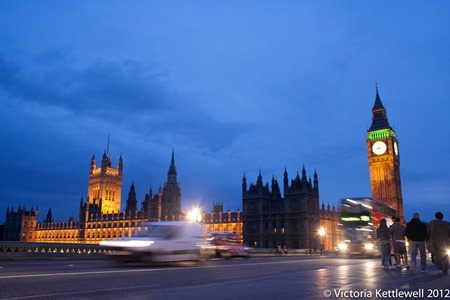
Image by Victoria Kettlewell

As Nick Robinson predicted, Prime Minister’s Questions was dominated by “the defining questions of the general election and the next five years” as all parties clashed over the topic of Europe after Cameron’s most crucial speech in her premiership. The question of which direction Cameron would be campaigning in favour of was carefully dodged over and over again as Miliband attacked his uncertainty. This uncertainty, Labour argued, would affect our economy, our businesses and our international relations. Attacked by his own party, Cameron was forced to defend himself against the jeers of backbenchers and the opposition with his line that he would want to stay in a renegotiated Europe. Turning the question on Miliband, Cameron coerced Labour into rejecting that they want a referendum. Meanwhile, a Scottish Member of Parliament ridiculed Cameron for saying that the two-year time frame for the Scottish referendum was too long whilst giving a five-year time frame for a referendum on Europe. Cameron retorted with a remark that implied the Scottish National Party were stupid for thinking of leaving the United Kingdom without even attempting negotiations. However, although Cameron’s remarks were stronger than Milibands, his continued resistance to his backbench Eurosceptics, the Labour party and the rising force of UKIP suggests that his position on Europe will not be as concrete as he might like it to be.

Saturday, 22 December 2012

How Effective is Prime Minister’s Question Time?

parliament

Image by Victoria Kettlewell

It is a way of ascertaining the direction of the Government and the performance of the MPs we elect, but Prime Minister’s Question Time is beginning to appear more and more like a Punch and Judy show, with more drama yet less variation within it than Eastenders. The weekly half-hour session is repetitive and nothing more than a trashing session. However, week after week, we continue to rely on it as a tool for scrutinising our representatives.

It is all too common that we see Miliband and Cameron calling each other less than imaginative names across the House of Commons – we probably mutter something more imaginative under our breaths at the mere mention of their names – whilst attacking each other’s policies. I’ve seen some supposed behavioural problems in classrooms before and nothing compares to the continual rowdy nature of the House. It’s too regular an occurrence that the Speaker has to step in and embarrass a member and quieten the House down before they are kept behind the bell.

However, aside from the poor use of nicknaming and insults, the House is beginning to get a bit repetitive. Labour attack the Tories for being “out of touch”, “on the side of the rich” and having terrible economic policies, whilst the Tories attack Labour for being “out of touch”, “on the side of the lazy” and wanting to increase the deficit, and this happens time and time again. The same phrases get churned out, the same business gets discussed – it’s no Royal Variety Show in there. Somehow, however, they manage to suppose a different slant on the discussion; Labour begin their questions about the NHS, the Leveson Inquiry or welfare reforms, but it always returns to an angry offensive against the economic policies of the Tory party; that’s Capitalism for you. Continually slating each other’s policies only amounts to engineered campaigning for the next General Election; is it a debate on an issue that effects the population, or on which party has the better policy? The latter seems a bit more believable.

Furthermore, it’s a rare occurrence that you see somebody stand up and honestly say “my constituents” when referring to a particular opinion they are presenting to the house. Despite being elected representatives of sixty million people, Prime Minister’s Question Time only serves to demonstrate how little they represent their people. Occasionally, you do see the odd MP stand up against their party-line, but even within the coalition (with their opposing ideological perspectives), it is too risky a move to make if they are scared of losing their party membership. Yet, according to Total Politics, of sixty million people, only around three-hundred and fifty thousand members of the public actually tune into the show. With the exception of those who catch the show on catch-up or via snippets on the news, less than five percent of the population choose the question time as a source of keeping account of their representatives. As an indication, we can only assume that less know of the ability to watch other debates live on BBC Parliament, or even visit Parliament and watch the debates in the houses themselves.

Prime Minister’s Question Time serves only as a new source of humour, an indication of the worthlessness of our representatives in a representative democracy and a sense of the democratic deficit that the UK population has. Perhaps in the future, the show will become more worthwhile but, in its current set-up, it is merely a tool of amusement, pretend accountability and continuous party-campaigning.


Also published on Backbench and Redbrick

Wednesday, 28 November 2012

Prime Minister’s Questions – 28th November

parliament

Image by Victoria Kettlewell

The economy was on the tips of everyone’s tongues in the Commons this week (but when isn’t it?). After the initial expected tributes to those involved in flooding rescue and clean up operations, the Commons immediately descended into the brawl between Cameron and Miliband, both blowing their own trumpets about their economic policies. Miliband continued to rely on quoting Cameron’s words and twisting them to his advantage when questioning Cameron’s Work Programme as the “biggest and boldest programme since the great depression” to which Cameron reeled off, at a pace most couldn’t keep up with, a horde of statistics about why his policy was good and Labour’s previous policies were not. Quoting 700,000 people in work as a result of the programme, Cameron was left susceptible to criticisms from Miliband that only 2% of those on the programme were in sustainable jobs (although it was quickly pointed out that Miliband’s math didn’t quite work out). The infamous “calm down” jeer was called from the Labour benches as Cameron tried to defend his policies with a flustered face and glances to his ministerial colleagues for support. Questions were also asked about the results of the Leveson inquiry, but Cameron continuously evaded them only saying that we need a strong and robust independent regulatory service for our media.


Also published on Redbrick