This website has moved!

Politically Me is no longer available here. To read James' blogs, please visit www.jphillips.eu

You will be automatically directed there shortly

Showing posts with label international. Show all posts

Sunday, 24 November 2013

Switzerland Begins Assault on Excessive Pay


Photo by 1:12 Initiative for Fair Play

Switzerland are to vote in a referendum on whether to cap pay ratios in organisations at 12:1. This is in addition to previously passed legislation that reduces the number of bonuses granted to senior executives. What we see here is nothing less than a sensible progressive policy.


Instigated by the Swiss Young Socialists, the referendum is a direct result of a petition that gained the support of over 100,000 people. This tremendous declaration of public agreement demonstrates widespread satisfaction with what is increasingly becoming the acceptable status quo: greedy capitalist executives taking more than their fair share. In this sense, Switzerland is leading the way in effectively challenging a system that allows a greedy few to get more, more, more. This is not an unreasonable or unfeasible demand. As Europeans continue to be stifled by austerity measures, we should continue to seek opportunities to garner funds that will help our Government's to make it easier for people to live.

The situation seems even less nonsensical when you put it in terms of statistics. To introduce a pay ratio of 12:1 in the UK would be to set a maximum salary of around £148,000. That's hardly on the brink of an austere budget. Currently, it's more than the Prime Minister's base salary - if the person who, arguably, has the hardest job in the country can only be paid £140,000, it makes no sense that people who do less difficult and liable jobs earn so much more. I'd welcome some reasoning as to why CEOs and footballers can earn eight-figure salaries. Furthermore, what does that money pay for?

Additionally, the maximum wage would be in comparison to a worker paid only the minimum wage of £6.31, for 37.5 hours work a week. It's now widely believed that, in a society where the rate of inflation increases faster than wages, this wage is no longer enough for people to get by healthily or comfortably. What we must see introduced is a living wage: a wage that fluctuates with the economy, so that no person is ever stuck on a wage that becomes more and more difficult to support a life with. When you live in a society where people are no longer able to afford the bare basics, it seems ludicrous that some people would be outraged at the idea that they might only earn ten times more than their lowest-paid measly employee.

However, the situation looks even worse when you look at what the money can afford, rather than just the pay ratios. For example, the Vice-Chancellor of the University of Birmingham earns around £372,000 this year, along with some other 'perks' that come with the job. That's only a meagre £7000 a week; incidentally, enough in a month to pay off the cost of a three-year degree course (even with the increased £9000 fees that he recommended were introduced). But to add salt to the wound, in two weeks the Vice-Chancellor earns more money than his lowest-paid employee does in a year. 

It is for this reason that what Switzerland is doing is highly commendable. If this is how much someone earning less than half a million a year can afford, imagine what the CEOs can pay for on a daily basis. We must tackle this deeply unfair equality and find some way for that money to be put to a better use, like increasing the wages of the lowest-paid. 

Wednesday, 13 November 2013

Harley Miller isn’t the only immigrant being deported

Photo by David McKelvey

There has been a certain furore on the internet over the deportation of a particular well-acclaimed Australian woman. 


With two masters degrees and her considerable input into our NHS system, it is understandable that people would get angry over the Border Agency’s demand for her to pack her bags and leave. Shared internationally via Facebook, her experience is rightly identified as an abomination, but why is it that this outcry is only deserving of a middle-class professional white woman?

There’s no denying that the situation that Harley Miller is facing is a horrible one to be put in: to suddenly receive a letter denying your application to stay in the UK after 9 years, to lose your job and to be told that you must leave within 28 days. However, the truth is that this happens to people on a far worse scale more often than we hear about it. Immigrants from across the world look to the UK for a better way of life, away from discrimination, from tyrannies and from war zones. Away from a failing economy, a tiny job market and poor standards of living. Put yourself in their shoes and I can guarantee you would want better than that.

The irony about those who oppose immigration is the complete contradiction they pose in their rhetoric. Individuals should strive towards personal success, using all the resources available to them to gain a better standard of life, say the Conservatives. The only thing holding people back is themselves, say the Conservatives. It’s their own fault that they’re living in impoverished conditions, say the Conservatives. Ignoring the fact that this is what most people do anyway, it appears that these same aspirations must not apply to immigrants. Most immigrants will come to the UK for a better standard of life, and who can blame them? Unfortunately for them, their better way of life involves constant xenophobia, fear of deportation and the additional role as a scapegoat. It’s a hard price to pay for a more comfortable life.

Yet, the media don’t write about these people being deported, and, thus, neither do the public hear about them. So when we get up-in-arms about Harley Miller’s deportation, step back and think of these poor immigrants who have are facing constant harassment and the fearful prospects that our international friends face daily.

Immigrants aren’t our enemies. Immigrants aren’t even something we should ‘tolerate’. Immigrants are human beings whom we should embrace. They bring multiculturalism to our country, they teach us of their culture, they bring us some new flavour to our lives. They provide us friends at university and at work, they provide business and they contribute to the tax system. Overall, immigrants provide more benefits to the UK than what they get back, and the papers (and the British as a result) don’t give them the credit or respect that they deserve. Regardless of where these people are from, they give the UK something we would never want to lose.

Luckily for Harley Miller, she’ll return to Australia with her two masters degrees and nine-years of medical experience in the NHS behind her. She’ll return to a tolerant and accepting country with no fear of persecution. The money she’ll earn from the sale of her house in the UK will allow her to instantly buy a new one in Australia. It’s a shame that’s not the case for most deported immigrants.

Wednesday, 6 November 2013

Last Night's Protest was More Than Fireworks at the Palace


It is far from the status quo, but anti-austerity protestors are beginning to find their feet in the world. 


Anonymous activists and supporters took to London and other cities across the world last night to demonstrate their increasing anger and frustration with the longstanding ruling elite. Among them was Russell Brand, recently announced a revolutionary, and Caroline Lucas. Green MP for Brighton.

Protestors took to central London last night smartly donning the mask inspired by Guy Fawkes beginning a Bonfire to Austerity (literally) on Westminster Bridge. Their protest was one of many over recent years that aims to highlight the corruption of mainstream politics, the disgusting destruction of the environment and the malice of the banking industry. These are the people that Russell Brand gave an increased public voice for last week in his widely watched interview with Jeremy Paxman on Newsnight.

These are incredibly important points; as dissatisfaction with politics continue, and people become more apathetic with the three untrustworthy options they are presented with, an alternative is necessary: a revolution. Now, perhaps we’re not talking about a full-scale French-Revolutionesque enactment, but we are talking about, as Brand put it, a ‘revolution of consciousness’ where people become vastly more aware of the atrocities and unethical attitudes of the government acting in their name. This is what will get us real change, whether this be through a new political party like the Greens, or through a new form of political control and governance it does not matter.  Unfortunately, this wanted effect on our consciousness and thought is difficult when those who most shape it are those who seek to retain the current power structures – the media – who are cozied up in the beds of the powerful.

Anti-austerity and anti-government protesters are stuck in a terribly biased situation. The media will want to run negative piece after negative piece and the Government of the day will simply ignore such arguments. When the opposition, who so profoundly announce support for their aims (like taxing the rich more heavily and imposing more regulation on the banking industry), gains Governmental control, still nothing will change. And while the population tacitly grants its support by voting in an election, nothing will change. A minority force like Anonymous is powerless by itself, but has no major player on their side.

It comes as no surprise that the right-wing media focus on the slightly more obstructive and violent methods adopted by a minority of protestors last night, hence detracting from the real message intended. The Daily Mail leads with ‘Funnyman-turned-activist joins protestors as they aim fireworks at Buckingham Palace’, for example. The media sets out to shut down minorities, and to dissuade against anything that challenges what is the status quo. One would like to think that this is regardless of newspapers, but this is shockingly, and sadly, untrue.

Now, certainly, the danger involved in setting off a firework in a very crowded space and towards a residential building makes the act ridiculous here. But we must remember that behind every method there is a genuine message: here it is that we must stop propping up our Monarchy using public funds when people are dying in the streets with no money, no home and no support.

Last night’s protest in London, and across the globe, was historic for the sheer number of anti-government protestors that assembled for it. Adorning the face of Guy Fawkes, protestors associated themselves with a force for change and challenging the establishment. Their next task is to rid themselves of those who dirty their image through violence and start recruiting more members of the public.

Friday, 30 August 2013

The UK wants to stay away from bombs, not give 'succour' to Assad


The Government's defeat in the House of Commons over taking military action in Syria demonstrates a rare circumstance where the public are listened to by the MPs and widespread unwillingness to create another situation we are still overseeing in Iraq and Afghanistan. Yet, as another day begins since the use of chemical weapons, allegedly by Assad, the propaganda war will begin and we will be told that we have failed the Syrian people by voting against; the UK Government will denounce its citizens as misinformed, misguided and attack anti-war MPs for their ill thought-out and 'despicable' (as Michael Gove shouted) choices. But this is not the case.

By voting no to military action yesterday, that is all MPs, representing us, have done. With public support for military intervention sitting at figures between 8 and 12 percent, depending on your source, the case for it was always going to be undermined. And that is because people recognised the failings of the Iraq and Afghanistan war: the massive loss of lives; the lies told by the Government; and, the failure for the conflicts to end after over a decade. In addition, the increased prevalence of whistleblowers, such as Wikileaks and Chelsea Manning, have raised the profile of the war crimes and terrible consequences of Western military intervention. Many now have the opinion that using bombs as a way of ending a conflict only makes the situation worse. Perhaps, the deep misunderstanding of the way to end a conflict has caused deep resentment by groups in the Middle-East and hence given way to the increased membership of terrorist organisations such as Al-Qaeda. I am in no way condoning the activities such organisations partake in, but I can see a possible motivation; you wrecked our country with your imperialist use of your military muscle, we'll do what we can to show you how reckless you have been. 

It is for these reasons that people oppose military intervention in Syria. The motion presented to the House yesterday, including the amendment, did not present us with the dichotomy that we are told we were presented with. It was not so simple as black and white that it was either bomb Syria or sit back and watch Syria bomb itself. The third option, ignored by the motions and the amendments, although recognised by many members of the house in their speeches, and unsuccessfully proposed as an amendment by Green MP Caroline Lucas, was that we used more peaceful, negotiating tactics, based on humanitarian aid and diplomacy to end the conflict. A far less bloody solution than was proposed by the leaders of the three main parties in the house. It was this view that was ever-dominant throughout the debate yet, ironically, no-one was given the choice to vote for it. The closest that MPs could get to voting for peaceful action, was to vote against the motion and the amendment, which called for military action.

Hence, the opinions that we are presented with today, that we have 'let the people of Syria down', we have 'ruled out any action' and that we have somehow given 'succour' to Assad completely disregard this third option. It is unfortunate that we live in a world where the two most powerful nation's leaders are bloodthirsty, hotheaded and quick to hit the launch button. At least, with some stroke of luck, a majority of thirteen members of the House swung the vote in the way of sense.

Thursday, 29 August 2013

The Vote Today Presents Us With a False Dichotomy


Get Adobe Flash player
 Video provided by the BBC

Today's recall of parliament reveals Cameron and Obama's deep want for imminent attacks in Syria, in response to the alleged use of chemical attacks by the Assad regime on its citizens in recent times. However, the debate uses a false dichotomy, presenting the options of military intervention or to sit back and watch as black and white. These are not in fact the only options available to us as a country and there are further choices we can make to act in a moral manner.

Cameron used a speech which he did not intend to use and, as such, his rhetoric seemed forceful, defensive and led by his own briefing. His body behaviour, too, demonstrated a deep desire to come across as in charge of the debate, as his decisions were undermined by his own party members, other members of the house and public opinion. Deafening his ears to criticism that he brought the house back for a pointless debate, Cameron set out his argument for the motion and military intervention, citing the Joint Intelligence Committee's report that it was 'highly likely' that the Assad regime were those responsible for the attack. However, he had to concede that this motion was based on a judgement, not evidence, and therefore that there was no 100% certainty about it. He dodged questions asking how an attack on Syria would actually deter a dictator, who has already showed a lack of shame and worry, from continuing to use chemical weapons. Driven by the legacy of the Iraq War, Cameron refuted any claim that an attack in Syria would be similar, saying there would be no troops on the ground, and no attempt at regime change. As members around the house quizzed him on his statement, Cameron maintained his claim that 'if nothing is done, we're more likely to see chemical weapons used' and, strangely, argued that there was no need to look at evidence throughout.


Cameron's speech was seen widely as relatively weak and as reluctantly sticking to a brief, with many speculating that there was still a want to launch an attack soon. What was clear from Cameron's speech, though, was that he was certain that the conclusions of the JIC and the US were enough to launch a unilateral intervention without the approval of the UN Security Council.


Miliband presented a far more heartfelt, solemn and emotional response to the motion as he tabled Labour's amendment, which included a requirement to hear the results of the UN tests, and that there be compelling evidence for the case. Despite a difficult staff, Miliband commanded a well-thought-out speech, but still presented one side of the dichotomy, refusing the idea that anything other than military intervention is viable, simply stating that we needed to be 'clear-eyed' before heading into war. Labour are not ruling out military intervention. Although he demonstrated far greater understanding of the real priority of such an intervention, Miliband failed to take notice of the fact that a diplomatic peace-keeping solution poses far less risks to life than military intervention of any sort. What did ring true though is that Miliband seemed more in touch with the Conservative Party than Cameron was, demonstrating the deep dissatisfaction from Tory MPs with Cameron's original war intentions.


'Evidence should precede decision, not decision precede evidence' proclaimed Miliband to choruses of support, over some members complaining about the delay in response. Any response should be time-limited, have clear objectives and a legal course and for that the UN should not be seen as simply as an inconvenience, he stated. Yet, Miliband's speech, despite proving better than Cameron's, seemed just a bid to follow the appropriate course, and avoid a repeat of the Iraq war. The cynics among us will argue that this is a result of wanting distance from Blair and Iraq or wanting to shine on the good side of the argument, playing to his party's and the population's concerns. But a hidden message was made apparent; even if the UN Security Council do not approve military action, the Labour party would be prepared to commit to it anyway.

It comes of no surprise that Nick Clegg did not make a statement, but his party members were particularly vocal, with many sympathetic to Labour's amendment, or the amendment, not discussed, tabled by Caroline Lucas, detailed below.

George Galloway, ex-Labour, now Respect, and anti-war campaigner, spoke passionately against supporting either side of the war, referencing the video uploaded by the Free Syrian Army of a commander eating a man's heart, and the war crimes of the Assad regime. He continued by arguing against ordering our army to war, claiming that only 11% of the population agreed with such a decision. Shouting at the house, Galloway seemed to oppose almost anything stated yet seemingly proposing no solutions.


Caroline Lucas, Green MP for Brighton Pavilion, tapped into perhaps what is being felt by the majority of citizens across the country as she noted that military intervention is not the best way forward for either the Syrian citizens at the centre of the violence, or the citizens of the UK. She noted that the original motion put to the House by the Prime Minister had changed due to the demands of other MPs and the citizens of the country. Lucas also stressed that any military intervention must require any sanctioning by the UN Security Council, even with the Labour amendment, and that this is simply seen as an inconvenience rather than a due course of justice. She declared that the summary of the legal advice granted to MPs was unacceptable and that members should be given more. She stated that she remained to be convinced that any military action would deter rather than escalate the horrors within the country, questioning what we would do if Assad retaliated to our attacks rather than back down. She argued that only a diplomatic solution would address the situation - unfortunately, her own amendment will not be given any time to be discussed today and thus, members of the house are given only black and white options. Members are 'misguided' when they state that not intervening with our military, ignoring the case that can be made using diplomacy and humanitarian aid.

What seemed to overarch the debate was the question of 'Why now?' as MPs wondered why the use of chemical weapons should cause an escalation of our response, when the deaths of over 100,000 did not. Surely, one death is as equal as another death. Furthermore, there was detailed concern regarding the response of the Syrian regime, and the further implications of any attack by Western nations. Indeed, a BBC correspondent has tweeted images of Israel handing out gas marks as they prepare for the potential of Syria retaliating to an attack by Western nations by using weapons in Israel.


It is extremely pleasing to see that MPs voted, twice, against any step towards military intervention. Many MPs, during the debate, recognised the third option that is an increased attempt at diplomacy, humanitarian aid and forcing the two sides apart peacefully to find a solution. Unfortunately, the result in the Commons means there will be no action of that sort either, but we can at least relish in the fact we have not started another conflict which results in the deaths of many innocent people, and the potential for wider conflict across the world.

We must now seek the third option of peaceful diplomacy, stop angering the Arab world and reduce our reliance on the Western might. We must also hope that the US do not take the unilateral route they have announced they are considering today.

I wrote to my local MP to detail my concerns around the vote today, the text of which can be read below:

Dear MP,

I am writing to you as a constituent with deep concern regarding the possible military intervention of the UK and other parts of the western world in the Syria crisis and I am hoping that you will listen and take my concerns into account when placing your vote in Parliament this Thursday.

Although I agree that the Syrian crisis is an incredibly appalling situation and that there is a strong case for intervention of some sort, I believe that military intervention is a dangerous path to head down. Learning from the lessons of Iraq and Afghanistan, we must note that these conflicts have not yet ended, people continue to die each day and deep resentment of the Western world has come about as a result of these confrontations.

Furthermore, with hundreds dying each day in Syria, the case for intervention should be centred around their suffering rather than the might of the West. If we are to bombard the country with bombs and cruise missiles, we must ensure that they are only used against targets which sustain the country’s military capabilities - no citizens should be killed in the process. We must also provide on-the-ground humanitarian aid to victims of the violence on both sides and seek to reunite displaced children in the country and those who have fled - this should be our highest priority.

However, it is also incredibly important that satisfactory evidence is reached to ascertain that the use of chemical weapons was under the instruction of the Assad regime and that a multilateral agreement is reached with the UN or NATO before we commit to any military intervention. In the meantime, we should act to ensure that those injured are given proper treatment and attempt to implement a ceasefire.

My preferred outcome of the debate on Thursday is for the UK and other western nations to act as peacekeepers, working with either side of the conflict to reach a diplomatic situation, allowing for no more bloodshed and, hopefully, a consensual agreement that can lead to a better situation for all those involved. Most importantly, it will allow the absolutely necessary humanitarian aid to be granted and for displaced children and adults to return to their war stricken country and find their loved ones.

Too many have died in this conflict, and the UK should not oversee or be the cause of any further deaths.

I do hope this message reaches you before the vote and that you take my concerns into account.

This article is a work in progress and will be updated as further developments are made.

Monday, 15 July 2013

Keep Calm! This Murder Was Legal


Seventeen months on from his death, Trayvon Martin’s family have been denied justice, as the jury declare George Zimmerman as ‘not guilty’ of second-degree murder. On the evening of February 26th 2012, Zimmerman followed Martin from his car on his own charge of Martin looking “up to no good”. Within twenty-one minutes of Zimmerman phoning the police declaring his unfounded concerns, Martin was declared dead after having been shot by the neighbourhood watch coordinator. The evidence suggests that this was a completely unprovoked attack on an innocent teenager, yet strangely, Zimmerman has been acquitted.

Despicably, there was nothing to suggest that Martin was involved in any criminal activity. In fact, it appears that Martin was returning to his home, and only began running from Zimmerman as he became aware of the fact that he was being followed. Ludicrously, according to the transcript between Zimmerman and the police dispatcher, Martin deserved the attention, because “it [was] raining and he [was] just walking around, looking about”. That hardly calls for active pursuit – when did it become a crime to walk around in the rain and use your eyes to look at things around you. The dispatcher told Zimmerman not to follow Martin, but he continued. Zimmerman was also reluctant to give his address to the dispatcher. This already screams guilt.

If the injuries that Zimmerman suffered were a result of Martin’s actions, it can only be assumed that they were in self-defence against the unwarranted pursuit and aggravation of the powerless neighbour watchman. The attack escalated quickly and resulted in the shooting of the teenager; Martin was shot within seven minutes and dead within twenty-one minutes of Zimmerman calling the non-emergency line. Zimmerman cries that he acted in self-defence, but if we are to believe that he followed Martin and acted to detain him before the police arrived, with no justification outside of supposed suspicious activity, then Trayvon is the only one who could have cried self-defence. It’s not a legitimate claim to argue that you acted in self-defence against someone else who was already acting in self-defence. You can’t claim that you acted in defence when it was you that instigated the altercation.

Some might argue that this verdict of ‘not guilty’ does not proclaim Zimmerman’s innocence, but that there was simply not enough evidence to convict him as guilty. But the call with the dispatcher, testimonies from witnesses, and no evidence to suggest that Trayvon was involved in any criminal activity at the time, only suggest that there was no legitimate motivation for Zimmerman to pursue and kill the teenager. Furthermore, Zimmerman was told not to follow Trayvon, did not have any power as a police officer and, thus, no right to use his gun in defence, and may have acted with a racist motivation - did Zimmerman see him as suspicious because he was a black male walking around? He was recorded stating “fucking punks” and “these assholes, they always get away”, implying that he discriminated against Trayvon on the basis of being part of the group that he named as “punks” and “assholes” – this group most certainly could have been based on race. This may not be just a case of murder, this may be a new case of anti-racism.

The fact of the matter is that Zimmerman shot dead an innocent male, with no real power to use such force. The police arrived just a moment later, and that one moment could have been enough to save this young male’s life. Yet, the jury declare Zimmerman as ‘not guilty’ of murder and even manslaughter, which seems ludicrous. There is no doubt here that Zimmerman killed Trayvon Martin – it is also likely that he planned the action from the moment he set his eyes on him – and that his response was not a proportionate response to the attack he alleges he was defending himself from.

As such, the string of protests in response to the verdict are justified, pronounced and internationally supported. There is real cause for concern in this case and the appeal for a further case should be backed by millions of supporters. Yet, Obama has called for calm, seemingly acknowledging the verdict as final and dismissing the distress the case has caused for people across the world.

However, if this appeal to the civil rights case is unsuccessful, Zimmerman will be unlikely to live his life as an innocent man. In the minds of many across the United States (and indeed the world), he remains a guilty man, and he will not be allowed to forget the death of the young teenager that he caused.

Wednesday, 26 June 2013

It’s Time to Tackle Climate Change


Barack Obama yesterday announced a wide-range of reforms to tackle climate change to make himself the most committed president to challenging growing ecological problems. From cutting carbon emissions to developing renewable energy, the demands from the President demonstrate an acceptance that climate change is a real problem that needs to be tackled. However, is his speech simply a demonstration of rhetoric, or is there something to look forward to?

The President of the United States released his plans to the public yesterday via a document and a speech at Georgetown University, and he makes some very promising points. His commitment to reducing carbon pollution in America, following on from mercury and arsenic, is a particularly important step, making the world a safer and more sustainable place for generations beyond us and the wider animal kingdom and their habitats. Furthermore, by doing this, he is committing to developing more renewable energies, which is not only good for the environment, but it also increases employment opportunities and helps to strengthen the economy. Obama positively suggests that this can be carried out alongside keeping the economy growing.

He also addressed the problem of natural disasters that climate change has caused, by announcing plans to protect people from the adverse effects of severe weather. This is perhaps where the UK can learn a lesson. With flooding increasing in recent years, it is certain that we need to tackle the problem at its source, but also increase flood defences, strengthen bridges and protect people’s homes to ensure that people are not made homeless and lose their possessions over and over again.

However, despite Obama’s great intentions, his announcements fall short. His continued commitment to nuclear energy and fracking allow cause for great concern. Both of these energy sources are dangerous to the population, with scientists proving that the latter has been linked to rare earthquakes in the UK. It also relies on a limited amount of shale gas resources and involves the destruction of habitats and the environment in the search and extraction of it. In addition to these concerns, he neglected to make any indication as to his decision on the Keystone tar sands pipeline, only stating that climate implications would be considered before making his decision. He also failed to mention any way of combating those who emit too much carbon and pollution, such as a tax or a penalty charge. Whilst the capitalist system allows for companies to exploit the environment with no consequences, we are unlikely to see any real change from such big industries.

Unfortunately for him and environmentalists, the US political system works in such a way that the President can’t just get what he demands and anything Obama wishes to push through must first go through Congress. So, was his speech yesterday another display of rhetoric, or a real commitment to making sure the progress starts during his administration? After all, we’ve seen his previous promises about Guantanamo Bay and no real action has been made on that front.

Nevertheless, the announcements made by the President push thought on climate change in the right direction; the problem needs to be addressed and tackled before it is too late. It is hopefully a step that his citizens will climb on board with, and one that nations around the world will learn from. To tackle climate change, everyone needs to be in it together.

Monday, 24 June 2013

The Illiberal Reaction of the US Government to Snowden

 Edward Snowden Protest
Image by Michael Fleshman

The revelations surrounding the National Security Agency (NSA) in the United States and the Global Communication Headquarters (GCHQ) in the United Kingdom show the disturbing penetration into people’s private lives that two of the “most liberal” Governments claim the authority for. It’s been nearly three weeks since The Guardian published the information that they had received from ex-CIA employee, Edward Snowden, much in the same way as information previously provided by WikiLeaks. This case continues to demonstrate the immense difficulties and dangers presented to those few whistle-blowers.

Positively, in this case, Snowden was well aware of the consequences of his actions and prepared his line of escape, flying to Hong Kong and taking temporary refuge there. Yet, it is a dismal state of affairs that a man should seek political asylum from such a “liberal” nation for something that amounts to accountability of a tax-paid scheme. The mass surveillance programs used by the NSA were not voted for by the US citizenship and do not solely pervade the home country, but also reaches out across the world in their attempts to spy on people and their governments. Now, I’m not saying that the US Government is the worst for invading privacy, but the secret nature of these operations make them ten times worse. At least in the countries that are renowned for their lack of privacy, they are renowned for it; you know what you’re getting there. Within the US, it was a different story; it was another case of the US deciding that liberty needed to be sacrificed in the name of security, without consulting their citizens on the issue.

Snowden faces three charges from the US Government: theft of government property, unauthorised communication of national defence information, and wilful communication of classified intelligence with an unauthorised person. It is easy to take issue with each of these charges. Firstly, the US Government works for US citizens, is paid for by US citizens and is elected by US citizens, so everything it creates and receives should surely be the property of US citizens. Surely the charge here then is synonymous with “theft of public property” or “theft of civilian property”. But, Snowden is a US civilian, and he can’t steal from himself and he’s not inhibiting others’ access to it – in fact, he’s making it more accessible – so can this charge be applied. I’d argue not, but this is most certainly not a view that the US Government or, perhaps, the courts will agree on. The other two charges follow on from this point; the Government were not authorised to intrude on people’s lives by those who have the authorisation – the public – so how was Snowden supposed to get authorisation from the public to communicate the Government’s secret work? Now, you may disagree with the fact that this information and operation does indeed belong to the US citizens but there remains a case for Government accountability and a warrant for the public to know what their Government is doing in their name.

The continued reaction by the US Government only serves to deepen the frustration and anger with the administration. In their desperation to shut Snowden’s mouth, gag him and take him away to Guantanamo Bay, they are making outlandish demands on the international community; not to harbour him, or to let him travel, unless it is back to the US. With joy, many countries have ignored this command from the self-proclaimed President of the World, as Hong Kong, Russia, Ecuador and Cuba rally behind Snowden. The US’ hope that they could get away with unilaterally enforcing security in the world has failed. They are deepening the cut by continuing their hostility, secrets and heavy-handedness.

Let us join in with the international solidarity for Edward Snowden who has performed an incredible and brave action that he should most certainly not be persecuted for.

Wednesday, 5 June 2013

Syria; the Unwinnable War

(Warning: this article discusses potentially traumatising and upsetting topics. Furthermore, the article will be using graphic and distressing images. Please do not read on if you feel you will be negatively affected by this.) 
 
The Syrian Civil War has progressed into one that is hard to find a solution for. After two years with the world looking on, the battle between the Assad Regime and the Free Syrian Army is just a massive bloodbath; the normality of war has taken hold and it appears that a concept of right and wrong has been forgotten. The war is not unwinnable because it will not end, but because no matter which force is successful, there is nothing redeeming about their actions and, thus, no joy or reason to celebrate. Truly awful atrocities have taken place in the country and it is too late for them to be taken back.

Hard as it may seem, morality can exist in war. The basic principles of just war theory allow us to gain an idea of what this may look like: to be undertaken in a last resort and all actions a proportionate response to the initial provocation. I’m sure we can all agree that there are certain acts, such as rape and torture, that are abominable regardless of the situation. Not even war can justify some actions.

Yesterday, the French Government confirmed that the chemical weapon, Sarin, a nerve agent, has been used by the Syrian Government during the, now, 27 month conflict. The weapon causes the nerves in our body to act differently, inevitably resulting in our bodily deterioration (The Atlantic provides a comprehensive understanding here). The unnecessary force against the protestors in the Arab Spring was detrimental far beyond what anyone expected. A peaceful and legitimate protest has become an easily avoidable massacre of 120,000 civilians, some of those from neighbouring countries or drafted in forces. The continued use of Government forces, large-scale weapons and, now, use of the chemical weapons stock show how mindless the Government are in the slaughter of their own citizens, and anyone else caught up in the process.

Baker (in the May 23rd issue of Time) discusses, however, the true horrors of the Free Syrian Army (FSA) displayed in a video proudly uploaded to YouTube. The video, below, should be watched at your own peril. The man in the video, whose war name is Abu Sakkar (but whose real name is Khalid al-Hamad), appears to have killed a soldier and seems adamant on disgracing the pro-regime male further by cutting the heart and a lung from the body, proclaiming “I swear we will eat from your hearts and livers, you dogs of Bashar” and then raising one of the organs to his mouth and eating from it.


This one video, arguably, represents an extreme version of the mentality of soldiers in this war; we can only hope that this act of cannibalism is an isolated incident and is not repeated throughout the ranks. However, what can be confirmed is similarly horrific actions (if you ignore that murder in itself is a horrific action). Public executions, sexual assaults and the torture of children have been prominent throughout the prolonged conflict.

Furthermore, Western Intervention is looking increasingly unlikely, particularly from the USA; memories and lessons from the Iraq and Afghanistan wars as well as an inability to back a side. The “War on Terror” has shown that even our own soldiers, who we praise and call “heroes” are not clear of blood on their hands. Bradley Manning, currently on trial in America for leaking US military documents to Wikileaks, provided the below video to show how US soldiers were so eager to play with their toy guns and got frustrated when control took too long to give permission. In the video, we see that soldiers mistake cameras for weapons and even RPGs and decline faster, more hygienic and more successful treatment for two injured children. Those “bastards”, as we hear them called, were shot down during their innocent everyday lives by bloodthirsty soldiers.


But for none to get involved is to not challenge the distressing events of the war and to allow them to continue with no consequences, disregarding the many lives that are being ruined. However, even if, hypothetically, Western nations improved their code of conduct and rules of engagement for war, it would be difficult for them to choose which side of the battle to fight alongside of. To fight on the side of pro-regime supporters would be to justify the systematic and institutionalised murders of its own citizens and to help in the process; but to fight alongside the FSA would be to condemn the Government, help with the murders of citizens and to install the leadership of those who have committed such immoral actions, essentially legitimising them. Neither of these are attractive or moral in themselves, so a third option must be discovered, but this is harder than it may seem and requires multilateral agreement (which itself is hard to find.)

However, as the war continues to spill into the neighbouring countries of Turkey, Israel and Lebanon, this difficult decision looks increasingly like it will need to be made. War must be avoided at all costs, and intervention does not necessarily mean of the military sort. Large-scale mediation can, if properly implemented, work. But, regardless of this fact, the conflict needs to be ended as quickly and with as few lives lost in the process as possible. However, with continued criticisms of existing conflicts in the Middle-East and the atrocities committed by both sides of the war, the war appears simply unwinnable.

Friday, 3 May 2013

Starvation vs. Detention

362480700_6c1ee905e8Image by Casmaron

The strongest prisoner rebellion at the United States’ detention camp only serves a reminder of the truly horrific side effects of the War on Terror. Having accepted that the prison is too much to bear, over one hundred of the one hundred and sixty six prisoners are taking part in a hunger strike with many now being force-fed. The strike has grown over the previous month to become the biggest prisoner protest since the detention camp’s establishment in 2002 and it is rightly capturing the attention of citizens across the globe.

It is far from the first time that we have heard of the alleged human rights abuses of prisoners at the camp. Yet, unfortunately, the fluid world easily disposes of the many stories that make our hearts ache; just think of how long it was until you forgot about Kony 2012 and you’ll realise that it won’t be long before this story disappears from the mainstream media and we return to our blissful lives, unaware of any further developments at the prison.

The protesting prisoners, whether intentionally or not, are highlighting the alleged injustices that are being committed; detention without trial, torture, poor living conditions and now being force-fed against their will. To these people, it would appear that a slow death is far better than living in the arrangements given to them; I don’t blame them. To be isolated from your life for over a decade without having been called guilty or innocent is a life of torture. Some have already committed or attempted to commit suicide.

But when the camp will close is unknown. Despite Obama’s 2009 inauguration pledge to close the camp within a year, four years on, the camp remains open, the prisoners remain detained and the politicians remain reluctant. Congress has voted again and again against closing it in. Yet, this week, Obama has been coerced into releasing a fresh statement of his determination to close the prison even though his power to do so is essentially non-existent without the backing of the two political houses.

Perhaps most shocking of all is the profile of the detainees. Too large a number were teenagers when captured and have spent their transformation into adults in the horrible conditions of the camp, held despite no court declaring them guilty. Barack Obama claims it “is inefficient, it hurts us in terms of our international standing, it lessens co-operation with our allies on counter-terrorism efforts, it is a recruitment tool for extremists, it needs to be closed.” I call it inhumane, abusive and unjustified; it should never have been opened.

The Human Rights Act that we take for granted in the United Kingdom is unfortunately not global. The extradition agreements in place between the United Kingdom and the United States are luxurious compared to the forceful abduction of these terrorist suspects. Our prisoners don’t have the vote; these prisoners don’t have lives.

Mainstream media continues their focus on the War on Terror with the atrocities committed in Iraq and Afghanistan whilst Guantanamo Bay continues to be ignored. With little pressure on their backs, Guantanamo Bay will continue operating, the United States congress will ignore their consciences and the torture will not cease.

There’s a reason the camp is in Cuba and not on United States mainland.

Friday, 19 April 2013

Disaster Strikes Again


This week has been ridden with disasters and terrorism - the Boston explosions and today's gunfight, the explosion at the Texas fertiliser plant, the ricin-laced letters sent to a US senator and Barack Obama, and the earthquake in Iran. Unfortunately, they are the harsh reminders of what a fearsome world we live in. We should not be subject to such worries yet, on a daily basis, many are; anti-terrorism legislation, constant presence of surveillance devices and security announcements on public transport serve to remind us.

This week’s Boston bombings are a horrible event for the hundreds of thousands citizens to endure. Twice this week, ordinary people have been warned to not leave their homes and been left stranded with a continual threat of death, disaster and destruction to their relatively peaceful lives. Causes for celebration became crime scenes and, as is far too common in the United States, a place where people go to learn, became a place where people should avoid for their own safety. It is not a situation that anybody should have to experience.

Hence, it is ludicrous that people should use such time to promote their political message. As support and solidarity was expressed from people across the world, others took the opportunity to attack the media for their coverage of the events in contrast to the coverage of other equally-important events. On Twitter, there were messages along the lines of “the media are forgetting that people die in Iraq, Afghanistan and Syria everyday”. But this is a sad argument. Yes, it is true that people do die in these sorry situations, but there is no reason to devalue the deaths and injuries of those affected in other crises. 


Indeed, media coverage of events in war-struck zones is not as high as it should be and there are areas of the world that the media do prioritise over others. This is wrong and this is unfair, but the death of anyone is a highly important event. It is important to provide coverage to any distressing events, but to capitalise on the coverage of one act of terrorism to protest the lack of coverage of another is disrespectful.


The world is a truly dangerous place in which to live. Damage is done to individuals and their environment almost constantly, and the right coverage is never given, and equal coverage will never be possible. We are experiencing a period of complete upheaval of our beliefs and faiths and this is not something that should be ignored. We should not tolerate any threat to life, but to use one horrific event to protest about another is simply petty. Save it for another day.

Monday, 4 March 2013

“The Sworn Enemy”

US Army Life in Fort Gordon, Georgia Image by Parker Knight 

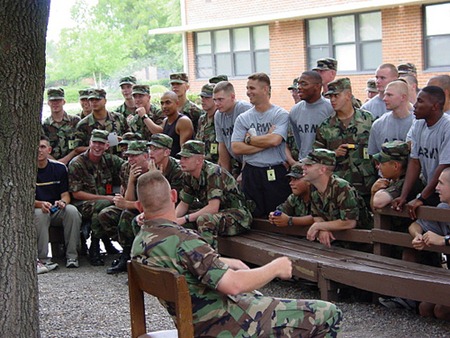
Tell me, when I ask you to think of two nations of the world who are notoriously known for their enmity, what names come to your mind? Israel and Palestine? USA and Russia? USA and North Korea? It is the latter that has come particularly into the limelight most recently yet it is quite a strange situation. If we consider them to be archenemies, it is questionable as to how their long-term hostility has not resisted a manifestation into direct conflict. So, what is it that’s stopped a usually arms-friendly nation from sending their warships over and demolishing the republic?

Their history spans a relatively long period in the timeframe of American history with relations being negative from as early as the mid-nineteenth century, before the nation split into the North and South regions, when the region closed its borders to Western trade and attacked ships sent to negotiate treaties. These relations worsened during the Cold and Korean wars and on creation of the Democratic People’s Republic of Korea, the United States refused to and continue to refuse to grant diplomatic recognition to the country.

As we look over the last century, we can see the US comfortably waging war in Vietnam, Afghanistan, Iraq and, most recently, intervening in Libya. It would appear that wherever the US saw a threat, they would pre-emptively act on it and reduce the threat considerably. It is debatable, but perhaps they have stopped short of colonisation and imperialism whilst “democratising” and “stabilising” their battlegrounds. If they’re not waging a war physically, it’s almost certainly some form of psychological and propaganda warfare and a constant assertion of US dominance and power throughout the world – even if they wanted to, no country is left believing the US weak, including the UK. However, it appears the same cannot be said of North Korea.

Recent tests of satellites, long-range missiles and nuclear weaponry in the North Korean region has heightened tensions across the world. Yet, in vast contrast to the US intervention in Afghanistan which was just under a month after the 9/11 attacks, any direct action from the United States is restrained. Perhaps it is the worry of response from the allies, China and Russia in particular. Yet, this is unconvincing; the lack of support from allies did not stop them in their advancement into Iraq in 2003. Perhaps they have learned their lesson from the global criticism of this attack, and this is the reason they have also not intervened to stabilise Syria.

Yet, when Kim Jong-Un is blatantly threatening the United States with technology that could be used against Hawaii immediately, and an invasion that the American people are more likely to approve of than Iraq, it is bizarre that the US administration are able to hold so much restraint on their actions; it is not something they are so well known for. Perhaps we are seeing a change in attitude under Obama, even though his own home turf is supposedly directly at threat, with the whole Western coast in sights within three years.

Is this a continuation of the cold war that emerged between the United States and Korea in the mid-twentieth century, or is this a new cold war? Whatever it is, it is definitely a case of both countries preparing to flex their muscles and show off about their fabulous warheads that they could launch at any time, and maybe something we should be worrying about. Perhaps we’ve already responded with a secret deployment of troops in the South region who should be worried about their “final destruction”.

Wednesday, 30 January 2013

Prime Minister’s Questions – 30th January

parliament6

Image by Victoria Kettlewell

In the middle of a week where Cameron’s premiership announced some of their biggest plans for expenditure, it was unsurprising that Prime Minister’s Questions focused on the pressing issue of the economy. Miliband stated that the Prime Minister had said in 2010 that the economy would have grown 5% by now. In the midst of news of the economy contracting by 0.1%, Cameron, unable to defend himself, spouted out the usual list of statistics and initiatives that he hopes to make Labour look bad with. Of course, it wouldn’t have been complete without Cameron blaming the previous Labour Government for the mess; a constant reminder that we would not be forgiven for forgetting. Miliband laughed the claims off, demanding that the “part-time chancellor” spent more time fixing the economy than trying to divert the new High Speed 2 route around his constituency, before drawing on the fact that this Government have borrowed £212bn more than they had promised. Aside from this, Cameron finally gave way to the weekly question on when he would visit a Foodbank, stating he would soon be visiting the one in his constituency. Cameron also made a mockery of George Galloway who asked a question on Syria by stating that wherever there is a brutal Arab dictator in the world, he’ll have the support of the honourable gentleman.”

Wednesday, 23 January 2013

Prime Minister’s Questions – 23rd January

parliament6

Image by Victoria Kettlewell

As Nick Robinson predicted, Prime Minister’s Questions was dominated by “the defining questions of the general election and the next five years” as all parties clashed over the topic of Europe after Cameron’s most crucial speech in her premiership. The question of which direction Cameron would be campaigning in favour of was carefully dodged over and over again as Miliband attacked his uncertainty. This uncertainty, Labour argued, would affect our economy, our businesses and our international relations. Attacked by his own party, Cameron was forced to defend himself against the jeers of backbenchers and the opposition with his line that he would want to stay in a renegotiated Europe. Turning the question on Miliband, Cameron coerced Labour into rejecting that they want a referendum. Meanwhile, a Scottish Member of Parliament ridiculed Cameron for saying that the two-year time frame for the Scottish referendum was too long whilst giving a five-year time frame for a referendum on Europe. Cameron retorted with a remark that implied the Scottish National Party were stupid for thinking of leaving the United Kingdom without even attempting negotiations. However, although Cameron’s remarks were stronger than Milibands, his continued resistance to his backbench Eurosceptics, the Labour party and the rising force of UKIP suggests that his position on Europe will not be as concrete as he might like it to be.

Monday, 10 December 2012

The Discourse of Terrorism

Terrorism

Image by 9/11 photos

“Terrorist” and “terrorism” are politically motivated words, interchangeable with “clinically insane”, “religious extremists” or “(ideology)-ists”. The Northern Irish Loyalists are causing bomb alerts, and acting in violent manners, and have for many decades, in order to fight against any attempt any change to their nation. Yet, they are called “paramilitaries”, when their aim can, sometimes, to create mass destruction and terror, the very characteristics that make a definition of a terrorist. By definition, Guy Fawkes was a terrorist. By definition, Breivik was a terrorist. By definition, any of those high school and university massacrists in the United States are terrorists. Note, however, how the media changes their portrayal of these people.

Breivik, a far-right Christian, initiated his attacks against the Norweigan Labour Party in order to bring attention to his views of islamophobia, Zionism, anti-feminism, anti-multiculturalism and apartheid. He killed 77 people via bombs and shootings to further his political causes. He stood in court and pleaded guilty. He committed acts of terrorism and whilst the media may use the word terrorism, it appears sly and almost invisible amongst the other adjectives on the page; the media called him a “mass killer” with an “extremist ideology” who committed “acts of political violence” (reported the BBC), while the Telegraph called him a Christian fundamentalist with certain “political traits”. The latter had no mention of “terrorism”.

Meanwhile, the shootings at a Batman screening in the United States earlier this year were carried out by a “former neuroscience student” turned “gunman”, reported the BBC. Don’t the media make him sound a much more innocent person than he was? In fact, some media reports made it sound as if we should pity him – after all, he was probably suffering from some form of mental illness and we shouldn’t take it personally.

In contrast, no member of society would argue that Al-Qaeda are not terrorists. So what makes them different? It seems improbable that we could name anyone of a western nation as a terrorist; after all, their underlying ideals are right – perhaps they have the right religion – they have simply gone insane. Maybe they didn’t receive enough support from their country. Poor them. They were driven to this by, most likely, a chain of distressing events in their life.

Al-Qaeda – how dare they? Those religious extremists will stop at nothing to destroy our civilised western nations. Somebody needs to teach them a lesson – perhaps we should send in our armies for 10 years – maybe longer? That should sort it. We’ll teach them what a good nation looks like. Say hello to democracy via an authoritarian and coercive means – that’s what democracy is all about. The west is best.

Something is wrong here. Language is overly important, and really shapes how we think. The more the media and our leaders associate one word with one image, the more we are to reject any alternative, yet true, images. As Wittgenstein said, “the limits of my language mean the limits of my world” after all.

Thursday, 15 November 2012

Using Rockets as Diplomacy

gaza-israel

Photo by dombook11 on Flickr

At what point did the use of dangerous weaponry become diplomacy? It’s only distressing that the military fire and air raids from both sides of the Israeli-Palestine conflict is the chosen way forward, causing unnecessary civilian casualties from arbitrary attacks on mix and match locations. War simply isn’t necessary nor acceptable, and full retaliation is never the first form of response, regardless of the provocation; that’s what diplomacy is for. But that’s the only ceasefire we’ve seen.

The Israeli-Palestine conflict has, in some form, been occurring since the earliest 20th century. Maybe that makes it understandable as to why violence is always the first call of duty, but at what point, and why, did they give up on the much more passive diplomatic route? And what seems most absurd to me is that this is essentially a religious conflict! Surely the ultimate method for peacekeeping is anti-war in essence? This conflict poses so many questions that simply should not be questions.

Whether you are pro-Israel or pro-Gaza, it is agreeable that murder, torture and loss of innocent lives is the least desirable of all options available there? And we definitely don’t want to escalate this into a major war with international intervention. The actions of Israel and Gaza are not acceptable; too many lives have already been lost, and no more blood should be shed.

And yet I can’t help but notice the media’s portrayal of the crisis. Almost one-sided, yesterday, the BBC news page had a tiny article on the attack on Gaza and the death of the Hamas leader, yet today, there was breaking news as Gaza responded. A huge lack of neutrality. If we don’t take a neutral stand, there will forever be bias, and hatred over one of the sides. If there’s hatred, there’s less likely to be peaceful resolutions. It seems self-perpetuating.

Aside from this, UK officials met today to discuss the Syria crisis also and the appropriate action to take, perhaps a stepping stone towards military intervention to bring the year and a half long conflict to an end. Understandably, UN resolutions and agreed ceasefires have ended, but it’s still not right to send in the army. I know there will be many arguments as to why we should intervene; the view point that are many innocent lives at risk and being lost that should be defended. Yet, that resolution would still involve some dying, and the prioritisation of some lives over others is not a justification for me. There’s got to be a better alternative, but the world is so apparently trigger-happy, we haven’t found it yet.

Perhaps the saddest part for me is that the turmoil in our country is political and economic, yet in many places across the world there is the tragic loss of life due to a militant attitude. If only we lived in a universal society where the former was the highest complaint anyone made.

Answer me one question; why is the nature of humans to fight?

Sunday, 11 November 2012

Choosing a Leader

5758106479_cf4ca592f3

Image by Cabinet Office on Flickr

It’s a funny thing choosing a leader for your country and essentially choosing someone to place your trust in to for a prolonged amount of time, with no real ability to recall your vote. It’s a big decision we must make, and most often one people end up regretting by the time the chosen one has finished dismantling the hard work that someone else has put in.

In the wake of Obama’s victory and re-election in the United States, it’s a little overlooked that we are now halfway through our Condemned Government (of course, unless by some stroke of luck, Parliament is closed) and that means we can officially count the days until we are certain their mandate will end. That wonderful time at which we can hold Clegg and Cameron to account and completely humiliate them with what will probably be a resounding Labour win is now closer than the time we voted them in (although this is arguable in itself.) The end is nearer than the beginning, although not exactly nigh yet.

It’s no secret that all of the parties are already planning their election campaigns for 2015, deciding who will lead their campaigns and what their manifestos and key policies will be, making predictions for what will happen over the next few years and be high on the agenda in 2015, so I’m going to make some of my own:

  • Nick Clegg will be replaced as leader by Vince Cable either for the election or as a result of the election
  • The PCC elections will show to have little support and little turnout and the decision will be reversed or reduced
  • The Labour Party will not have tuition fees as a key policy or will only reduce fees by a small amount
  • UKIP and the Green Party will see a small rise in support
  • Labour will win an overwhelming majority, but still not match Blair’s 2001 majority. Lib Dems will lose a large number of seats and Nick Clegg will not win the Sheffield seat.
  • The UK will enter another recession in 2013.
  • Another European country using the Euro will collapse.
  • There will be further military intervention in the Middle East, Syria or the Faulklands.

Some may seem far-fetched, and some might seem plain obvious. I think all of these are highly possible, but let’s see how the next two and a half years pan out, shall we?

Friday, 31 August 2012

The UKBA and LMU


This Wednesday at 20:00, the UK Border Agency (UKBA) announced its decision to revoke the Highly Trusted Status (HTS) of London Metropolitan University, thus removing the right for the University to grant approval for student visas, and causing all current student visas approved by the University to be invalidated.
The UKBA’s horrific decision has far-reaching and outstanding effects, far more than one could possibly first imagine; the displacement of current students, the delay to prospective students, the loss of money to the University and the Higher Education sphere as a whole, the loss of tenants, the damaging impact to the reputation of the United Kingdom, overstaffing at the University, confusion for students… the list goes on.

However, of course, the most important is the damaging effect that students have faced. The most shocking part is that even those who are currently studying at the University, of whom most, if not all, will be legitimate hard-working students, are now no longer able to complete their course – some may have less than three months left of their course, and paid out thousands in order to study at this University, yet are now being told their course is no longer an option. They must find a new course by 1 December or return to their home country – a very unfair, and economically harming danger. 

Furthermore, there are the students who have applied for the University, been warranted Visas, perhaps bought their travel tickets, and have planned to travel to the University next month, some within the timeframe of 2 weeks. These students are now being told they must also reapply elsewhere.

The worst? It would be fairly simple if they had more time; the fact is, UCAS applications have been completed, clearing spaces have been open, filled and closed. There are no longer any spaces left for students, and even if there were, it would be very unlikely that it was a course that the students had originally studied or intended to study. What use is that?

This decision is not a simple one, but the Government and the UKBA thoroughly knew the impact of it, and the unwelcome reception it would have. It is also not a decision that will be taken lightly. The National Union of Students (NUS), Unison and the University and College Union (UCU) have all condemned the action, planning a day of protest to show their support and solidarity for the displaced students and I am certain that hundreds, if not thousands, will turn out; perhaps I will be one of them.