This website has moved!

Politically Me is no longer available here. To read James' blogs, please visit www.jphillips.eu

You will be automatically directed there shortly

Showing posts with label prime minister. Show all posts

Wednesday, 11 September 2013

Prime Minister's Questions - 11th September

parliament6

The second Prime Minister’s Question Time after the Summer Recess, held on the twelfth anniversary of the terrorist attacks on the World Trade Centers, began with Cameron and Miliband paying tribute to the families and friends of those who died in the attacks. The Tory leader promised to prepare a plan for the Syrian situation in time for the UN General Assembly, with particular focus on ensuring that there is access to the country for humanitarian aid. Cameron and Miliband welcomed figures that overall unemployment levels had fallen, and that private sector jobs had risen to 1.4million. Miliband accused the Tories of ‘total complacency’ with the handling of the deficit, criticising the Government for the slowest recovery in 100 years where prices have risen faster than wages.

Miliband asked the Prime Minister whether he agreed with the Education Secretary, Michael Gove’s, comments that those who used foodbanks ‘only had themselves to blame’. Cameron refused to back or distance himself from these comments, instead retorting with his own criticism on Miliband’s speech at the Trade Union Congress conference yesterday, claiming that it was a ‘disgrace’ that he had caved into trade unions.

There was considerable back and forth between the two major parties on the topic of youth unemployment with Labour attacking the Government for the continual rise of unemployment for the country overall whereas the Tories commended the Government for a fall in unemployment levels in their particular constituencies.

However, Miliband did not bring up today’s report from the UN on the effects of the bedroom tax, suggesting distrust with the accuracy and reliability of the report.

Prime Minister’s Question Times now stop for a few more weeks whilst we turn our attention to party conference season, starting with the Liberal Democrat and Green Party conferences this weekend.

Wednesday, 4 September 2013

Prime Minister's Questions - 4th September

parliament6

MPs appeared rusty as the first session of Prime Minister's Questions began after the Summer recess. It comes as no surprise that the dominant topic in the House was Britain's response to the Syrian civil war, following the recall of parliament for a debate on military intervention last week. Cameron and Miliband debated in a calm manner, agreeing on points that a diplomatic solution must be reached by convening talks between the warring parties and the nations backing them. Cameron couldn't resist a shot at Miliband, ending their exchange with a complaint that Miliband divided the house on a vote 'that led to a vote'. Many members of the House called for a more concerted effort in bettering relations with Iran, who were named as complicit in an attack on the British embassy, following the election of a new president. Cameron argued that Britain needed to be cautious but that he had taken steps towards this.

Asked about why the Tories won't back a mansion tax but continue to implement a bedroom tax, Cameron retorted that Labour needed to learn what a tax was before ridiculing Miliband about whether they would reverse it if they were in Government and demonstrating how to nod in response. Miliband showed no sign of Labour's commitment post-2015, showing an unwillingness to show their true views, either because they would be unpopular or so as not to reveal their tactics. Prime Minister's Questions only return for a few weeks before party conference season puts it on a hiatus again.

Monday, 12 August 2013

Cameron Demands Complacency on Fracking

"Get behind fracking" demands David Cameron in The Telegraph today. Think of the benefits to the economy, he lays on. Ignore the environmental impact, he infers. As anti-fracking protests continue strong in Balcombe, Sussex, the Tory Prime Minister adds yet another controversy to his premiership's legacy, so what substance lies behind his words?

The pro-fracking alliance of Caudrilla and The Conservative Party announce the godsends of the new energy initiative at any hint of disapproval: cheap energy, self-sufficiency and enough jobs to provide for the unemployed and the millions of illegal immigrants popping out of the sewage system. Meant to be a bit of good news, the Nasty Party must be in disarray that their distraction from their widespread attacks has only added fuel to the fire. Rather than prompting street parties and celebrations akin to those on New Year's Day, simply the possibility of fracking has resulted in angry gatherings. 

The potential of fracking is vastly outweighed by its potential to wreck the environment. Carving up the countryside, destroying habitats and contaminating water, it's hardly going to be Beautiful Britain. 1,300 trillion cubic feet of gas doesn't exactly suggest a short-scale and isolated project; if David Cameron's partners manage to find shale gas, which is a certainty, there's no doubt that they'll continue to exploring elsewhere in the country. It really should come as no surprise that fracking is being favoured over other options when one of Cameron's advisors, Lord Browne, is the chief executive of Caudrilla. The big black bags of money that the Government are saying will drop into the Treasury or the local public's back pockets are empty promises. If anything is reinvested into the economy, it will be minimal. We only have to look at the 'Big Six' to recognise this; despite their massive profits this year, they still have the cheek to demand more money from their customers. Here is where Cameron's promise of cheaper energy can be called into question.

The latter two promises, self-sufficiency and jobs, also raise eyebrows. Although it may be the case that fracking can provide them both, they are not the sole approaches that can offer, and they are far more the cleanest. Fracking is a dirty process, and presents the highly likely chance of water contamination in the local area. Add the certainty of increased traffic from unclean lorries through the local area, and the noise created during the process, and it the pollution is an abysmal thought. Furthermore, climate change is a real concern in the present day and as we continue to rely on finite and dirty resources to power society, we are forgetting the long-term problems and solely thinking of the short-term benefits. It has been predicted that 60-80% of resources in the ground must not be extracted if we are to avoid any of the catastrophic results of climate change. In contrast, there are various green energies that can be invested in for all the same benefits. Additional money placed towards procuring energy-efficient homes and building technologies to catch renewable energies is far more sustainable and financially viable. The jobs created by implementing a shale-gas service are equally required for a large-scale investment project in sustainable and clean resources, that will not just benefit us, but generations to come and have far more public support than dirty fracking.

The language used by the pro-fracking alliance is misleading and ignorant of alternatives and public opinion. Despite widespread opposition, the technology, which is in its infancy, is being favoured over far more sustainable technologies, which can provide the very same benefits. There is enough shale gas to keep us powered for decades, they say. But there is enough sun, water, wind and heat to keep us powered indefinitely.

Also posted on Redbrick.

Wednesday, 17 July 2013

Prime Minister’s Questions – 17th July

parliament6

How much of the UK’s legislation has been bought by lobbyists? Both sides of the House questioned that today. The Tories questioned Labour’s relationship with trade unions, in particular Unite, with Cameron stating that trade unions buy Labour’s policies, candidates, MPs and even leader. Meanwhile, Labour requested an answer to the connection between the advice of Lynton Crosby and the decision to not go ahead with plain packaging on tobacco products. Neither side gave particularly satisfactory answers. Miliband was particularly quiet on the day’s announcement of falling unemployment (despite long term unemployment levels having gone up) and this was something that Cameron made sure the House was aware of. As expected, another dominant topic was the Keogh Report, which placed 11 NHS Trusts under special measures with both sides of the house disagreeing on the change of number of nurses and clinical staff since the Government took power in 2010. The sight of Cameron lying back in relaxation, head towards the ceiling, was not unobvious; as we head into the Summer Recess, Cameron is in a strong position, with a recent poll placing Labour and the Conservatives on an equal lead, and he’s revelling in the knowledge. According to him, Labour’s leadership is “in crisis” – everyday, the country is getting stronger, and everyday Miliband’s leadership is getting weaker.

Wednesday, 26 June 2013

Prime Minister's Questions - 26th June

parliament6

Today’s Prime Minister’s Questions was dominated by questions on infrastructure, with members eagerly awaiting the Spending Review to be delivered by the Chancellor immediately after the scrutiny session. Miliband seemed in his element today as he attacked the Government for their poor record on delivering their promises on infrastructure, highlighting that only 7 of 756 infrastructure projects have been completed under this government, and 5 of those were started under Labour. Cameron tried to deflect the argument by questioning Labour’s record in their 13 years of power, to which Miliband easily answered that there 3700 rebuilt schools, 1000 new hospitals and 3500 new children’s centres. Cameron returned to his usual defence and stated that it was because of this that the country was in this “mess”. According to the Prime Minister, half of the population think Miliband belongs in Sesame Street rather than Downing Street. Serious concerns over the alleged bugging of the friends and family of Stephen Lawrence by police were raised by a Labour MP, with a positive response from the Prime Minister that two independent inquiries had been set up by the Home Secretary to investigate and that no additional oppositions were ruled out. Labour were attacked for the conflicting reports from Miliband and Balls about their commitments in regard to borrowing, with both contradicting each other. The session only served to prove that neither of the main parties are prepared to commit to further investment if elected in 2015.

Wednesday, 19 June 2013

Prime Minister's Questions - 19th June

parliament6

After a busy week at the G8 summit, David Cameron returned the House of Commons for his weekly scrutiny session, beginning with an announcement that the Chief Executive of BT, Ian Livingstone, would be joining the Government as the trade minister towards the end of the year. Ed Miliband immediately questioned the Prime Minister on whether the Government would be making amendments to the banking bill, based on the parliamentary commission on banking’s report, stating that Labour would be submitting them if the Government didn’t. However, consensus between the parties was found on this point. Miliband attacked the Government on the news that many in the banking sector received a bonus in April that was 64% higher than in the previous year, stating that it was the result of Cameron’s lowering of the highest rate of tax. Cameron failed to defend himself, instead retorting that the Labour party did not manage to sort the problem out themselves during their thirteen years in government. The rise in child poverty was also a dominant topic, with many Labour MPs attacking the Government’s policies that have caused this increase – all David Cameron could do was say that it was Labour’s fault, because they got the country into the economic crisis. Caroline Lucas asked the Prime Minister whether he would agree with her that The Sun newspaper should be removed from sale in the house, due to the link between the portrayal of women as sex objects in the media and the acceptance of sexual harassment. The Prime Minister laughed the question off, stating he was glad that she got her question asked after her “dazzling t-shirt”, but that he believes all newspapers should be available for sale in the house, disgustingly shrugging off the blatant sexism that The Sun prints.

Wednesday, 15 May 2013

Prime Minister’s Questions – 15th May

parliament6

This week’s Prime Minister’s Questions was more a case of Deputy’s Questions; Clegg took Cameron’s place as the Conservative leader visited the United States, while Harriet Harman replaced Miliband. However, the proceedings were very much the same: attacks on the Government from Labour, attacks on Labour from Clegg, and Clegg showed himself to be the joker that British television expects. Clegg seemingly struggled under the pressure as the Liberal Democrats and himself were attacked by members on both sides of the house. Clegg was asked if he had “no influence or just didn’t care”, had to tell the members behind him to “hang on” and deflected from difficult questions by attacking Labour’s “blank sheet of paper”. Harman asked why the Prime Minister had only attended the House once in the last eight Wednesdays (although this is not very shocking considering the Easter recess and Baroness Thatcher’s funeral) but Clegg retorted branding Miliband as some of the best comedy Radio 4 had broadcasted. Harman’s questions were, however, a waste, as she used many to ask where the Prime Minister was rather than attack the Government’s policies, supporting Clegg’s later question as to “what were [Labour] doing?” during the last Government. The conversation on Europe dominated the house as pressure for an in/out referendum increases; why won’t the Prime Minister tell anyone how we would vote, and was the Clegg promising a referendum on Europe in 2008 “an imposter or just a hypocrite”? Topics ranged from unemployment levels to the privatisation of Royal Mail to the Prime Minister’s attendance of the Commonwealth summit in Sri Lanka, despite the nation’s human rights record. Clegg was far less confident than Cameron and is unlikely to want the House’s weekly pressure again for a short while.

Tuesday, 9 April 2013

The Death of Margaret Thatcher


I’m a little late to the mark, but the death of Margaret Thatcher troubled me. As a “lefty”, I was massively against the entirety of her neoliberal and conservative policies and I look back on the impact of the era as destructive and causing huge inequalities. However, the announcement of her death yesterday is not something I have or ever will celebrate. It is the reverence and respect that comes with any death that translates into proportional quietness. The solemn expression of a “goodbye” is all that is necessary. Yet this is not what we saw.

The death of any person, regardless of their life, is not something that should be celebrated. However, as the news broke, people, parties and groups across the world cheered and planned parties as they experienced happiness in the loss of a life. This is inherently despicable behaviour. By all means, celebrate the downfall of a politician you disagreed with, but not their death. This woman’s downfall was in 1990, not yesterday. She left the political sphere and retreated to a personal and private life, one we had no right to intrude upon. You may argue that I didn’t live through the 1980s and I don’t understand what she did to the country. You’re right, I didn’t and I might not, but I know that death is not a thing to be celebrated.


This woman had a family, loved ones, friends, supporters, like you and I. If your mother, wife, friend died, how would you feel if the neighbours you’ve always feuded with held a street party and cheered as the ambulance carted her away? You wouldn’t. Now imagine this is what is happening to her family and friends and understand that the reaction they are witnessing in street parties (above) and at NUS national conference (below); it is unfair, it is upsetting and it is unnerving.


You can celebrate the downfall of the politician, but not the death of a human being.

Baroness Margaret Thatcher, an 87 year old lady, 1925-2013: Rest In Peace.

Wednesday, 20 March 2013

Prime Minister’s Questions – 20th March

parliament6

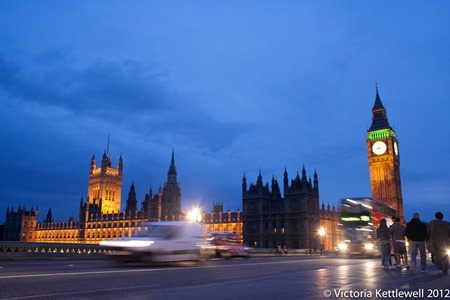
Image by Victoria Kettlewell

A serious undertone lay within the house today as members gathered for the budget announcement, resulting in a far more polite and short rally between Miliband and Cameron and the level of jeering was kept at a minimum. Finding consensus on the issues of the Cypriot euro bailout and the support for Syrian opposition, it could easily have been forgotten what a landmark day it was for the country; perhaps the work on the Leveson inquiry has showed the two parties that it is not impossible to reach something that all can agree on. Questions revolving around the budget were also kept at a minimum, most likely awaiting the question session after the announcement. Yet, this did not stop the Conservatives being blasted with their decision to cut the fifty pence tax rate for millionaires, which is set to come into effect next month. There was a disgusting display of a lack of concern from the Prime Minister when he appeared to shun the remarks of a Labour MP who told the story of a homeless teenager who must live off eleven pounds a week due to the Government’s economic policies. Obviously tired of the questions on the economy, Cameron claimed taking advice from the Labour party on the economy was ‘like taking advice from Enron on accountancy’ before refusing to answer what he would ‘spend his millionaire’s tax cut on’.

Wednesday, 6 March 2013

Prime Minister's Questions - 6th March

parliament6

Image by Victoria Kettlewell

A furious Cameron erupted in the chamber today, blasting Labour as ‘croupiers’ and demanding that Miliband apologise for the “shambles” that the Labour treasury left the economy in under the last Government. Labour attacked the Government for their opposition to the EU’s banker’s bonus cap, suggesting it as hypocrisy that they would want to do this whilst inflicting deep and damaging cuts, including the “bedroom tax” on the poorest and most vulnerable of society. Cameron refuted the claims, arguing many times that the reform was not a tax, and that the most vulnerable sectors of society were exempt. Miliband ridiculed the Conservative party on their 2015 prospects, stating that he was glad Cameron was preparing for being in opposition by asking him questions, before saying that he looked forward to seeing Theresa May directly opposite him in opposition. One Liberal Democrat MP (in a rather dazzling yellow waistcoat) congratulated their victor in the Eastleigh by-election, proclaiming the benefits of sticking by their leader . Another MP asked how Cameron ‘s talks with Ukip, the party of “nutcases”, were going. Cameron almost ignored the remark, instead stating that it showed that Labour were going “precisely nowhere”. Finally, one Labour MP told Cameron that if doesn’t “get a grip”, he should let Miliband in the seat to do so instead.

Wednesday, 6 February 2013

Prime Minister's Questions - 6th February

parliament6

Image by Victoria Kettlewell

The day after a vote that Diane Abbott argued proved that “the arch of history bends slowly, but it bends towards justice”, Prime Minister’s Questions unsurprisingly did not show any criticism for the policy of same-sex marriage, a fantastic decision to moving towards equality in society shown by many members of all parties across the house. The debate swiftly moved into one on the ‘bedroom tax’. Cameron refuted claims that it was a tax, instead dubbing it a benefit. Miliband shook this defence off effectively, questioning the case that paying £25 more a week due to Government policies is not considered a tax. Rightly, it was raised across the Labour benches that this policy would hit those with disabled members of their family hardest. Cameron, again, seemed unable to defend himself, reversing questions towards Miliband. After criticisms almost amounting to corruption of the PM, Cameron accused Miliband of wanting to be the “fairy godmother” to trade unionists. One Labour MP cynically asked whether the recently discovered remains of Richard III had been declared fit to work by ATOS, receiving laughs and cheers from around the house, even from Cameron. Yet, in the midst of the IFS’ announcement that they expected the Government to borrow £64 billion more than expected, what really resounded was Miliband’s description of the PM as “weak, incompetent and totally out of touch”

Wednesday, 30 January 2013

Prime Minister’s Questions – 30th January

parliament6

Image by Victoria Kettlewell

In the middle of a week where Cameron’s premiership announced some of their biggest plans for expenditure, it was unsurprising that Prime Minister’s Questions focused on the pressing issue of the economy. Miliband stated that the Prime Minister had said in 2010 that the economy would have grown 5% by now. In the midst of news of the economy contracting by 0.1%, Cameron, unable to defend himself, spouted out the usual list of statistics and initiatives that he hopes to make Labour look bad with. Of course, it wouldn’t have been complete without Cameron blaming the previous Labour Government for the mess; a constant reminder that we would not be forgiven for forgetting. Miliband laughed the claims off, demanding that the “part-time chancellor” spent more time fixing the economy than trying to divert the new High Speed 2 route around his constituency, before drawing on the fact that this Government have borrowed £212bn more than they had promised. Aside from this, Cameron finally gave way to the weekly question on when he would visit a Foodbank, stating he would soon be visiting the one in his constituency. Cameron also made a mockery of George Galloway who asked a question on Syria by stating that wherever there is a brutal Arab dictator in the world, he’ll have the support of the honourable gentleman.”

Wednesday, 23 January 2013

Prime Minister’s Questions – 23rd January

parliament6

Image by Victoria Kettlewell

As Nick Robinson predicted, Prime Minister’s Questions was dominated by “the defining questions of the general election and the next five years” as all parties clashed over the topic of Europe after Cameron’s most crucial speech in her premiership. The question of which direction Cameron would be campaigning in favour of was carefully dodged over and over again as Miliband attacked his uncertainty. This uncertainty, Labour argued, would affect our economy, our businesses and our international relations. Attacked by his own party, Cameron was forced to defend himself against the jeers of backbenchers and the opposition with his line that he would want to stay in a renegotiated Europe. Turning the question on Miliband, Cameron coerced Labour into rejecting that they want a referendum. Meanwhile, a Scottish Member of Parliament ridiculed Cameron for saying that the two-year time frame for the Scottish referendum was too long whilst giving a five-year time frame for a referendum on Europe. Cameron retorted with a remark that implied the Scottish National Party were stupid for thinking of leaving the United Kingdom without even attempting negotiations. However, although Cameron’s remarks were stronger than Milibands, his continued resistance to his backbench Eurosceptics, the Labour party and the rising force of UKIP suggests that his position on Europe will not be as concrete as he might like it to be.

Wednesday, 16 January 2013

Prime Minister's Questions - 16th January

parliament6

A solemn start to the house as all parties paid tribute to military personnel and those involved in the day’s helicopter crash in London, sending wishes to their families. Debate swiftly moved on to the discussion of the UK’s position in Europe, a topic that dominated the day. Cameron stumbled over his words as he tried to defend the obvious split in the Tory party over the decision whilst Miliband attacked him for wanting to delay the decision for five years, creating uncertainty in Britain’s business sector. Ludicrously, the PM appeared to dodge a question from Labour on whether the country would remain signed up to the equal pay bill that makes it illegal to discriminate on pay. Cameron’s only consistent line of defense lay in that he wanted to propose a change to the EU and then get the British electorate’s consent on the manner and his tactic was solely on offense as defense, accusing the Labour party of creating the Governemnt’s problems at any opportunity. In response to the earlier helicopter crash, Cameron said it was very likely that regulations on flying through the increasing skyline of the city would be urgently reviewed.

Wednesday, 9 January 2013

Prime Minister’s Questions – 9th January

parliament6

Image by Victoria Kettlewell

Happy New Year wishes from the “nasty party” and the “little red pests” as the first Prime Minister’s Questions greeted us this week. The re-launch of the coalition appears to have reinvigorated Clegg as, sat on the front bench, his usual solemn-looking face was replaced with laughing and increased gestures. Miliband attacked the coalition for its lateness in publishing the audit, before proclaiming it would only highlight the Government’s broken promises on the NHS, sexual inequality and the tagline “we are all in this together”. Cameron failed to rebut the claims, only making different points about the policy areas, then stating that the five million pounds that goes to the Labour party does not guarantee any returns. One Member of Parliament asked of the Government’s intention to repeal the fox hunting ban to which Cameron ignored the question instead stating that the “only little red pests he pursues are in this house”. A referendum may seem impending after it was stated that the Government would seek public consent for any EU settlement that is reached. A backbench and, obviously, critical Conservative MP asked the PM whether he was politically closer to Lord Tebitt or Clegg and received the response that Cameron is, and always will be, closer to the Conservatives than any other. Strangely, the resignation of Conservative peers and the Northern Ireland violence didn’t get a look-in.

Saturday, 22 December 2012

How Effective is Prime Minister’s Question Time?

parliament

Image by Victoria Kettlewell

It is a way of ascertaining the direction of the Government and the performance of the MPs we elect, but Prime Minister’s Question Time is beginning to appear more and more like a Punch and Judy show, with more drama yet less variation within it than Eastenders. The weekly half-hour session is repetitive and nothing more than a trashing session. However, week after week, we continue to rely on it as a tool for scrutinising our representatives.

It is all too common that we see Miliband and Cameron calling each other less than imaginative names across the House of Commons – we probably mutter something more imaginative under our breaths at the mere mention of their names – whilst attacking each other’s policies. I’ve seen some supposed behavioural problems in classrooms before and nothing compares to the continual rowdy nature of the House. It’s too regular an occurrence that the Speaker has to step in and embarrass a member and quieten the House down before they are kept behind the bell.

However, aside from the poor use of nicknaming and insults, the House is beginning to get a bit repetitive. Labour attack the Tories for being “out of touch”, “on the side of the rich” and having terrible economic policies, whilst the Tories attack Labour for being “out of touch”, “on the side of the lazy” and wanting to increase the deficit, and this happens time and time again. The same phrases get churned out, the same business gets discussed – it’s no Royal Variety Show in there. Somehow, however, they manage to suppose a different slant on the discussion; Labour begin their questions about the NHS, the Leveson Inquiry or welfare reforms, but it always returns to an angry offensive against the economic policies of the Tory party; that’s Capitalism for you. Continually slating each other’s policies only amounts to engineered campaigning for the next General Election; is it a debate on an issue that effects the population, or on which party has the better policy? The latter seems a bit more believable.

Furthermore, it’s a rare occurrence that you see somebody stand up and honestly say “my constituents” when referring to a particular opinion they are presenting to the house. Despite being elected representatives of sixty million people, Prime Minister’s Question Time only serves to demonstrate how little they represent their people. Occasionally, you do see the odd MP stand up against their party-line, but even within the coalition (with their opposing ideological perspectives), it is too risky a move to make if they are scared of losing their party membership. Yet, according to Total Politics, of sixty million people, only around three-hundred and fifty thousand members of the public actually tune into the show. With the exception of those who catch the show on catch-up or via snippets on the news, less than five percent of the population choose the question time as a source of keeping account of their representatives. As an indication, we can only assume that less know of the ability to watch other debates live on BBC Parliament, or even visit Parliament and watch the debates in the houses themselves.

Prime Minister’s Question Time serves only as a new source of humour, an indication of the worthlessness of our representatives in a representative democracy and a sense of the democratic deficit that the UK population has. Perhaps in the future, the show will become more worthwhile but, in its current set-up, it is merely a tool of amusement, pretend accountability and continuous party-campaigning.


Also published on Backbench and Redbrick

Wednesday, 19 December 2012

Prime Minister’s Questions – 19th December

parliament6

Image by Victoria Kettlewell

It seemed like some festive cheer was in the air this week as it took a good few minutes before the battle of statistics began – it even looked like Cameron and Miliband were just going to stand there agreeing with each other for a while as they talked about various military topics. We finally got a glimpse of what Cameron’s “Big Society” is when he shouted about the fantastic hard work thousands of volunteers are offering to food banks around the country; Miliband has now captioned the scheme as for “feeding hungry children in Britain”. Cameron seemed unable to defend himself against Miliband’s attacks on the Tory’s cuts calling them “out of touch” with families and saying that the richest were getting a tax reduction. According to Cameron, Miliband has nothing else to offer this Christmas. Other Labour MPs gifted the Tories with their own panto with some new Christmas movies – the Grinch Who Stole Christmas starring the Chancellor, the Muppets Christmas Carol starring the Lib Dems and It’s Not A Wonderful Life for the Poor starring Cameron. There was a shout of “can we have a vote?” from a Tory MP as one Labour MP gave his season’s greetings to the Speaker. One final attack from Labour saw a suicide note that blamed the Government’s reforms of the Disability Living Allowance. However, the impending end of the world never managed to make it onto their agenda. Let’s hope they’ve got a secret plan for the survivors up their sleeves.

Also published on Redbrick

Wednesday, 12 December 2012

Prime Minister’s Questions – 12th December

parliament6

Image by Victoria Kettlewell

The house just couldn’t keep quiet this week and with that came a feeling of having returned to a classroom of schoolboys. Even our infamous Speaker couldn’t get the house to shut up, so there was a constant jeering, perhaps more annoying than the vuvuzelas of the 2010 Football World Cup. Cameron and Miliband referred to each other as bullies and there certainly was some use of catchphrases. Red-faced Cameron was asked if he had “wrecked a restaurant recently” whilst confidence-lacking Miliband had his shadow chancellor attacked as a bully who couldn’t take it in return. It was an elongated and highly repetitive argument of welfare cuts and deficit reduction over welfare increase and increased borrowing. Where Cameron tried to take a Robin Hood angle, Miliband shot him down, stating that the Tory donors stamped their feet and got what they wanted. Cameron shortly replied that if it weren’t for the Labour donors, Miliband wouldn’t be in his position. Neither side won – there was just simply bulldozing of either side’s policies. Other MPs ravaged the PM with questions on the “snooper’s charter” saying the Government would do more spying than their media friends in Wapping, whilst others showed off their historical expertise in asking whether the Government were going to repeal the Magna Carta of 1297. Scottish MPs showed off and asked whether the Government would be copying them in their successes, whereas Northern Irish MPs asked the PM to condemn the violence in Belfast. Wales was quiet this week.

Wednesday, 5 December 2012

Prime Minister’s Questions – 5th December

parliament6

Image by Victoria Kettlewell

This week, MPs began Prime Minister’s Question Time by congratulating William on the success of his natural bodily functions, reminding us of the unforgettable, that William and Kate are expecting a baby. Eventually we moved onto the more important topics (one that actually affects our daily lives) of the implementation of the Leveson recommendations, where the PM and the Government were criticised for their apparent and backstabbing refusal to implement statutory requirements for an independent regulation system – a system that would seem intuitive to have to most people. Instead, Cameron says he has trust in the editors that they can establish that themselves and, by that, he means, he doesn’t want to interfere with his close friends and sponsors, only waste our money on an inquiry he won’t adhere to, whilst cutting services that we need, like the NHS. Obviously not enough money was spent on maths in their day, because neither Miliband nor Cameron seemed to agree on any statistics, both quoting different sets form the IMF and the OBR, and telling those opposite them they were constantly wrong. Cameron accused Labour of cutting the NHS and said the Tories were increasing the budget; Miliband accused the Tories of cutting the NHS and said Labour increased the budget. Somebody is right, but only the IMF knows that. PMQs seem to just set the precedent for the later Autumn statement, that outlined that the deficit has been reduced by 25% by deciding not to dish out any money any more.


Also posted on Redbrick

Wednesday, 28 November 2012

Prime Minister’s Questions – 28th November

parliament

Image by Victoria Kettlewell

The economy was on the tips of everyone’s tongues in the Commons this week (but when isn’t it?). After the initial expected tributes to those involved in flooding rescue and clean up operations, the Commons immediately descended into the brawl between Cameron and Miliband, both blowing their own trumpets about their economic policies. Miliband continued to rely on quoting Cameron’s words and twisting them to his advantage when questioning Cameron’s Work Programme as the “biggest and boldest programme since the great depression” to which Cameron reeled off, at a pace most couldn’t keep up with, a horde of statistics about why his policy was good and Labour’s previous policies were not. Quoting 700,000 people in work as a result of the programme, Cameron was left susceptible to criticisms from Miliband that only 2% of those on the programme were in sustainable jobs (although it was quickly pointed out that Miliband’s math didn’t quite work out). The infamous “calm down” jeer was called from the Labour benches as Cameron tried to defend his policies with a flustered face and glances to his ministerial colleagues for support. Questions were also asked about the results of the Leveson inquiry, but Cameron continuously evaded them only saying that we need a strong and robust independent regulatory service for our media.


Also published on Redbrick